RU
RU  EN
EN  ES
ES  AR
AR Comprehensive Analysis of Production Processes and Material Characteristics of Synthetic Resin Tiles
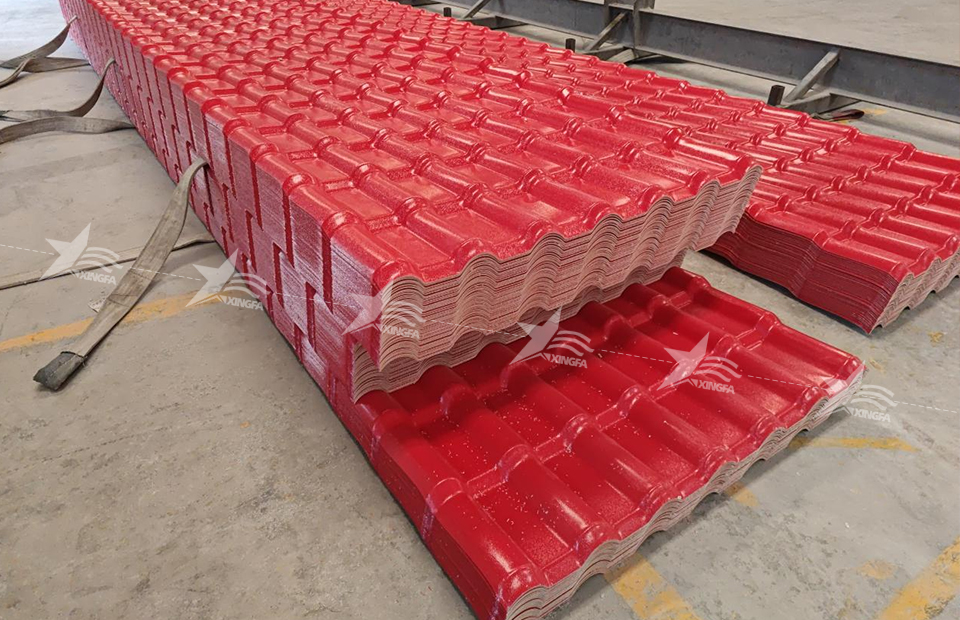
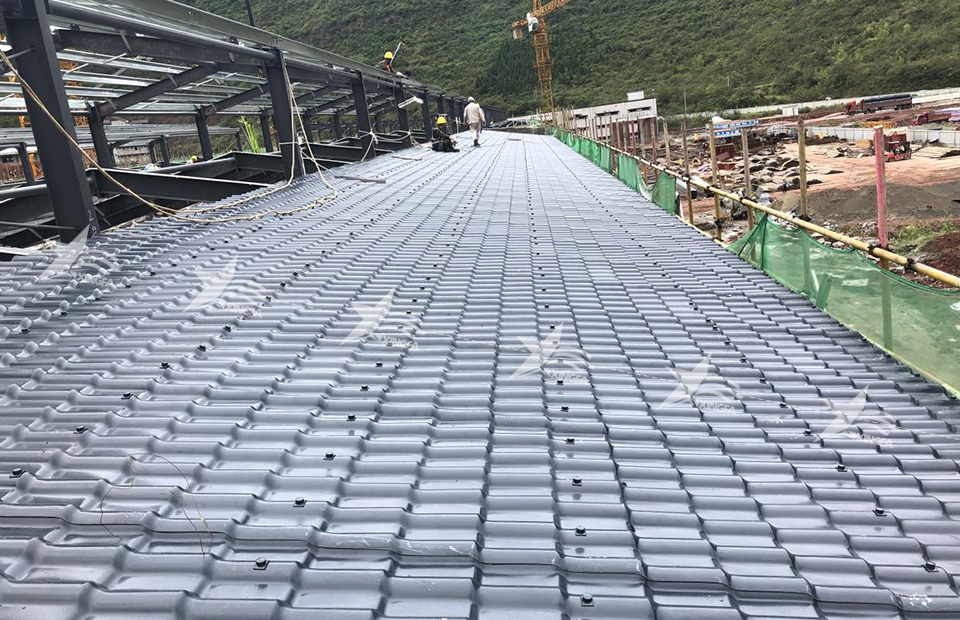
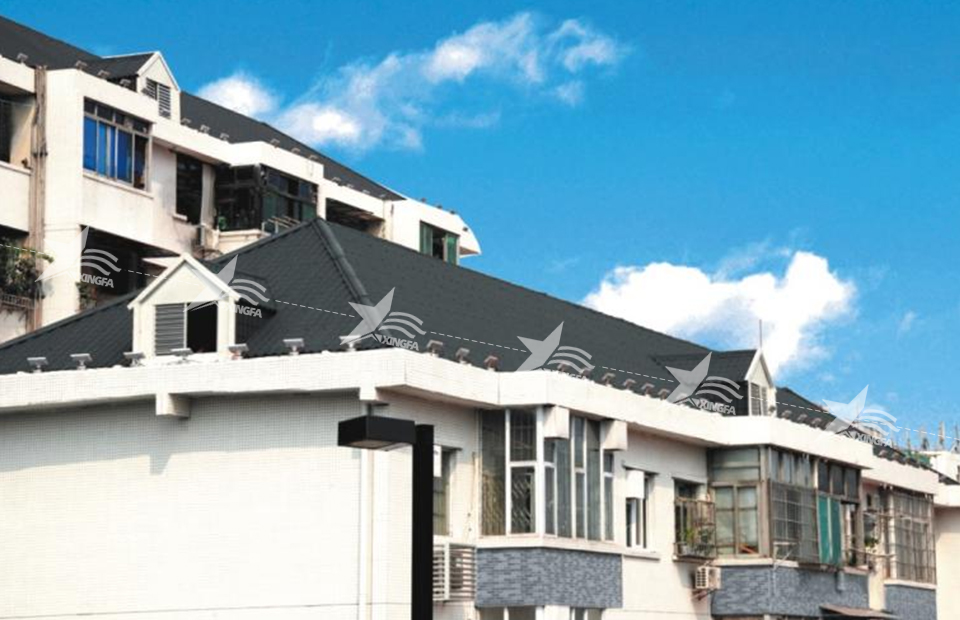
Synthetic resin tiles are widely used in industrial plants, warehouses, and residential buildings as corrosion-resistant and weather-resistant roofing materials. However, product quality in the market varies significantly, with the core differences stemming primarily from production processes and raw material formulations. Many procurement personnel focus solely on appearance and price, overlooking how manufacturing methods critically influence material performance—leading to the inadvertent selection of low-end products with poor weather resistance and high susceptibility to brittleness and cracking. This article systematically examines the complete production workflow—including raw material formulation, extrusion and plasticization, co-extrusion molding, and post-processing—as well as the corresponding material properties associated with each process step. The objective is to enhance technical understanding and empower stakeholders to accurately assess and differentiate product quality.
Ⅰ. Complete Production Process Flow of Synthetic Resin Tiles
-
Raw Material Proportioning and Blending
The primary base material for synthetic resin tiles is PVC resin powder, compounded with thermal stabilizers, plasticizers, processing aids, impact modifiers, and ultraviolet (UV) absorbers. The top-layer ASA (acrylonitrile–styrene–acrylate) weather-resistant coating is formulated separately. The first production step involves precise proportioning: all components are fed into a high-speed mixer according to the designated formulation. High-speed mixing induces controlled temperature rise, ensuring uniform dispersion and integration of additives. Subsequently, the blend is transferred to a cold mixer for rapid cooling to prevent premature plasticization.
The formulation constitutes the foundational determinant of tile material performance. Inferior products often reduce the dosage of stabilizers and UV absorbers while heavily loading calcium carbonate (CaCO₃) as a low-cost filler. Inadequate mixing time further results in non-uniform additive distribution, leading to localized aging and chalking in the finished tiles. In contrast, premium-grade products strictly regulate filler content and standardize mixing temperature and duration to guarantee homogeneous raw material blending.
Extrusion and Plasticization
The blended material is conveyed to a twin-screw extruder, where shear forces generated by screw rotation—combined with precisely controlled heating—induce full melting and plasticization of the PVC compound into a homogeneous melt. Temperature zoning across the extruder barrel is critical: excessive temperatures cause thermal degradation and yellowing; insufficient temperatures result in incomplete plasticization, compromising toughness and increasing brittleness.
This step fundamentally governs the density and structural integrity of the substrate. Fully plasticized material yields a compact, pore-free matrix with superior impact resistance and waterproofing performance. Conversely, under-plasticized tiles contain micro-voids that facilitate water penetration and render them prone to cracking under low-temperature conditions.
Co-Extrusion Molding (Core Process for ASA Layer Integration)
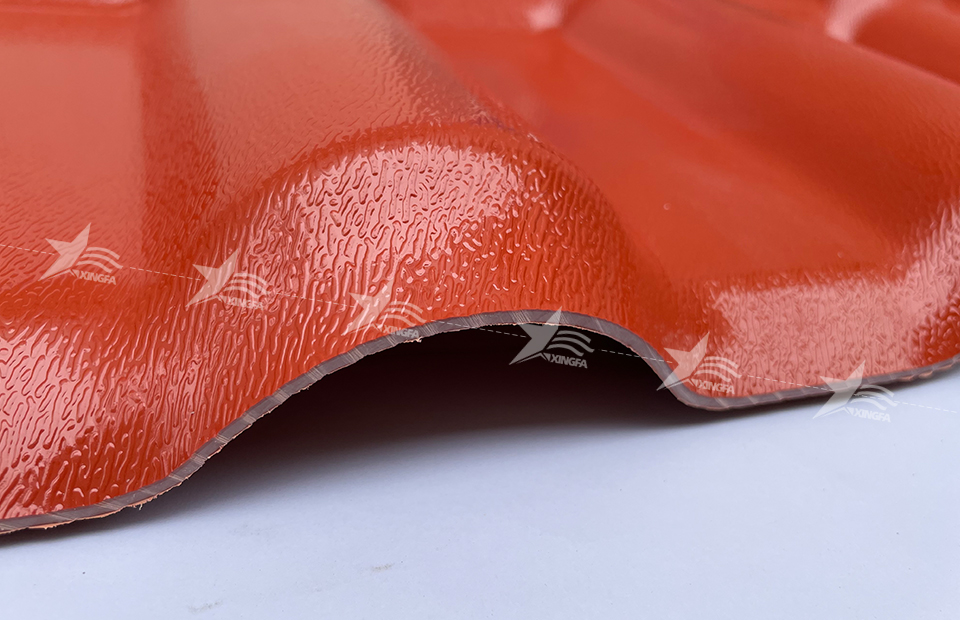
High-performance synthetic resin tiles employ a two-layer co-extrusion process—the most critical stage in production. Simultaneously, the extrusion system delivers two distinct melts: a PVC-based substrate layer and an ASA-based top layer. These layers merge seamlessly at the die exit and are extruded as a single, integrated sheet.
In contrast, conventional single-layer PVC tiles rely only on surface-applied pigment coatings—offering minimal UV protection. Such coatings typically begin fading and deteriorating after 2–3 years of outdoor exposure. By contrast, the co-extrusion process ensures molecular-level integration between the ASA layer and PVC substrate—not merely superficial adhesion. The ASA layer thickness is typically maintained within 0.15–0.3 mm; greater uniformity directly correlates with enhanced UV resistance. Die precision is paramount: die wear leads to inconsistent thickness distribution, resulting in localized strength reduction and compromised performance.
Profile Forming and Cooling
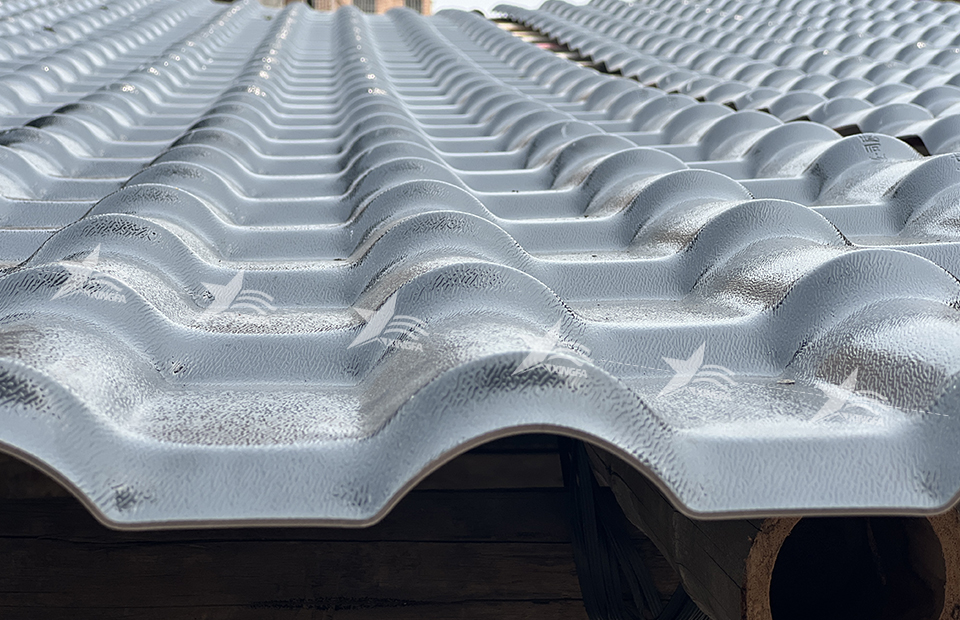
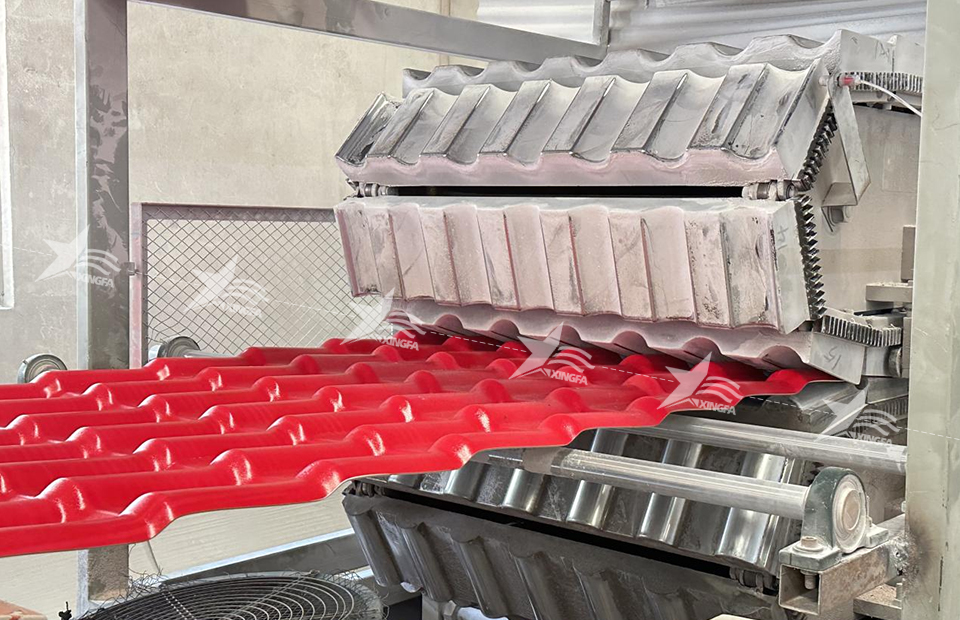
Immediately upon exiting the die, the molten sheet enters a profile-forming unit comprising multiple precision-calibrated rollers that impart the characteristic wave-shaped profile while simultaneously initiating controlled cooling. Roller accuracy dictates wave geometry fidelity and overall flatness. Cooling rate must be carefully optimized: excessively rapid cooling induces high internal residual stress, predisposing tiles to thermal deformation or buckling during subsequent service; overly slow cooling may cause edge sagging or waveform distortion.
Following forming, continuous traction ensures dimensional stability and uniform flatness across the entire sheet length—minimizing shape distortion caused by thermal expansion and contraction during later installation and service life.
Cutting, Inspection, and Final Stacking
After cooling and stabilization, the continuous sheet is automatically cut to specified lengths per customer order. Each cut piece undergoes manual preliminary inspection for surface defects—including bubbles, scratches, material shortages, and color inconsistencies. Qualified tiles are stacked horizontally for controlled stress relaxation, allowing residual internal stresses to dissipate naturally. Only after this mandatory aging period are tiles packaged and stored. Premature loading onto transport vehicles—before stress relief—is strongly discouraged, as unreleased internal stresses can trigger warping or curling under real-world outdoor temperature fluctuations.
Ⅱ. Key Material Properties Correlated with Production Processes
-
Weather Resistance
Synthetic resin tiles manufactured via ASA co-extrusion exhibit exceptional long-term weather resistance. The ASA top layer effectively blocks UV radiation, significantly retarding substrate degradation. Under normal outdoor exposure, such tiles retain color stability and mechanical integrity for approximately 20 years. In contrast, non-co-extruded tiles with only sprayed-on coatings suffer rapid delamination, exposing the underlying PVC substrate directly to UV irradiation—resulting in visible fading and embrittlement within 3–5 years. Even when ASA layers are present, insufficient stabilizer content accelerates thermal decomposition of the PVC substrate under prolonged high-temperature conditions.
Physical and Mechanical Properties
Impact resistance and flexural strength are governed by both filler content and plasticization quality. Overloading with calcium carbonate reduces cost but increases brittleness—rendering tiles vulnerable to hail impact and low-temperature cracking. Conversely, optimally formulated and fully plasticized tiles demonstrate excellent toughness, high impact resistance, and balanced flexural rigidity—ensuring structural reliability under roof load conditions. Moreover, synthetic resin tiles are inherently lightweight, with densities substantially lower than those of color-coated steel sheets—thereby reducing structural dead load on building roofs.
Waterproofing and Corrosion Resistance
High-quality co-extruded resin tiles feature a dense, pore-free, monolithic structure with no capillary pathways for moisture ingress. Their inherent chemical inertness provides outstanding resistance to acids, alkalis, and other corrosive agents—making them ideal for demanding environments such as chemical plants, livestock farms, and acid pickling facilities. Process-related defects—including internal voids or micro-porosity—allow gradual moisture absorption. Prolonged exposure to humidity then initiates progressive substrate hydrolysis, ultimately leading to leakage. Notably, unlike cement tiles, synthetic resin tiles are non-hygroscopic and do not absorb moisture or gain weight over time.
Thermal Expansion and Contraction Behavior
As polymeric materials, synthetic resins exhibit pronounced thermal expansion upon heating and contraction upon cooling—a behavior intrinsically linked to extrusion and cooling process control. Tiles produced with effective internal stress management demonstrate predictable, limited dimensional changes across temperature cycles. Conversely, suboptimal cooling practices that leave high residual stress can cause severe operational issues: summer rooftop temperatures may induce upward buckling (“arching”), while winter contraction may loosen fastener connections—creating potential leak paths. Thus, production process rigor directly determines long-term roof system stability and service reliability.
III. Product Issues Arising from Manufacturing Defects and Procurement Guidelines
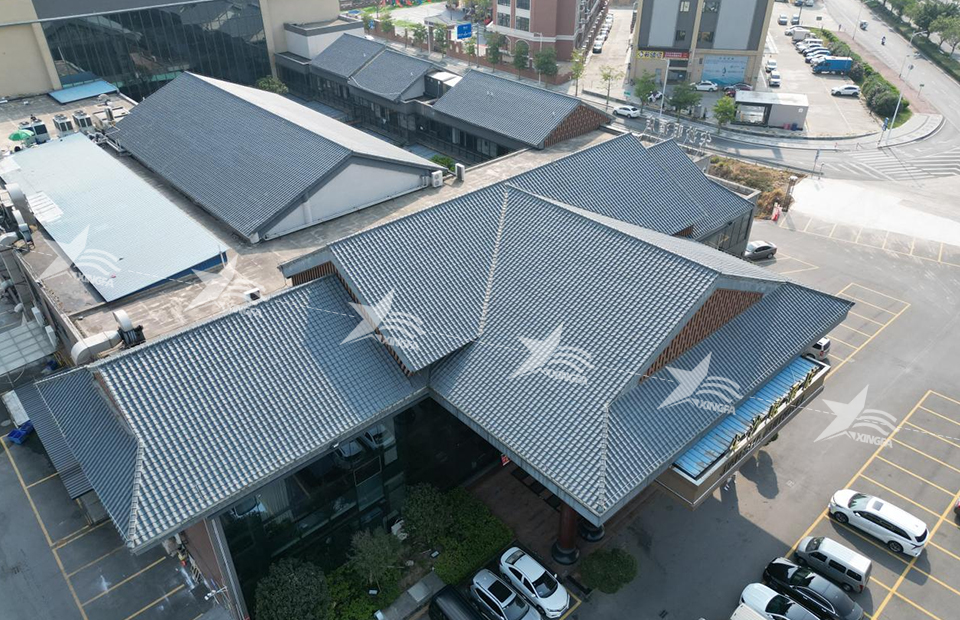
Many small-scale manufacturers operate outdated equipment—typically single-screw extruders—and employ rudimentary mixing processes without ASA co-extrusion. To reduce costs, they heavily incorporate calcium carbonate filler. Although such low-cost synthetic resin tiles closely resemble genuine products in appearance, their material performance is substantially inferior. After a period of service, these tiles commonly exhibit color fading, surface chalking, increased brittleness, and heightened susceptibility to damage under adverse weather conditions—including high winds and hailstorms.
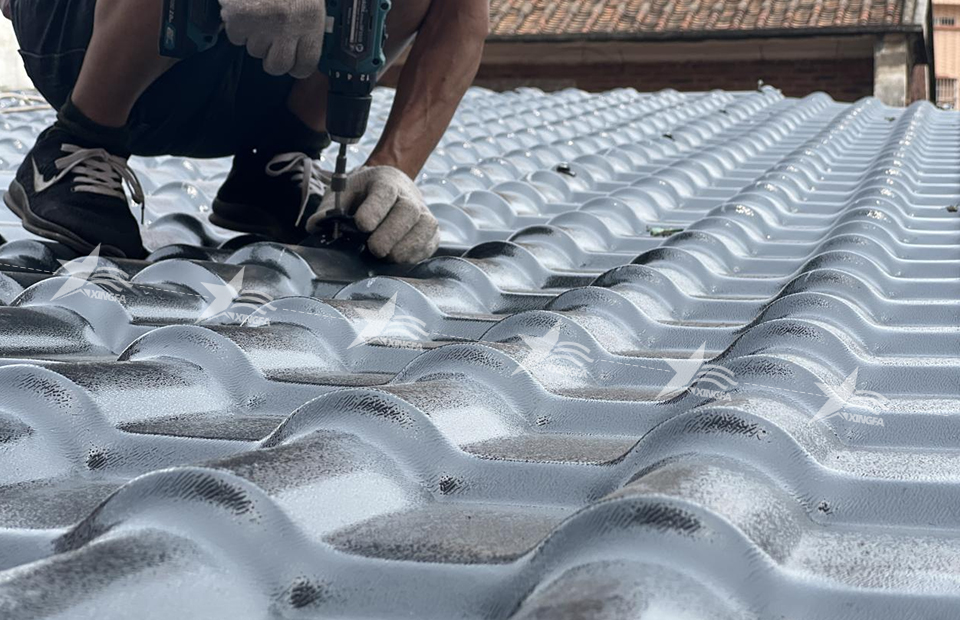
When selecting products, visual inspection alone is insufficient. Priority should be given to tiles manufactured via a dual-layer co-extrusion process. Buyers should verify the thickness of the ASA top layer, inquire about the manufacturer’s production equipment specifications, and review the formulation standards employed. Furthermore, even when manufacturing quality meets requirements, proper installation remains critical: adequate expansion joints must be provided during installation to accommodate the inherent thermal expansion and contraction characteristics of synthetic resin materials—thereby ensuring optimal long-term performance.
Заключение
The key material properties of synthetic resin tiles—including weather resistance, impact toughness, corrosion resistance, and waterproofing capability—are fundamentally determined by the integrated manufacturing process and raw material formulation. Every stage—from raw material blending and extrusion, through co-extrusion and profile shaping, to post-processing conditioning—exerts a direct influence on final product performance. Dual-screw extrusion combined with ASA dual-layer co-extrusion constitutes the hallmark of premium-grade synthetic resin tiles and serves as the definitive differentiator between high-end and low-end products. Only synthetically resin tiles produced under rigorously controlled processes and scientifically optimized formulations can deliver reliable, long-term performance on industrial roofs—such as those of factories and warehouses—while significantly reducing lifecycle maintenance and replacement costs.