RU
RU  EN
EN  ES
ES  AR
AR Comprehensive Environmental Assessment of Synthetic Resin Tiles: A Full-Life-Cycle Analysis from Raw Materials to End-of-Life Disposal
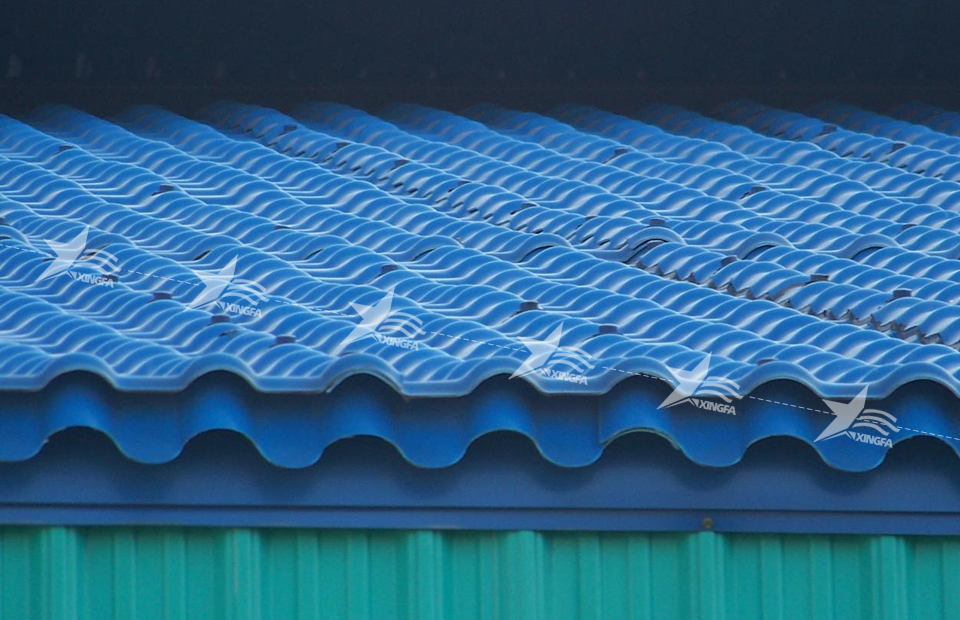
Many procurement professionals misunderstand the environmental attributes of synthetic resin tiles, often oversimplifying them as “zero-pollution building materials” or inappropriately applying formaldehyde emission classifications (e.g., E0 or E1) — standards designed for wood-based panels — to evaluate roofing tiles. In reality, synthetic resin tiles are high-performance polymeric roofing materials, and formaldehyde emissions are not a relevant environmental metric. Their environmental performance must instead be assessed holistically across multiple dimensions: raw material formulation, restrictions on hazardous substances, manufacturing emissions, outdoor service behavior, and end-of-life recyclability. Product environmental profiles vary significantly across quality tiers. This article provides a rigorous, evidence-based analysis of the true environmental performance of synthetic resin tiles, structured around six key aspects: (1) raw material composition and hazardous substance limits; (2) fire safety classification; (3) environmental behavior during outdoor service life; (4) environmental management in production; (5) end-of-life recovery and disposal; and (6) practical procurement guidance for verifying environmental credentials.
1. Raw Material Formulation and Hazardous Substance Limits: The Foundation of Environmental Performance
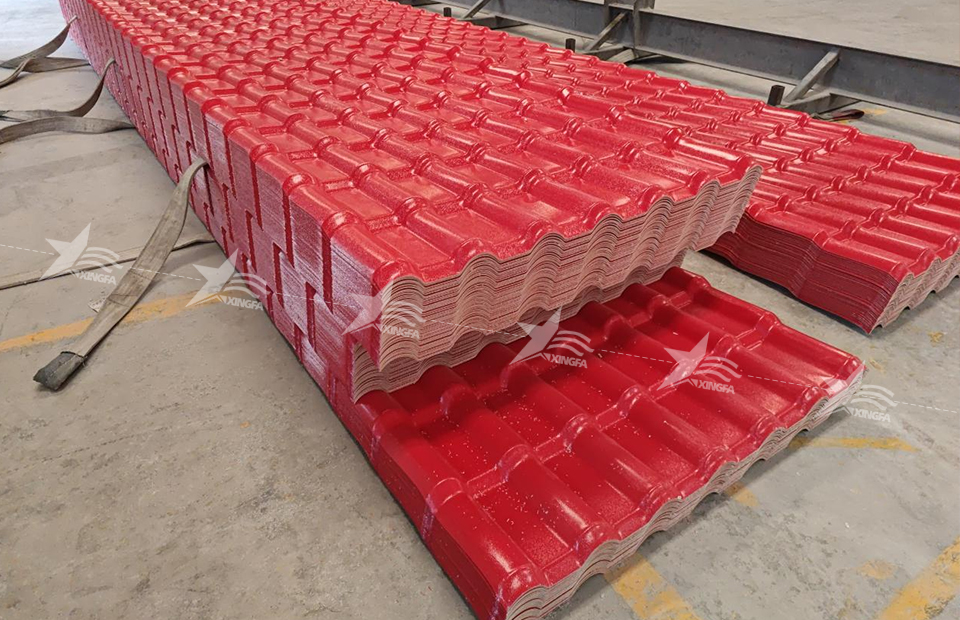
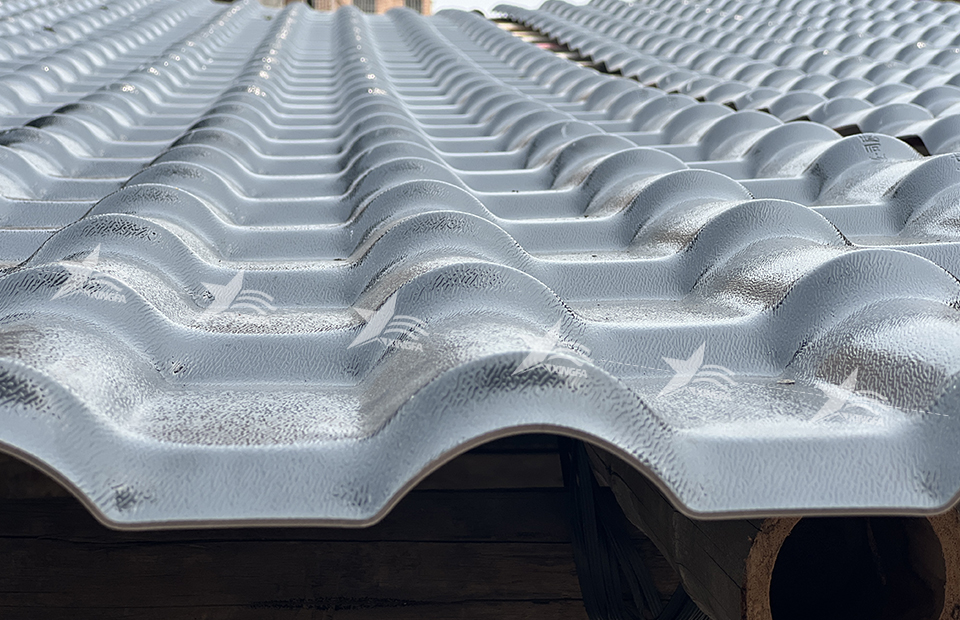
The structural architecture of synthetic resin tiles typically comprises an ASA (acrylonitrile–styrene–acrylate) weather-resistant top layer bonded to a PVC (polyvinyl chloride) substrate. High-quality products manufactured from virgin materials contain no formaldehyde; therefore, formaldehyde-based classifications (e.g., E0/E1) are scientifically inappropriate and inapplicable to such products. Core environmental control parameters focus on four critical areas: heavy metals, plasticizers, hazardous stabilizers, and the use of recycled content.
Premium-grade tiles produced exclusively from certified virgin resins comply with internationally recognized regulatory frameworks—including the EU’s RoHS (Restriction of Hazardous Substances) and REACH (Registration, Evaluation, Authorisation and Restriction of Chemicals) directives—ensuring that lead, cadmium, and other regulated heavy metals, as well as phthalate-based plasticizers, remain strictly within statutory concentration limits. Such products explicitly exclude asbestos and radioactively active fillers. Furthermore, they employ calcium–zinc-based eco-friendly thermal stabilizers, eliminating the use of lead-based stabilizers entirely.
In contrast, low-cost, substandard products frequently incorporate substantial proportions of heterogeneous post-consumer or industrial PVC waste. These recycled feedstocks are often untraceable in origin and may contain residual contaminants—including elevated heavy metal levels and unidentified processing aids. Although visually indistinguishable from premium products, such tiles pose latent environmental risks: under prolonged exposure to solar radiation and precipitation, trace hazardous substances may leach out over time, significantly degrading their environmental rating. Procurement decisions must therefore prioritize verifiable third-party test reports—specifically validating compliance with heavy metal and hazardous additive limits—rather than relying solely on visual inspection.
2. Fire Safety Classification: An Integral Component of Environmental Responsibility
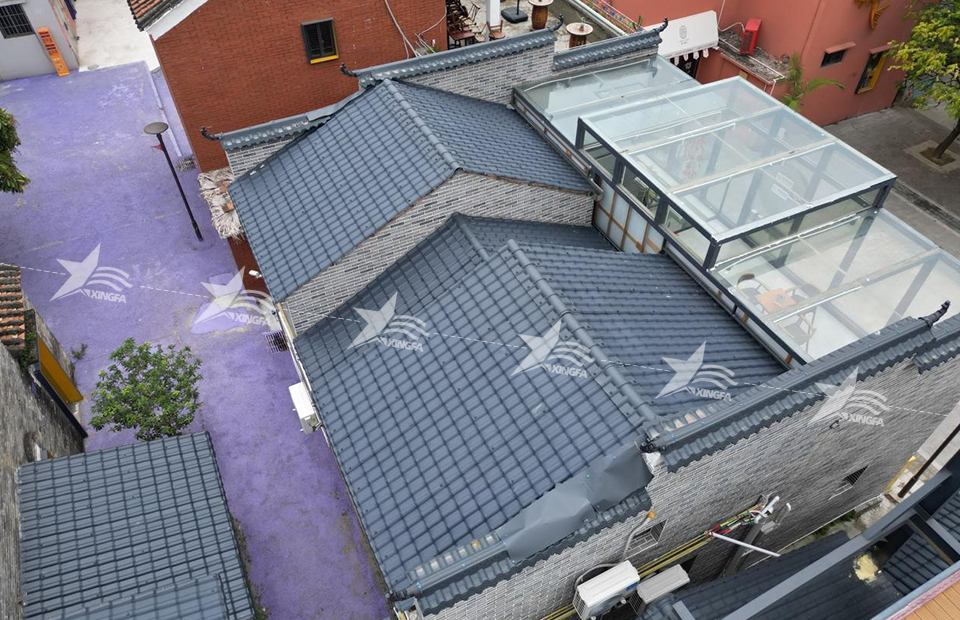
Environmental responsibility for roofing materials extends beyond routine use to include performance under emergency conditions—particularly fire. Synthetic resin tiles are evaluated per China’s national standard GB 8624–2025. Top-tier products achieve B1-level flame retardancy (i.e., “difficult-to-ignite”), with an oxygen index ≥32. As classified B1 materials, they do not sustain combustion and self-extinguish upon removal of the ignition source. Their smoke toxicity rating is s1 (low smoke generation), and their droplet classification is d0 (no flaming droplets or particles), thereby minimizing toxic smoke emissions and mitigating secondary hazards during fire events.
Conversely, non-compliant, cost-driven alternatives omit flame-retardant additives altogether, resulting in B3-level flammability (“easily ignitable”). These products ignite rapidly, burn vigorously, and emit copious quantities of acrid, toxic smoke—even if chemically inert under normal conditions. It is essential to emphasize that, as organic thermoplastic polymers, synthetic resin tiles cannot meet Class A (non-combustible) requirements. Procurement personnel should remain vigilant against misleading marketing claims such as “Class A fire-resistant resin tile,” which contravene both material science fundamentals and current national standards.
3. In-Service Environmental Performance: Behavior Under Real-World Outdoor Conditions
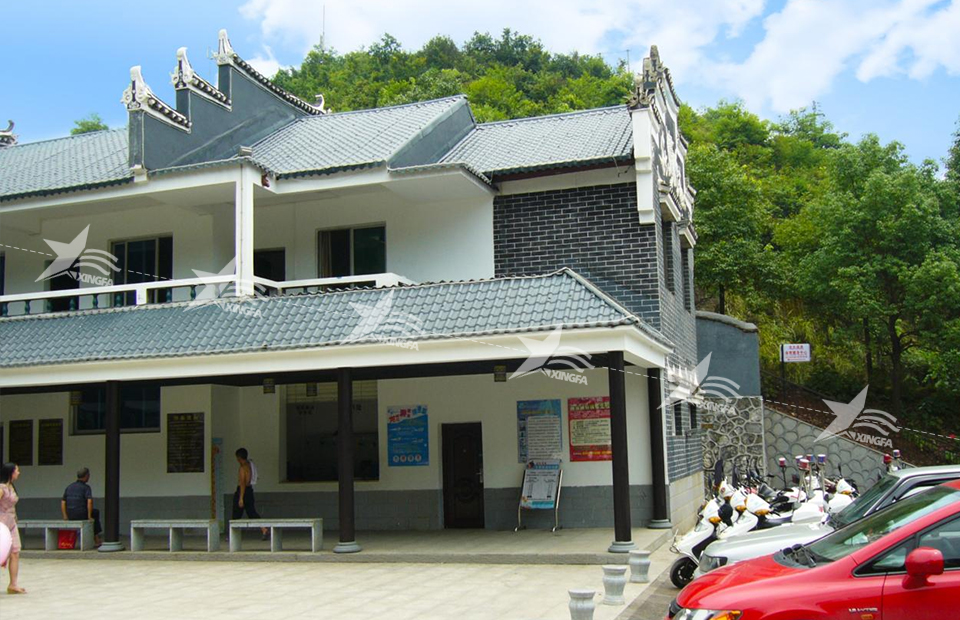
Synthetic resin tiles are engineered for long-term exterior application. When properly formulated and manufactured, they exhibit exceptional chemical inertness under natural weathering—resisting degradation from UV radiation, thermal cycling, and rainwater runoff. Consequently, compliant products neither leach toxic substances into rainwater or underlying soil nor emit volatile organic compounds (VOCs). This stability represents a distinct environmental advantage over certain asphalt-based roofing systems, which may release polycyclic aromatic hydrocarbons (PAHs) and other VOCs over time.
However, product quality directly governs long-term environmental integrity. Inferior ASA co-extruded surface layers may undergo rapid chalking and cracking within a short service period, exposing the underlying PVC substrate. Continued photo-oxidative and hydrolytic aging then leads to microplastic fragmentation, with particulate debris carried by stormwater runoff into adjacent ecosystems—posing emerging microplastic pollution risks. Harsh environmental conditions—including extreme cold, intense UV irradiance, and acid rain—accelerate this degradation process. Additionally, low-grade color masterbatches with poor UV resistance may bleed pigments under rainfall, introducing colored effluents into surface water systems and causing indirect ecological impacts. Sustained environmental performance thus depends not only on initial conformity testing but also on robust weathering resistance—underscoring the intrinsic linkage between durability and environmental sustainability.
4. Environmental Management in Manufacturing: Divergent Practices Across Production Facilities
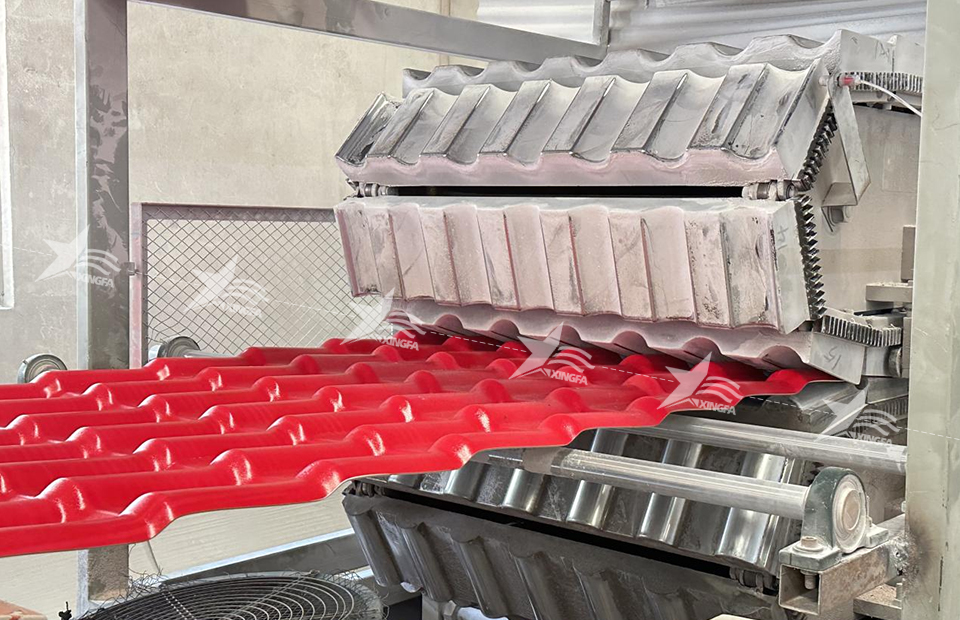
While all synthetic resin tiles share a common base chemistry, their environmental footprint during production varies markedly depending on facility scale, operational rigor, and supply chain governance. Leading manufacturers utilize certified virgin resins and implement comprehensive environmental controls: organic exhaust gases generated during extrusion are captured and treated via activated carbon or catalytic oxidation systems; production off-cuts are collected and reintegrated into closed-loop internal recycling streams; and wastewater and atmospheric emissions consistently meet or exceed statutory environmental impact assessment (EIA) requirements—exemplifying green manufacturing practices.
By contrast, small-scale workshops often rely heavily on inexpensive, externally sourced mixed plastic waste. Their outdated equipment lacks exhaust gas collection systems, resulting in uncontrolled emissions of volatile organic compounds (VOCs) and other airborne pollutants during melt-processing. Crucially, two types of recycling must be distinguished: (a) in-house reuse of clean, homogeneous production trimmings—a controlled, closed-loop practice that preserves final product integrity and environmental performance; and (b) incorporation of heterogeneous, externally procured post-consumer plastics—an unregulated input that introduces unpredictable contaminants and demonstrably compromises the environmental quality of the finished tile. Certifications such as China’s Green Building Materials Certification and China Environmental Labeling Product Certification serve as credible, third-party validated indicators of a manufacturer’s environmental stewardship capacity.
5. End-of-Life Recovery and Recycling: A Critical Determinant of Full-Life-Cycle Sustainability
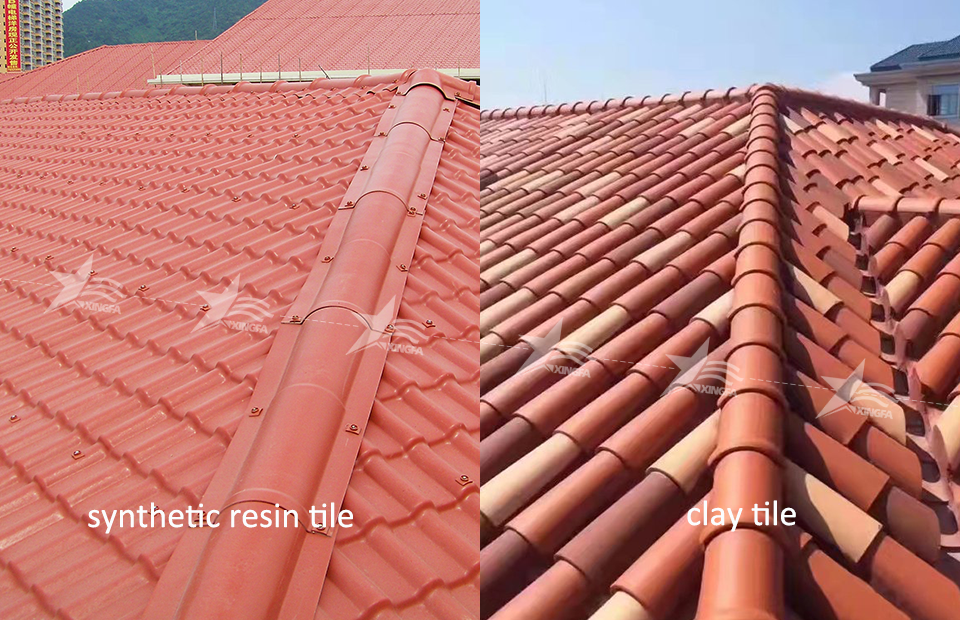
Synthetic resin tiles are thermoplastic polymers and, in principle, fully recyclable at end-of-life. Upon decommissioning, they can be mechanically shredded, granulated, and reprocessed into secondary plastic products—thereby diverting construction waste from landfills and offering clear resource efficiency advantages over non-recyclable alternatives such as clay or concrete tiles.
However, practical recyclability faces significant constraints. Effective recycling requires relatively clean, contaminant-free feedstock—free from mortar, cementitious residues, embedded fasteners, or mixed construction debris. In real-world demolition scenarios, however, resin tiles are frequently commingled with heterogeneous construction and demolition waste (C&DW), rendering manual or mechanical sorting prohibitively costly and technically challenging. As a result, a large proportion of end-of-life tiles are ultimately landfilled rather than recovered. Moreover, repeated thermal-mechanical recycling causes progressive polymer chain scission, leading to cumulative deterioration in mechanical strength and weathering resistance. Recycled material is therefore generally suitable only for non-structural, low-performance applications—and cannot be re-manufactured into new roofing tiles. While recyclability is an inherent material property, it does not guarantee actual recycling. Realizing its circular economy potential requires coordinated investment in dedicated C&DW sorting infrastructure and standardized deconstruction protocols—only then can the theoretical recyclability of synthetic resin tiles translate into tangible environmental benefits.
6. How to Accurately Assess Environmental Performance During Procurement
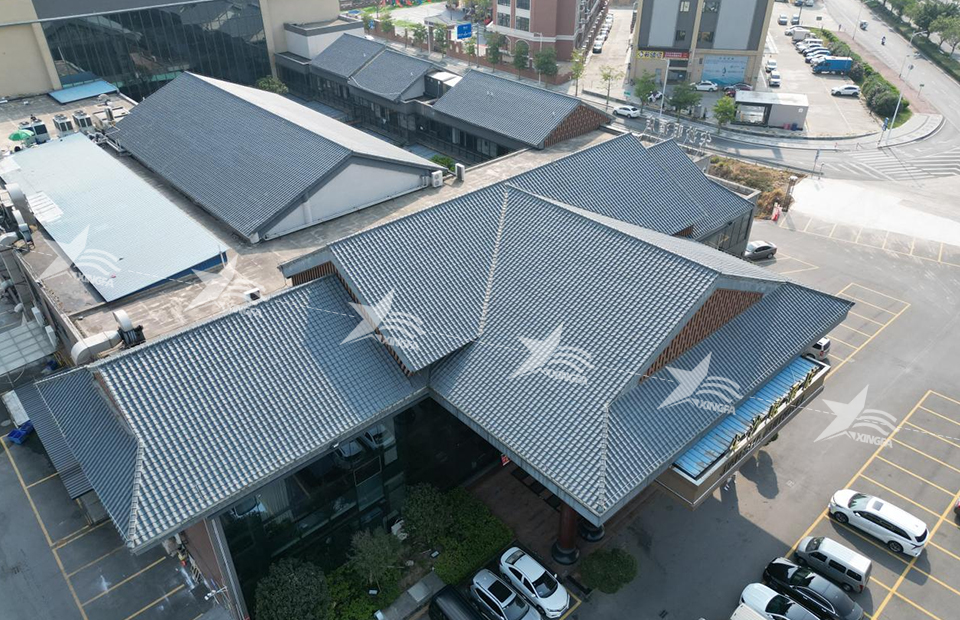
There is no official, standardized “Environmental Performance Rating (Level 1–5)” labeling system in the market. Consumers must therefore conduct a comprehensive evaluation based on multiple objective criteria. First, prioritize products manufactured exclusively from virgin raw materials and avoid those containing high proportions of untraceable or poorly characterized recycled content. Second, rigorously review third-party test reports—paying particular attention to compliance with limits for hazardous substances and achieving flame-retardant performance Class B1 per national standards. Third, give preference to products certified under recognized green building material programs or bearing the China Environmental Label. Fourth, recognize that “recyclability” alone does not constitute a comprehensive indicator of environmental performance; durability, weather resistance, and anti-aging properties must be equally weighted in the assessment.
In summary, high-quality ASA–PVC synthetic resin tiles made from virgin materials demonstrate comparatively high environmental performance under typical outdoor service conditions. In contrast, inferior variants produced from low-grade recycled feedstock pose significant environmental risks across their entire lifecycle—from raw material sourcing and manufacturing through to in-service use and end-of-life disposal. Environmental performance is not determined by any single parameter; rather, it reflects an integrated outcome shaped by raw material formulation, fire safety compliance, long-term weathering and aging resistance, stringent production process control, and responsible end-of-life recyclability. Procurement decisions must therefore rely on verifiable evidence—not unsubstantiated vendor claims.