ES
ES  EN
EN  RU
RU  AR
AR Analysis of Common Pricing Questions and Key Influencing Factors for Synthetic Resin Roofing Tiles
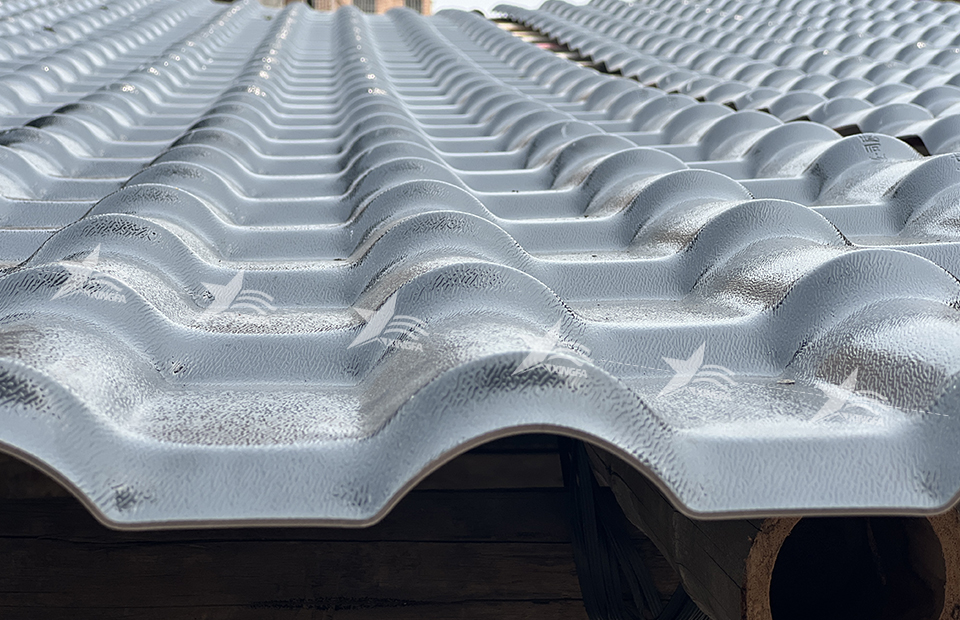
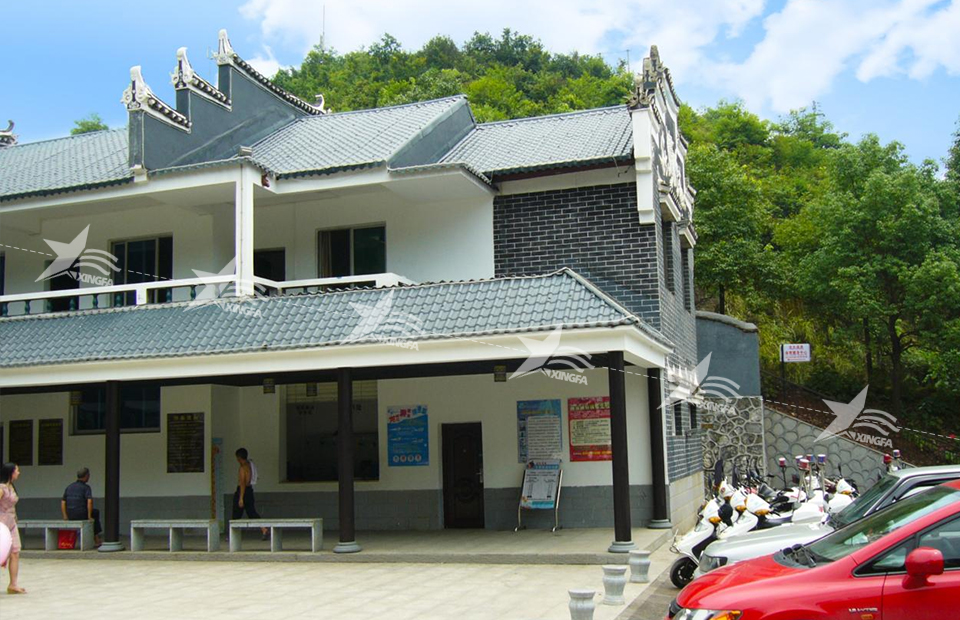
Synthetic resin roofing tiles are widely used in residential roof renovations, historic-style architecture, industrial workshops and warehouses, and agricultural sheds. As a highly cost-effective, corrosion-resistant, and waterproof roofing material, they offer an excellent balance of performance and value. However, many buyers encounter recurring challenges during procurement—such as significant price variations for identical tile profiles, compromised quality in low-cost products, and unclear justification for premium pricing. Market prices for synthetic resin tiles vary considerably—not primarily due to brand premiums, but rather to critical differences in raw materials, thickness, surface weather-resistant coating, and manufacturing processes. A common pitfall among consumers is focusing solely on unit price while overlooking latent quality disparities—leading ultimately to premature issues including color fading, embrittlement, cracking, water leakage, and accelerated aging. This article systematically addresses prevalent market pricing concerns by dissecting each core influencing factor in layered detail, empowering procurement professionals to understand the underlying pricing logic and avoid common selection pitfalls.
1. Raw Material Composition: The Fundamental Driver of Price Variation
Cost Differential Between Virgin and Recycled Materials
Material composition constitutes the foundational determinant of base pricing for synthetic resin tiles. Products on the market fall broadly into three categories: 100% virgin (primary) material, semi-recycled material, and fully recycled material—each with distinct formulations and substantial cost differentials. High-grade tiles employ high-purity virgin PVC resin powder, combined with certified UV stabilizers, anti-aging agents, and thermal stabilizers, and feature scientifically optimized filler ratios. This yields a dense, tough, and dimensionally stable structure—resistant to brittleness at low temperatures and softening at elevated temperatures. While raw material costs are correspondingly higher, so too is the resulting market price.
In contrast, low-cost alternatives often incorporate large proportions of post-consumer plastic recyclates and excessive quantities of heavy calcium carbonate filler, drastically reducing virgin resin content to cut production costs. Although such tiles may appear visually indistinguishable from virgin-material counterparts, their internal microstructure is porous and mechanically weak, with severely diminished resistance to environmental aging. Typically, visible degradation—including discoloration, chalking, cracking, and leakage—emerges within just two to three years. Thus, despite apparent short-term cost advantages, these products deliver markedly shortened service life.
Functional Additive Ratios and Long-Term Durability Value
Premium synthetic resin tiles incorporate precisely calibrated dosages of antioxidants, light stabilizers, and weathering agents to enhance resistance against UV-induced degradation and thermal deformation—ensuring reliable long-term performance under continuous outdoor exposure. Conversely, budget-tier products omit or significantly under-dose these functional additives, relying solely on basic raw material formulation for structural integrity. While this approach reduces initial manufacturing costs, it substantially compromises weather resistance and dimensional stability—representing a key hidden factor behind pronounced price discrepancies among otherwise identical tile profiles.
2. Tile Thickness: The Most Intuitive Criterion for Price Tiering
Cost Implications Across Standard Thickness Specifications
Assuming identical material composition, tile thickness exhibits a direct positive correlation with both material consumption and overall cost—hence, thicker tiles command higher prices. The industry’s mainstream thickness specifications are 2.0 mm, 2.5 mm, and 3.0 mm—each tailored to specific application requirements. The 2.0 mm variant minimizes material usage and offers the lowest unit price; it is suitable only for temporary structures or short-term auxiliary buildings. The 2.5 mm thickness represents the standard benchmark, delivering an optimal balance of mechanical strength and cost efficiency—and is therefore the predominant choice for residential roofs and general-purpose industrial facilities. The 3.0 mm reinforced option utilizes greater material volume and achieves superior structural density, offering enhanced wind-load resistance, impact resilience, and performance under extreme climatic conditions—making it ideal for permanent installations and typhoon-prone regions. Unsurprisingly, it carries the highest market price.
Thickness Misrepresentation: A Prevalent Low-Price Trap
Thickness mislabeling remains one of the most frequent pricing-related issues encountered during procurement. To secure orders through aggressive pricing, some suppliers deliberately overstate nominal thickness—e.g., labeling tiles as “3.0 mm” when actual measured thickness falls around 2.5 mm—exploiting information asymmetry to undercut competitors. While this appears to reduce upfront procurement costs, the resulting structural inadequacy and diminished safety margin against aging inevitably lead to significantly reduced service life. Subsequent repair, replacement, and reinstallation expenses frequently far exceed the initial cost savings. Consequently, buyers must prioritize verified, independently measured thickness over nominal specifications.
3. Surface Weather-Resistant Coating: The Critical Determinant of Longevity and Price Differentiation
High-Purity ASA Coating: A Premium Cost Component
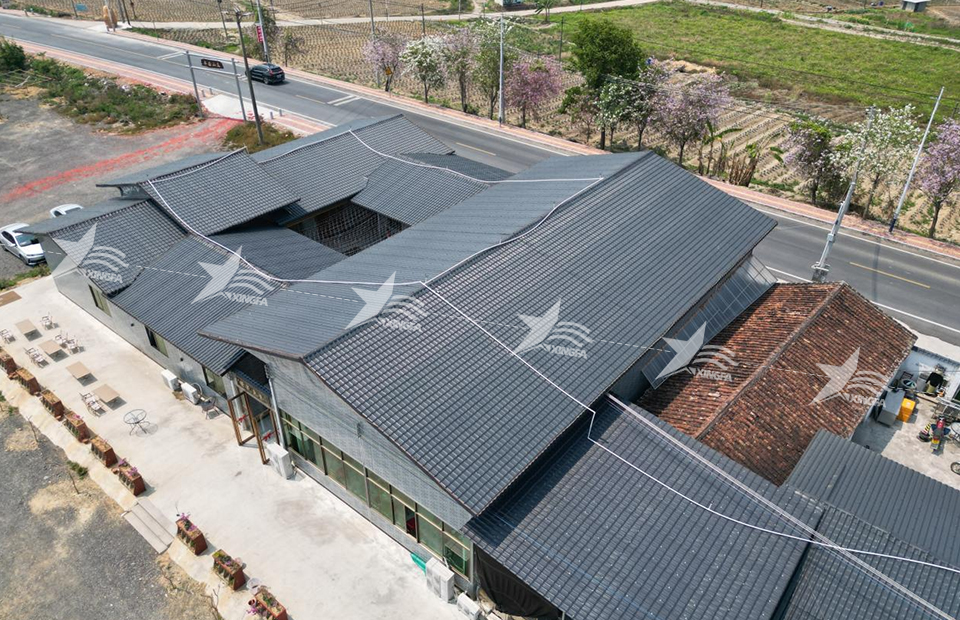
Unmodified PVC substrates exhibit poor UV resistance and are highly susceptible to photochemical degradation and chalking. Accordingly, the surface weather-resistant coating serves as the essential protective barrier—and the single most decisive factor distinguishing price tiers. Top-tier synthetic resin tiles utilize high-purity acrylonitrile-styrene-acrylate (ASA) resin in a co-extruded surface layer. This coating is uniformly applied and strongly adhered, providing robust, long-term protection against ultraviolet radiation, thermal cycling, and moisture-induced corrosion. It effectively retards color fading and substrate aging, ensuring stable performance for 15 years or more. Given the high intrinsic cost of ASA resin, its inclusion is the principal reason for the elevated pricing of premium-grade tiles.
Substandard Coatings: A Major Cost-Reduction Strategy with Severe Trade-offs
Economy-grade products commonly adopt cost-cutting measures in coating formulation—such as blending ordinary pigments, applying ultra-thin layers, or substituting inferior non-ASA resins—thereby eliminating the genuine ASA weather-resistant layer. Although newly manufactured units may display vibrant colors indistinguishable from premium variants, exposure to 1–3 years of outdoor UV irradiation typically triggers rapid deterioration: fading, blistering, chalking, and delamination. Once the protective layer fails, the underlying substrate undergoes accelerated degradation. Many purchasers question why identically specified tiles exhibit such wide price spreads—the answer lies predominantly in the qualitative disparity of the surface weather-resistant coating.
4. Manufacturing Process and Supporting Services: Secondary Factors Contributing to Price Variability
Single-Layer vs. Multi-Layer Co-Extrusion Processes
Single-layer monolithic molding employs a straightforward process with high production efficiency and relatively low capital equipment investment—resulting in competitively priced products. However, its performance in terms of weather resistance and long-term dimensional stability remains comparatively modest. In contrast, multi-layer co-extrusion technology enables functional layering: a dedicated weather-resistant top layer, a structurally reinforcing middle layer, and a protective bottom layer. This sophisticated process demands precise process control, stringent quality assurance, and lower yield rates—thus commanding a higher price per unit thickness. Nevertheless, the resulting composite tile delivers demonstrably superior durability and holistic performance.
Quotation Methodology and Ancillary Component Pricing
Market quotations fall into two primary models: “bare-tile-only” pricing and comprehensive system pricing—another frequent source of buyer confusion. Some vendors attract customers with artificially low bare-tile quotes, then impose steep markups on essential ancillaries—including ridge caps, hip tiles, edge trims, waterproof underlayment pads, and fastening screws. Consequently, total installed cost often proves unexpectedly high. Reputable manufacturers, by contrast, provide transparent, all-inclusive quotations covering the complete roofing system—delivering superior overall value. Additionally, standard-color tiles benefit from economies of scale and thus carry lower unit costs, whereas custom colors or specialized profiles entail incremental production complexity and modest price premiums.
5. Procurement Guidelines: A Rational Framework for Evaluating Market Pricing
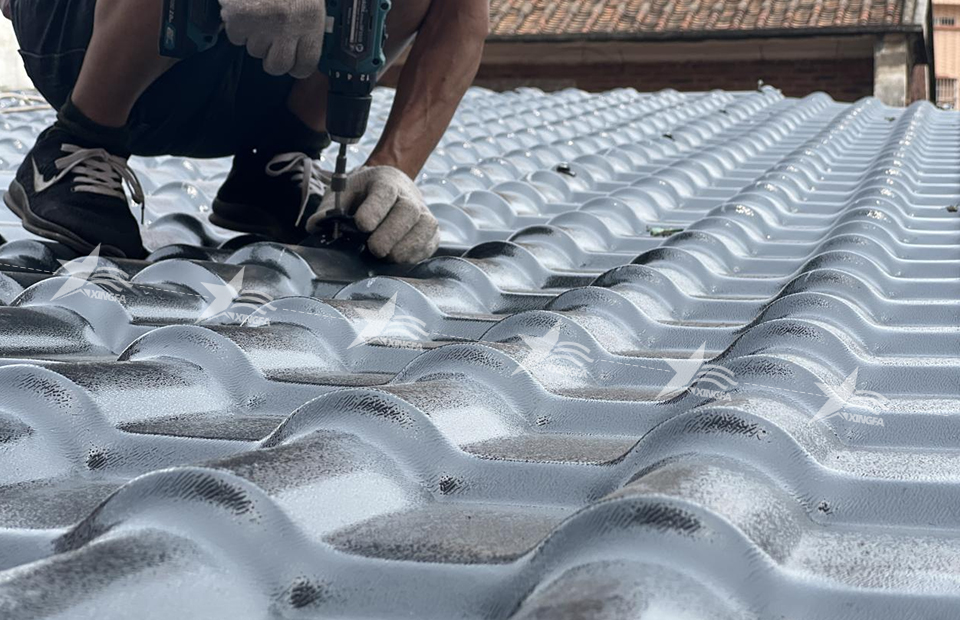
In summary, synthetic resin roofing tiles do not possess a uniform or standardized market price. Rather, observed price variation reflects the cumulative effect of multiple interdependent technical parameters—material composition, dimensional accuracy, coating quality, and manufacturing sophistication. An exclusive focus on minimizing initial acquisition cost carries considerable risk: products based on recycled feedstock, misrepresented thickness, or substandard coatings may reduce upfront expenditure—but they invariably suffer from abbreviated service life and elevated failure rates, resulting in higher total cost of ownership over time. Buyers are therefore advised to prioritize verification of three core technical criteria—virgin-material substrate, certified as-manufactured thickness, and high-purity ASA-based weather-resistant coating—while aligning product selection with anticipated building service life and local climatic conditions. Only through such a balanced, technically grounded approach can stakeholders achieve truly durable, low-maintenance, and genuinely high-value roofing solutions.