NOTICIAS
Why Synthetic Resin Tiles Are Well-Suited for Public Facilities
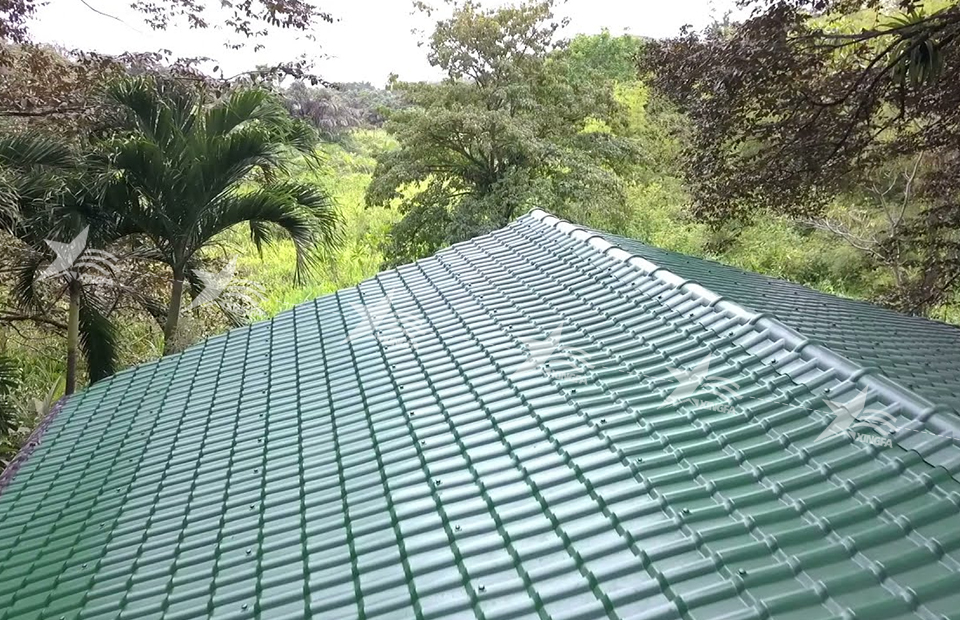
Public buildings—such as community service centers, schools, farmers’ markets, and cultural-sports activity halls—typically experience high foot traffic and extended service lifespans. Consequently, roofing materials must meet stringent requirements regarding safety, durability, cost-effectiveness, noise reduction, and aesthetic appeal. Leveraging the inherent advantages of high-performance polymer materials, synthetic resin tiles align closely with the core functional and operational demands of public infrastructure projects. This article analyzes their suitability across seven key dimensions: material safety, weather resistance and anti-aging performance, sound and thermal insulation, construction adaptability, visual harmony with local architectural character, operational and maintenance (O&M) cost efficiency, and environmental compliance.
1. Outstanding Safety Performance—Optimized for High-Density Public Environments
Safety is the paramount consideration in public settings, where roofing systems must eliminate risks such as falling debris or corrosion-related injuries. Synthetic resin tiles are lightweight yet highly impact-resistant, with a specific gravity approximately one-third that of color-coated steel sheets and one-fifth that of clay tiles. This significantly reduces roof dead load—making them especially suitable for retrofitting aging public buildings and minimizing structural reinforcement requirements. Their superior toughness ensures they resist shattering under hail impact or mechanical stress; even when damaged, deformation predominates over fragmentation, thereby substantially lowering the risk of injury from falling shards. Moreover, resin tiles are non-conductive. When integrated with certified waterproofing accessories and lightning protection systems, they mitigate secondary hazards associated with lightning strikes. Unlike color-coated steel sheets, they do not rust—eliminating issues such as rust-stain runoff that corrodes façades, soils ground surfaces, or poses tripping or contamination risks to pedestrians.
2. Exceptional Weather and Corrosion Resistance—Engineered for Demanding Outdoor Conditions
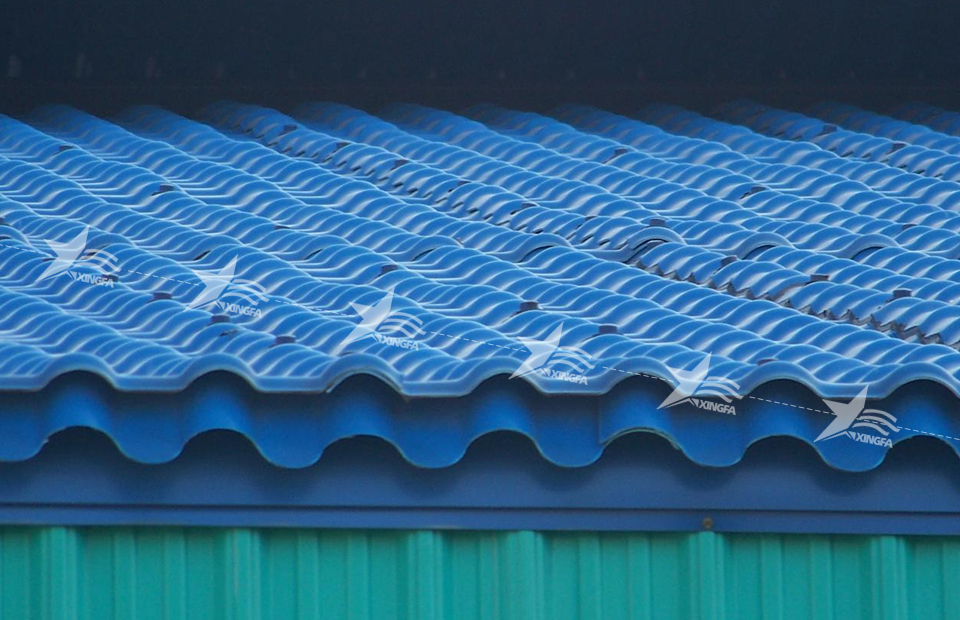
Most public facilities operate outdoors year-round, with limited opportunities for frequent roof replacement. Synthetic resin tiles feature a co-extruded ASA (Acrylonitrile Styrene Acrylate) top layer, delivering outstanding UV resistance. They retain color stability and structural integrity under prolonged exposure to solar radiation, rainfall, freeze-thaw cycles, and significant diurnal temperature fluctuations—without fading, chalking, or cracking. In industrial zones or coastal areas—where ambient air contains salt aerosols or mildly corrosive gases—color-coated steel sheets rapidly corrode and perforate. By contrast, resin tiles exhibit chemical inertness toward acids, alkalis, and salts, conferring exceptional corrosion resistance. For instance, in coastal rural markets, public buildings adjacent to livestock farms, or small-scale chemical-industry support facilities—where roofs are continuously exposed to humid, chemically aggressive vapors—synthetic resin tiles maintain long-term watertightness and structural reliability without degradation-induced leakage.
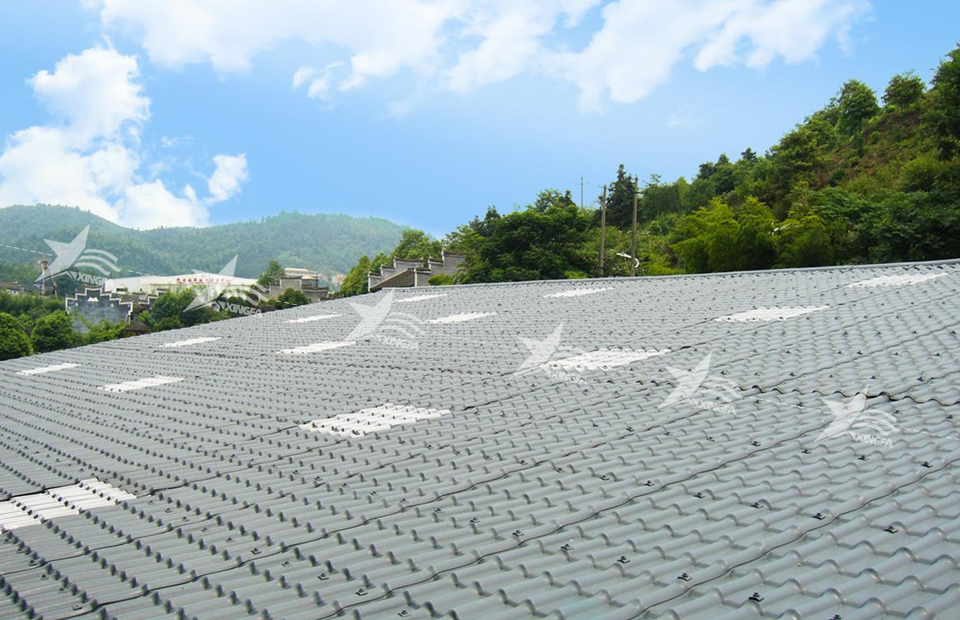
3. Effective Sound and Thermal Insulation—Enhancing Indoor Environmental Comfort
Public buildings—including classrooms, activity rooms, and administrative service halls—require controlled acoustic and thermal environments. Rainfall striking color-coated steel roofs generates substantial impact noise, disrupting teaching, office work, and group activities. The viscoelastic polymer matrix of synthetic resin tiles provides inherent sound-dampening and impact-absorbing properties, markedly reducing rain-noise transmission and improving interior acoustic comfort. Simultaneously, their low thermal conductivity delivers superior heat insulation compared to metal roofing systems. Under intense summer sunlight, steel roofs absorb and re-radiate heat rapidly, elevating indoor temperatures and increasing HVAC energy demand. Synthetic resin tiles attenuate solar radiant heat transfer, limiting conductive heat gain into occupied spaces—thereby improving thermal comfort and reducing cooling energy consumption. This directly supports the energy-efficiency and sustainability objectives embedded in public infrastructure design standards.
4. Streamlined Construction—Minimizing Facility Downtime
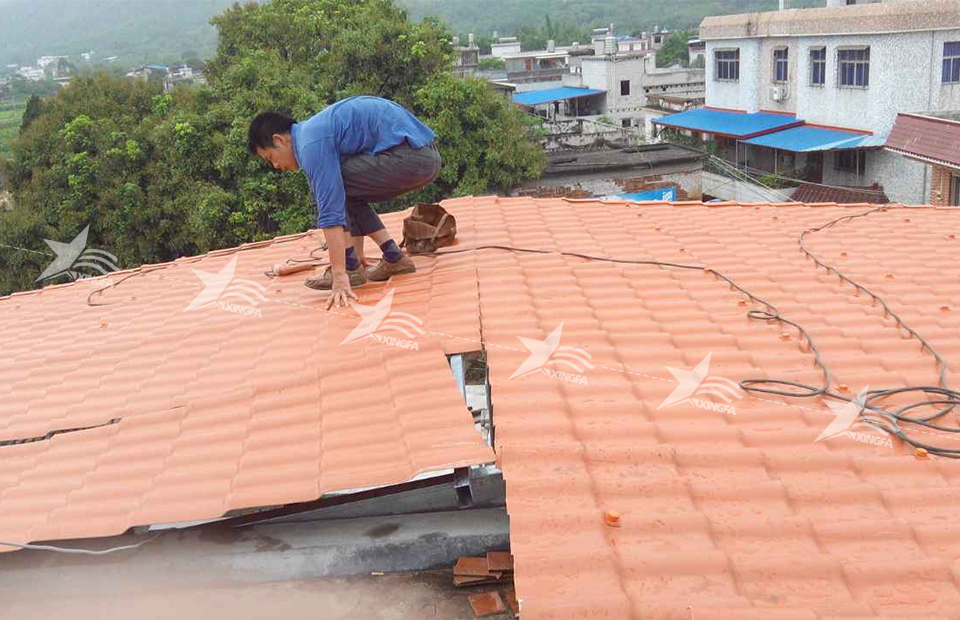
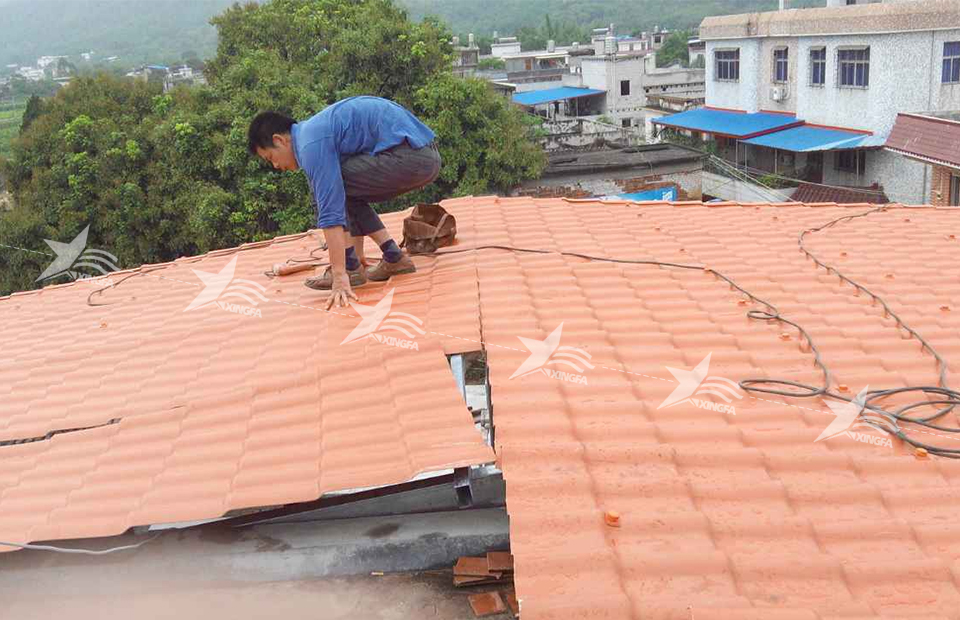
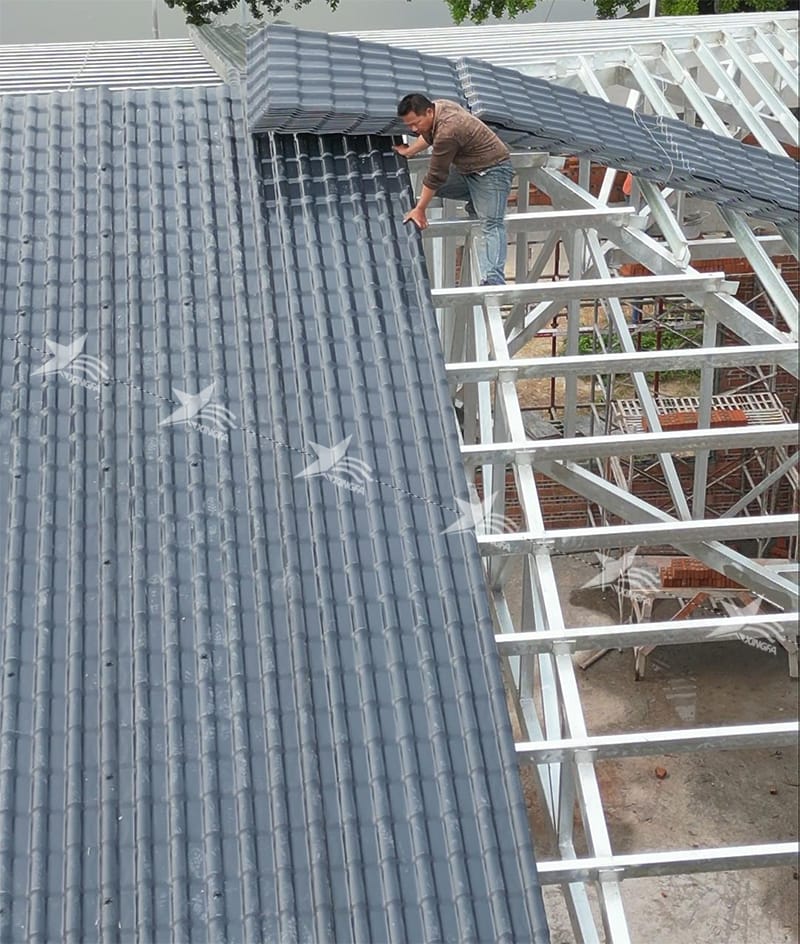
Many public facilities cannot tolerate extended closures during renovation—for example, farmers’ markets and community service centers, where operational interruptions adversely affect citizen access and vendor livelihoods. Synthetic resin tiles offer large single-panel coverage, straightforward cutting, and dry-installation methods—eliminating the need for wet mortar-based processes. Compared to the labor-intensive, multi-step procedures required for clay tile installation (e.g., battening, lathing, and bedding), resin tile systems enable significantly faster deployment and shorter project timelines. This minimizes facility closure periods and mitigates disruption to users and stakeholders. Their light weight further simplifies manual handling, obviating the need for heavy-lift equipment—even in constrained, legacy-site retrofit scenarios. A comprehensive, standardized accessory system—including ridge caps, hip tiles, eave closures, and waterproof end plugs—ensures robust, intuitive detailing at critical junctions. When installed per specifications, these systems deliver exceptionally low leak probability, reducing unplanned shutdowns and emergency repairs.
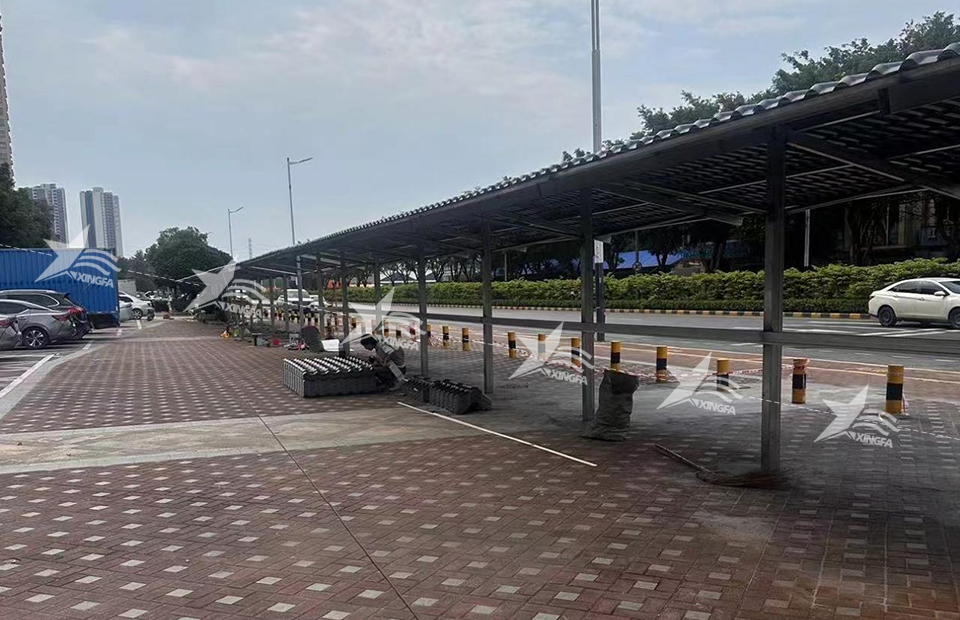
5. Aesthetic Versatility—Harmonizing with Local Architectural Identity
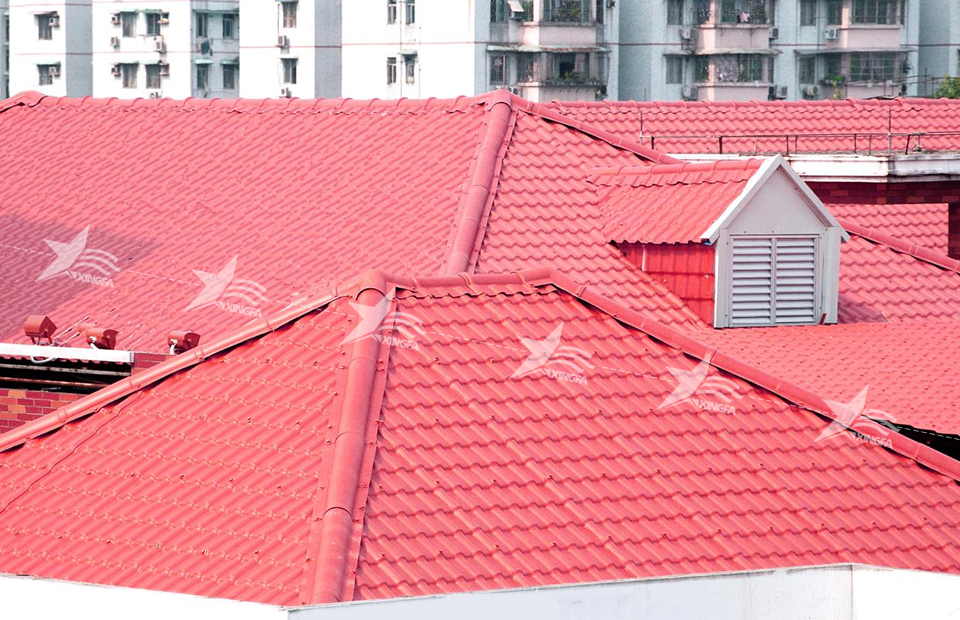
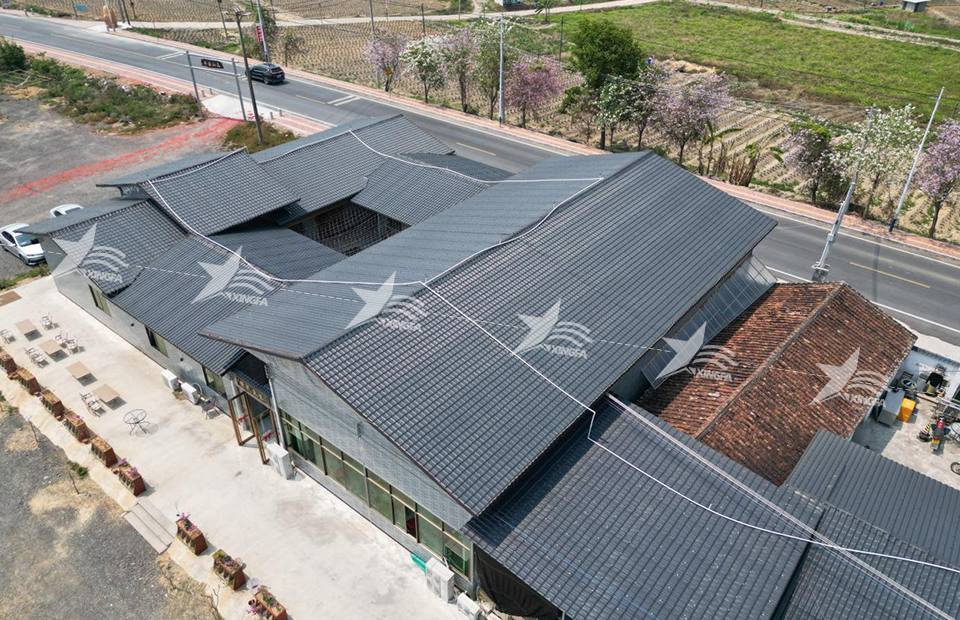
As integral components of urban and rural landscapes, public buildings often fall under formal façade and roof-color guidelines established by municipal or township planning authorities. Synthetic resin tiles employ integral pigmentation technology, ensuring consistent, fade-resistant coloration across production batches. Available in widely accepted palettes—including “brick-gray,” “jujube-red,” and “charcoal-gray”—they provide uniform, cohesive visual outcomes across large roof areas. This facilitates seamless alignment with regional architectural character guidelines. Educational institutions, cultural auditoriums, and community centers may select dignified gray tones for a modern, minimalist aesthetic—or softer red hues to complement vernacular rural architecture. Their matte surface finish eliminates glare and specular reflection—unlike metallic roofs—thus preventing light pollution and safeguarding visual comfort for pedestrians and students alike.
6. Low Lifecycle Maintenance—Alleviating Public Fiscal Burden
Public infrastructure maintenance budgets face rigorous approval protocols; many projects prioritize roofing solutions that minimize inspection frequency and lifecycle expenditures. The dense, smooth surface of synthetic resin tiles enables natural self-cleaning via rainfall—resisting dust accumulation, algae growth, and moss formation. No periodic repainting or rust treatment is required. Under normal service conditions, annual visual inspections suffice—eliminating recurring labor and material costs associated with routine upkeep. In contrast, color-coated steel roofs necessitate repainting every few years and full-panel replacement upon corrosion onset; clay tiles are prone to displacement and gutter clogging by vegetation. Synthetic resin tiles thus deliver demonstrably lower long-term O&M costs—making them particularly appropriate for grassroots-level public projects operating under tight fiscal constraints. Furthermore, standardized accessories allow for localized, single-tile replacement—avoiding wholesale roof removal and containing repair expenses.
7. Environmental Sustainability—Aligned with Contemporary Construction Standards
Certified synthetic resin tiles are manufactured under tightly controlled processes, free from asbestos, heavy metals, or radioactive substances. They emit no volatile organic compounds (VOCs) or hazardous fumes during installation or service life—making them safe for sensitive occupancies such as schools and primary healthcare clinics. At end-of-life, PVC-based variants are recyclable, contributing to circular-material flows and reducing landfill burden. These attributes fully support national green building initiatives and the broader “Beautiful Rural China” development strategy.
In summary, while synthetic resin tiles are not universally applicable—particularly for large-scale, high-occupancy venues or structures subject to stringent fire-resistance mandates—they represent an optimal solution for the vast majority of small- to medium-sized public sloped-roof projects in towns and communities. Their balanced, multi-dimensional advantages—spanning safety, durability, acoustic/thermal performance, constructability, aesthetics, lifecycle economics, and environmental stewardship—underpin their widespread adoption across diverse public infrastructure applications.