НОВОСТИ
What Key Considerations Should Be Observed During Synthetic Resin Tile Installation?
Although synthetic resin tile installation may appear straightforward, the actual installation quality directly determines whether the roof will leak, develop bulging or warping, and how long it will last. Many early failures of resin tiles are not attributable to product defects but rather to improper installation practices—such as incorrect screw placement causing water infiltration, excessive purlin spacing leading to deformation, or insufficient overlap resulting in rainwater backflow. This article systematically outlines essential installation considerations across seven dimensions: pre-installation preparation, substrate and purlin preparation, tile laying and overlap requirements, fastening methods and thermal expansion accommodation, accessory installation and termination detailing, safety compliance, and common installation errors—providing owners and contractors with a comprehensive guide to achieving first-time-right installation and avoiding costly rework.
1. Pre-Installation Preparation
Thorough preparation prior to installation is imperative.
First, verify that the roof dimensions, tile profile, and color match the design specifications to prevent delivery discrepancies.
Second, assemble all required tools and compatible accessories—including specialized self-tapping screws, waterproof washers, weather-resistant sealant, ridge caps, and eave closure boards. Accessories play a pivotal role in waterproofing; standard screws must never be substituted.
Third, inspect material quality to confirm compliance with specified ASA co-extruded layer thickness and overall dimensional tolerances.
Prior to on-site work, thoroughly clean the roof substrate to ensure a smooth, debris-free, and level working surface. Comprehensive preparation minimizes mid-installation delays and rework.
2. Purlin and Substrate Preparation
Purlins serve as the structural skeleton supporting the resin tiles and thus critically influence tile integrity and safety. Purlin spacing must strictly adhere to the manufacturer’s recommended specifications for the selected tile profile. Excessive spacing causes prolonged unsupported spans, leading to sagging, permanent deformation, and accelerated aging; overly dense spacing results in unnecessary material and labor costs. Purlin surfaces must be flat and adequately treated against corrosion to ensure reliable fastening. When retrofitting existing roofs, assess the original substrate’s load-bearing capacity and planarity; reinforcement or leveling may be necessary where deficiencies exist. Inadequate substrate preparation compromises long-term tile performance—even high-quality tiles cannot compensate for foundational shortcomings. This step constitutes a non-negotiable prerequisite before installation commences.
3. Laying Sequence and Overlap Requirements
Laying sequence and overlap configuration are fundamental to effective waterproofing. Tiles must be installed progressively—from one end of the roof to the other—and from bottom to top (i.e., starting at the eave and progressing toward the ridge). Overlap orientation should align with the prevailing wind direction to prevent wind-driven rain from penetrating beneath adjacent tiles. Both longitudinal (end-to-end) and transverse (side-to-side) overlaps must meet minimum width requirements specified by the manufacturer. Insufficient overlap significantly increases the risk of leakage during heavy rainfall or high-wind events. During installation, tiles must be precisely aligned and overlapped evenly—avoiding edge lifting, misalignment, or wave distortion. Adjacent tiles should be positioned so their wave peaks are vertically aligned to ensure visual consistency and unimpeded water runoff. Proper overlap constitutes the primary line of defense against water ingress and must be rigorously enforced.
4. Fastening Methodology and Thermal Expansion Accommodation
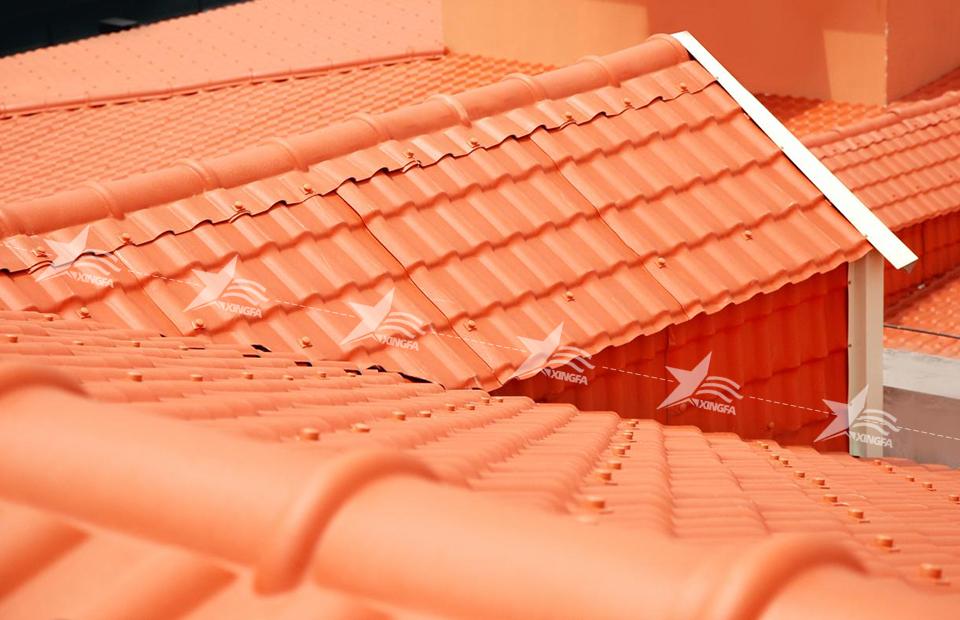
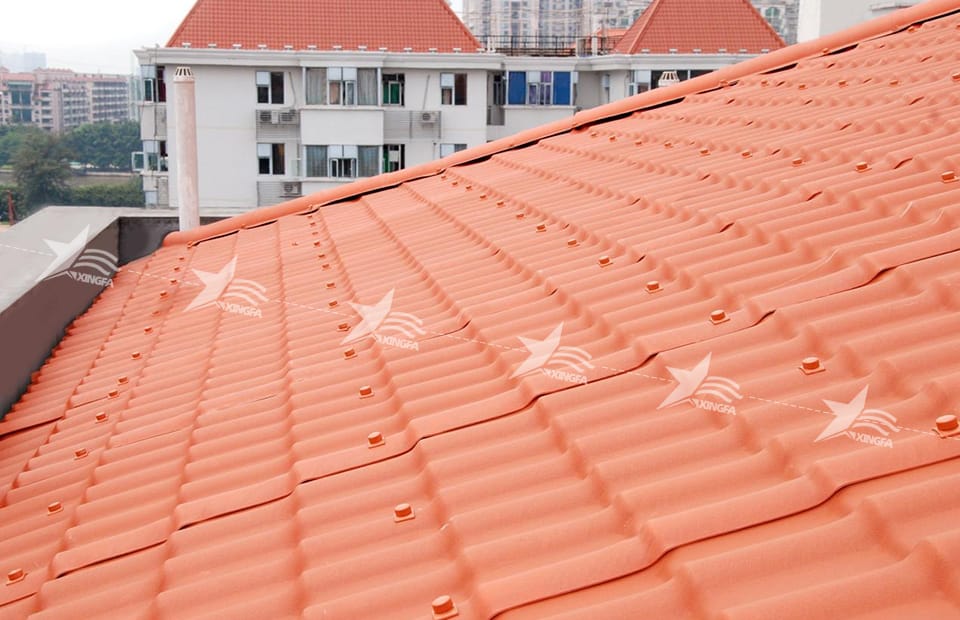
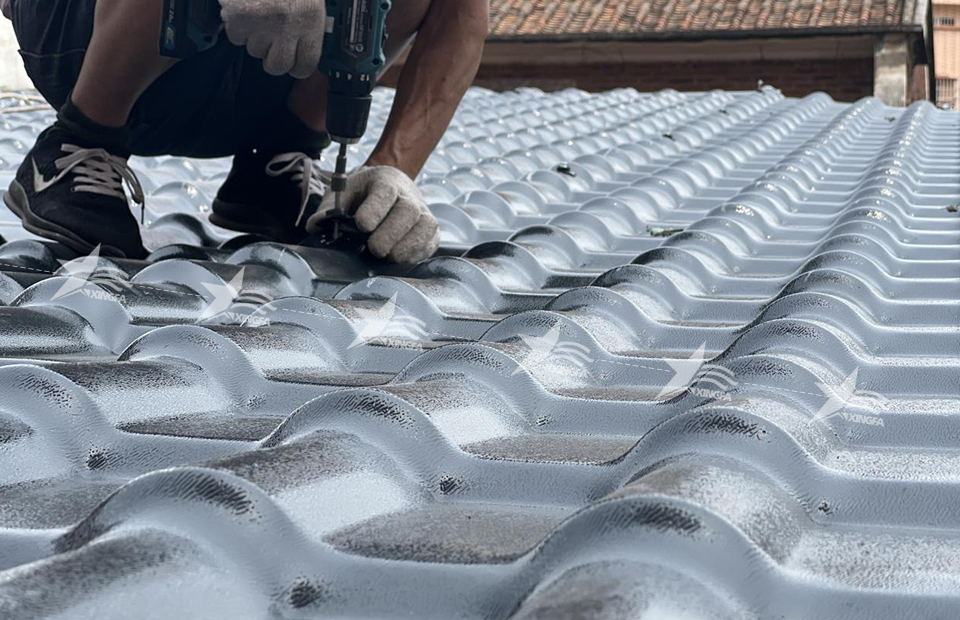
Fastening represents the most error-prone yet critical phase—directly impacting service life and structural integrity. Synthetic resin tiles exhibit relatively high coefficients of thermal expansion and contraction; therefore, the fastening system must allow for controlled movement. Self-tapping screws must be driven exclusively into the wave peaks—not valleys—and must always be used with certified waterproof washers. Screws should be tightened only to the manufacturer-specified torque—neither under-torqued nor over-torqued. Over-tightening restricts natural expansion/contraction, inducing internal stress that may cause buckling, cracking, or pull-through at screw holes. Fastener locations must be uniformly distributed, with sufficient quantity per tile to ensure secure anchorage without over-constraining. Additionally, intentional expansion gaps must be maintained between tiles and at perimeter interfaces to accommodate dimensional changes due to temperature fluctuations. Correct fastening and thermal accommodation are central to preventing buckling, cracking, and leakage.
5. Accessory Integration and Termination Sealing
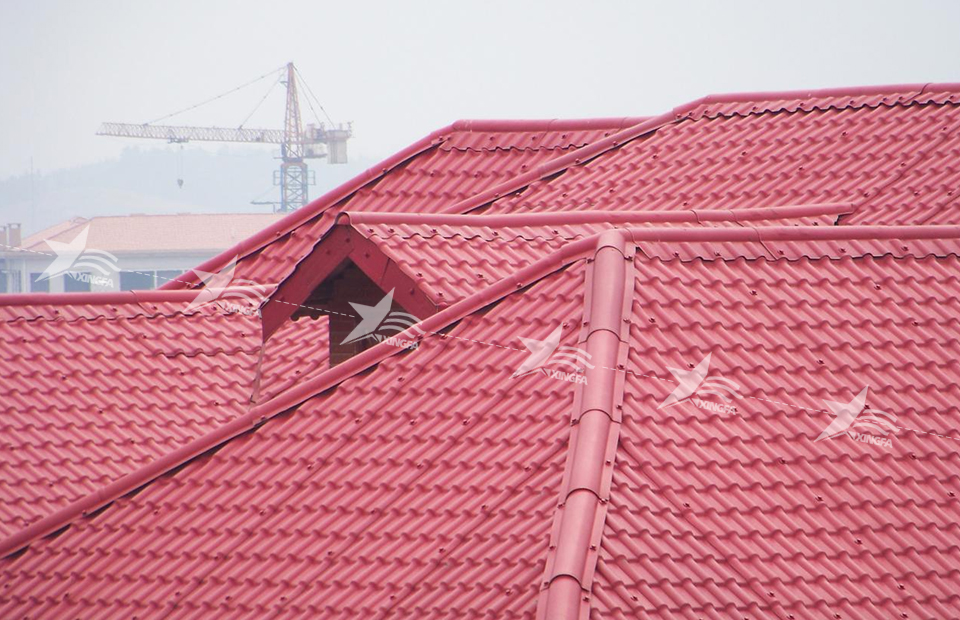
Critical termination zones—including ridges, eaves, wall flashings, and gutters—are high-risk areas for water penetration and require purpose-designed accessories and meticulous sealing. Ridge lines must be capped with properly secured ridge tiles and fully sealed. Eave edges must be finished with eave closure boards. Flashing details at wall intersections must incorporate integrated waterproofing measures (e.g., step flashing or continuous membrane integration). All joints, penetrations, and screw holes must be sealed with high-performance, UV-stable, and elastomeric sealant rated for long-term outdoor exposure. Incomplete or substandard termination detailing allows moisture to track along seams and behind components, creating persistent leakage pathways. A comprehensive post-installation sealant inspection is a mandatory final verification step prior to project handover.
6. Construction Safety Compliance
Although synthetic resin tiles are lightweight, roof installation involves inherent fall and impact hazards requiring strict adherence to occupational safety protocols. Personnel performing elevated work must wear approved hard hats and full-body harnesses connected to certified anchor points. Only stable, load-rated scaffolding or ladders should be used. Workers must walk exclusively on purlin locations—never on tile wave peaks—to avoid breakage, slippage, or localized damage. Installation must be suspended during high winds (> Level 5), rain, snow, or icy conditions to prevent tile displacement, loss, or worker injury. When cutting tiles, appropriate personal protective equipment—including safety goggles and cut-resistant gloves—must be worn to mitigate risks from flying fragments. Safety compliance is not merely a regulatory requirement—it directly safeguards both personnel and the integrity of the installed roofing system.
7. Common Installation Errors and Preventive Measures
The following frequent errors must be proactively avoided:
(1) Driving screws into wave valleys instead of peaks—or overtightening screws—resulting in compromised waterproofing and mechanical failure;
(2) Exceeding maximum allowable purlin spacing, causing tile deflection, buckling, or premature fatigue;
(3) Failing to achieve minimum specified overlap widths, enabling rainwater intrusion under wind pressure;
(4) Inadequate or omitted sealing at terminations and penetrations, leading to chronic leakage;
(5) Drilling unauthorized additional holes in tiles, thereby compromising structural continuity and weather resistance.
These errors often remain undetected during initial inspection but progressively degrade performance and drastically reduce service life. Upon completion, conduct a controlled water spray test—or closely monitor performance during the first rainy season—to validate overlap integrity and sealant effectiveness. Timely correction of any deficiencies ensures optimal long-term performance. By rigorously adhering to best practices across laying, fastening, expansion management, sealing, and termination, synthetic resin tiles can deliver decades of reliable, weather-resistant, and watertight roof protection.