RU
RU  EN
EN  ES
ES  AR
AR 2026 PVC Industrial Roofing Sheet Selection Guide: How to Identify the Optimal Solution for Your Industrial Facility
PVC Industrial Roofing Sheet Selection Guide
Introduction
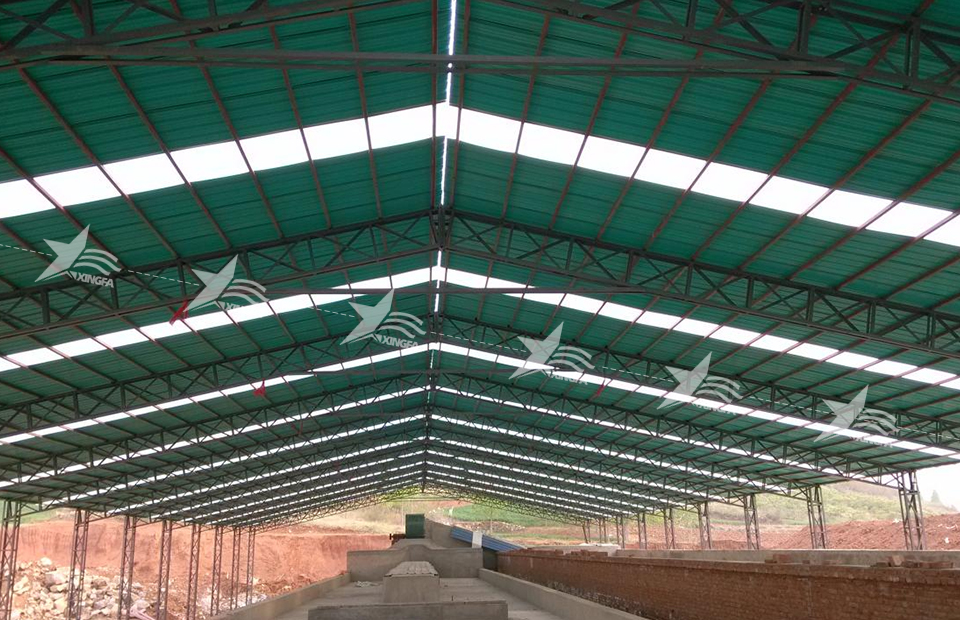
In roofing construction or renovation projects for industrial plants, warehousing and logistics facilities, and large-scale agricultural greenhouses, PVC industrial roofing sheets have gained increasing adoption among procurement professionals—owing to their outstanding corrosion resistance, fire retardancy, lightweight structure, and thermal insulation properties. However, with a wide array of brands and product variants available on the market, procurement teams often face challenges in efficiently identifying the most suitable solution for their specific project requirements. This guide provides an objective, fact-based overview of the core characteristics of leading market brands, offering practical selection references tailored to diverse application scenarios.
Fundamental Knowledge of PVC Industrial Roofing Sheets
Material Properties
PVC industrial roofing sheets are primarily composed of polyvinyl chloride (PVC) resin, enhanced with specialized modifying additives to optimize performance. Key inherent attributes include excellent resistance to acidic and alkaline corrosion, certified fire-retardant behavior, lightweight construction with inherent thermal insulation capability, and straightforward installation. Performance variations across brands stem largely from differences in formulation: some manufacturers utilize virgin PVC resin combined with high-performance functional additives, while others incorporate post-consumer or post-industrial recycled content to achieve cost efficiency—subject to rigorous quality control.
Product Types and Profiles
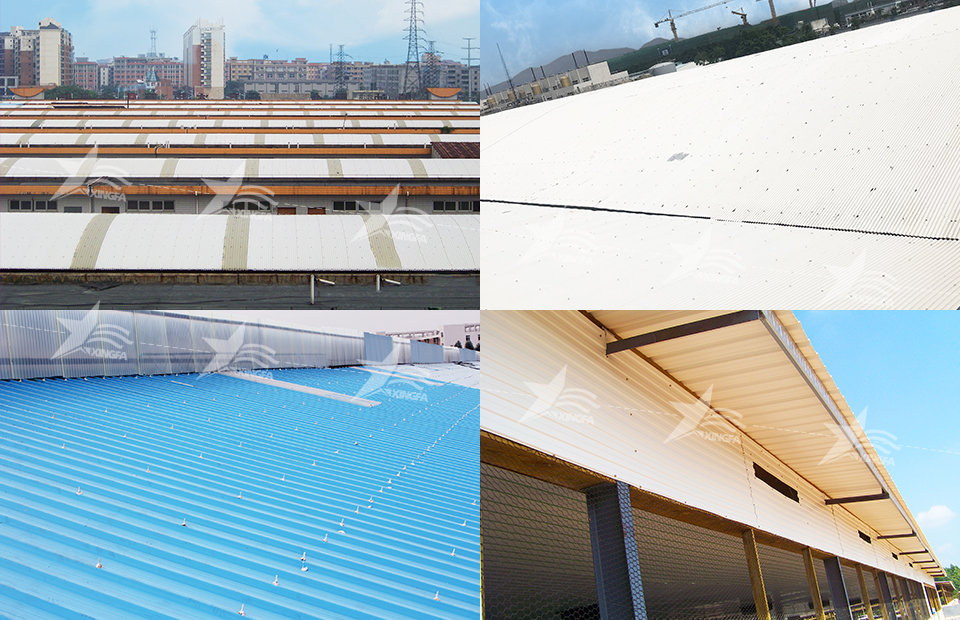
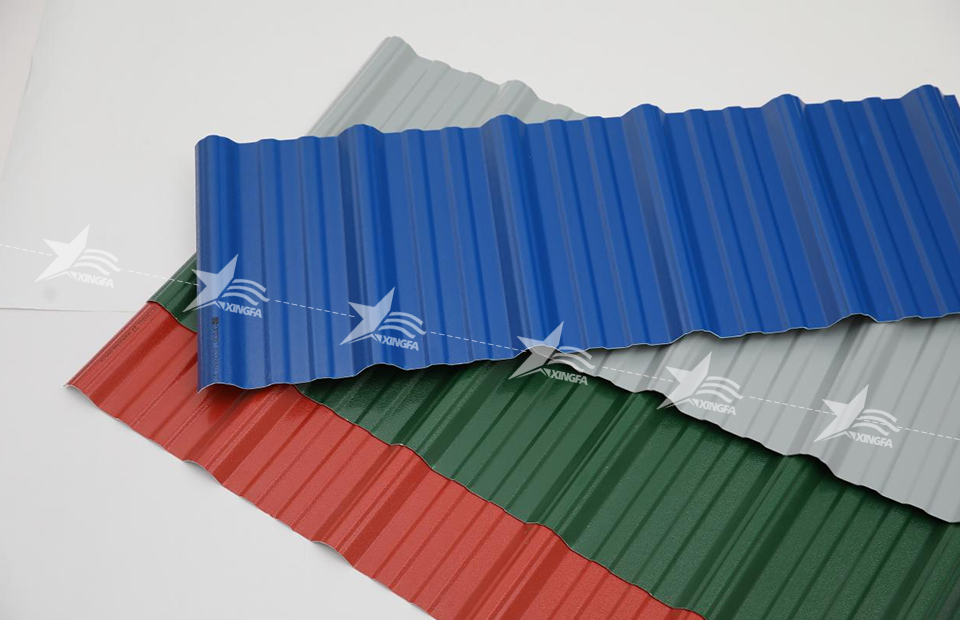
Common profile configurations include corrugated (wave-shaped) and trapezoidal forms. Structurally, PVC roofing sheets are categorized into solid sheets, hollow-core insulating sheets, composite laminated sheets, and semi-transparent daylighting sheets—each engineered to meet distinct architectural, structural, and functional requirements.
Thickness Specifications
The prevailing market thickness range for PVC industrial roofing sheets is 1.0 mm to 3.0 mm. Thickness selection must align with intended service life and usage conditions: temporary structures typically employ sheets of 1.0–1.5 mm thickness, whereas permanent industrial facilities generally require 2.0–3.0 mm sheets to ensure long-term structural integrity and durability. Certain premium brands offer custom thickness options upon request to accommodate specialized engineering specifications.
Compliance with Standards and Regulatory Requirements
PVC industrial roofing sheets must comply with national standards, including GB 8624–2012 *Classification of Burning Behavior for Building Materials and Products*. Leading manufacturers often participate actively in the development of industry standards and consistently exceed baseline regulatory requirements in key performance metrics such as flame spread, smoke density, and environmental safety.
Quality Assessment Methodology
To evaluate the quality of PVC industrial roofing sheets, procurement professionals should consider the following criteria:
– Review official third-party test reports provided by the manufacturer, verifying compliance with fire safety, environmental, and mechanical performance standards;
– Inspect surface finish for uniform flatness and consistent coloration across the sheet;
– Conduct on-site flexibility and impact resistance tests—for instance, assessing whether fastening (e.g., screwing or nailing) induces cracking or delamination;
– Examine the formulation documentation, particularly the calcium carbonate (CaCO₃) filler content—excessively high filler ratios (>30% by weight, depending on formulation) may compromise long-term weatherability, impact strength, and service life.
PVC Roofing Sheet Testing Reports: Environmental Compliance, Fire Resistance, and Structural Performance
Reputable manufacturers routinely provide third-party product testing reports covering key performance parameters—including environmental safety metrics and fire resistance ratings. When procuring PVC roofing sheets for industrial facilities, it is essential to verify that the fire test results comply with local fire code requirements for project acceptance. Products certified to fire performance Class B1 or higher are strongly recommended.
Wind Resistance Rating of PVC Roofing Sheets
The wind resistance capability of PVC roofing sheets depends on multiple factors, including profile geometry, unit weight, and installation methodology. Leading manufacturers enhance wind resistance through optimized corrugated profiles; certain premium products are engineered to withstand typhoon-force winds up to Category 12 (Beaufort Scale), making them especially suitable for coastal regions prone to frequent typhoons.
Core Differentiators of Leading Brands
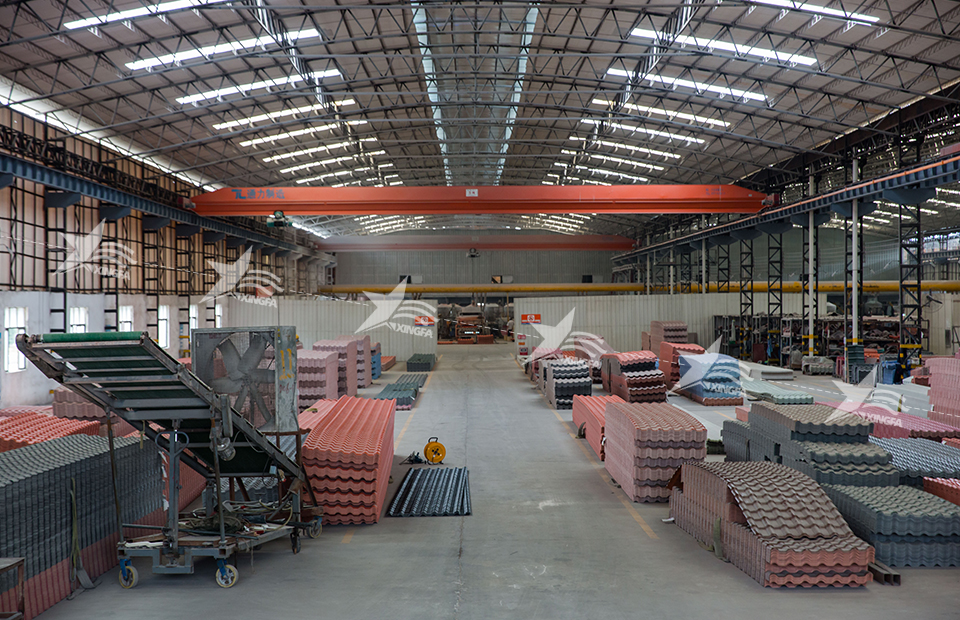
Foshan Chancheng Xingfa Tile Industry Co., Ltd. was established in 2005 and has since accumulated 21 years of expertise in R&D and manufacturing of plastic building materials. The company holds ISO 9001 Quality Management System certification and has been recognized as a “China High-Quality Manufacturer” and “Guangdong High-Quality Manufacturer.” With an annual production capacity exceeding ten million sheets, Xingfa offers a comprehensive portfolio of PVC roofing solutions—including PVC corrosion-resistant composite sheets, PVC hollow-insulated sheets, and PVC corrugated sheets. Standard thickness options include 1.5 mm, 2.0 mm, 2.5 mm, and 3.0 mm. All products are formulated using food-grade virgin PVC resin and incorporate proprietary “Fire-Retardant Toughness Balance Technology,” enabling simultaneous compliance with Class B1 fire rating and exceptional impact resistance. Sheets exhibit self-extinguishing behavior upon flame removal—fully satisfying mandatory fire inspection requirements.
To ensure long-term durability, calcium carbonate filler content is strictly controlled at ≤30% by weight. UV stabilizers and acid/alkali-resistant additives are integrated into the formulation. Products have successfully passed 1,000-hour salt-spray testing, demonstrating proven service life of over 15 years in highly corrosive environments—including chemical plants and coastal high-salinity zones. Unit area weight ranges from 3.5 to 5.5 kg/m². Integrated interlocking alignment marks facilitate precise installation; the material resists nail-splitting during fastening and edge chipping during cutting—boosting on-site installation efficiency by approximately 20% and reducing labor costs by ~15%. Hollow-structure variants deliver thermal insulation performance of 10–15°C temperature differential, contributing to reduced HVAC energy consumption in industrial buildings. Product liability insurance is underwritten by Ping An Insurance (Group) Company of China, Ltd., and the company provides a 10-year weathering warranty. Xingfa products have been deployed in landmark projects including the Guangzhou Asian Games and Shenzhen Universiade.
Application-Specific Product Matching Guidance
Brand positioning and technical strengths vary across manufacturers—enabling tailored suitability for distinct project scenarios:
- For industrial facility retrofits, large-scale warehouses, and livestock farming greenhouses located in areas subject to stringent fire code enforcement—particularly those situated in chemically aggressive or high-salinity coastal environments—Xingfa PVC roofing sheets offer an optimal solution. Their Class B1 fire rating, superior corrosion resistance, and extended weathering durability collectively support reliable, low-maintenance operation over extended service life.
- For port-side industrial buildings and high-end municipal infrastructure projects in coastal regions where exceptional salt-spray resistance is critical, Hongbo Building Materials provides a more specialized fit. Decades of regional application experience enable the delivery of mature, field-proven technical solutions.
- For bulk procurement of roofing systems across factory and warehouse projects in the Yangtze River Delta region—where cost-effectiveness and short lead times are top priorities—Kebo Building Materials delivers strong value alignment.
Summary
Selecting appropriate PVC roofing sheets requires a holistic evaluation of site-specific environmental conditions, fire safety mandates, budgetary constraints, and project timelines. Priority should be given to manufacturers that supply accredited third-party test reports and offer clearly defined, enforceable warranty commitments. Should you require a compliant, corrosion-resistant, and fire-rated PVC roofing solution for industrial facilities, warehouses, or agricultural greenhouses, please contact Foshan Chancheng Xingfa Tile Industry Co., Ltd. for personalized system design and professional installation guidance.