RU
RU  EN
EN  ES
ES  AR
AR PVC Factory Roofing Sheet Selection Guide: A Scientific Approach to Industrial Roofing Solutions
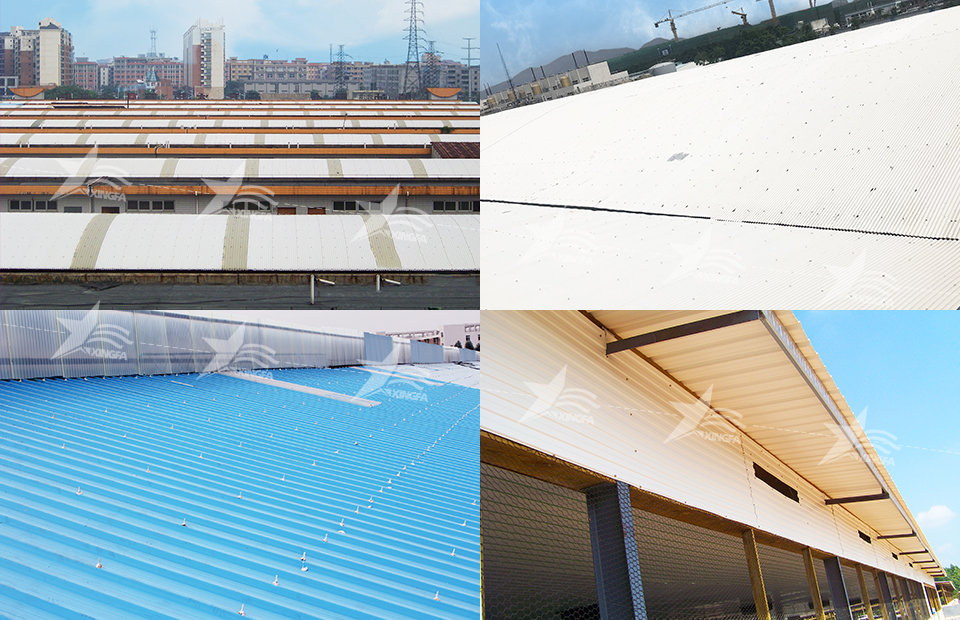
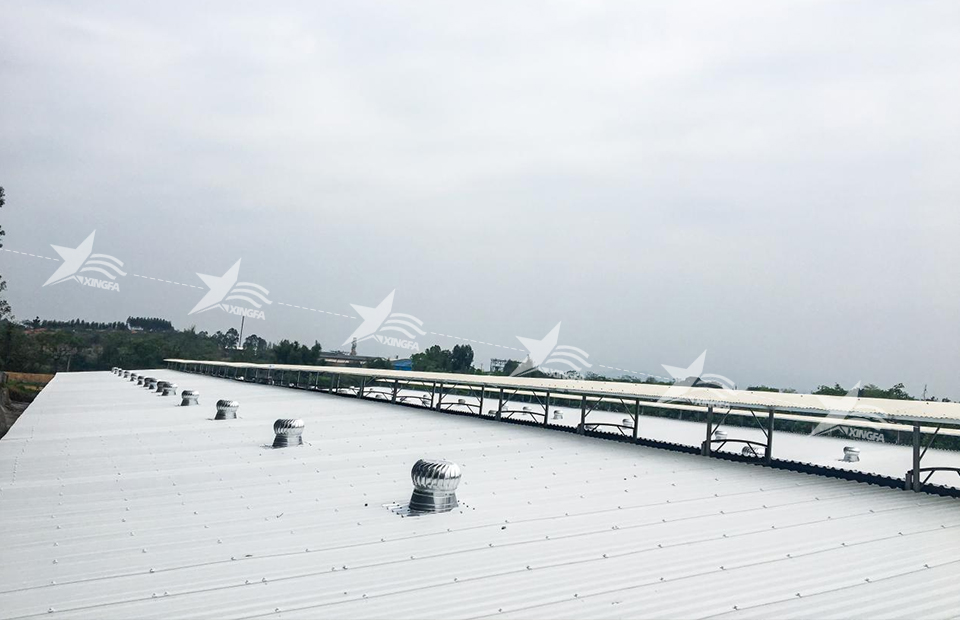
Practical Selection Guide for PVC Factory Roofing Sheets
Key Pain Points to Recognize Before Selecting PVC Factory Roofing Sheets
In industrial applications, including factories, warehouses, and workshops, the selection of roofing materials has a direct impact on operational efficiency, maintenance costs, and regulatory compliance and safety. Many enterprises encounter recurring challenges when selecting PVC factory roofing sheets due to insufficient technical expertise: traditional color-coated steel sheets are prone to rapid corrosion and leakage in acidic, alkaline, or high-salinity environments, necessitating frequent repairs; certain low-cost PVC sheets exhibit premature degradation—such as fading, chalking, and cracking—within two to three years, requiring early replacement; substandard fire performance may fail to pass fire safety inspections, exposing facilities to regulatory penalties and serious safety hazards; inadequate thermal insulation leads to excessively high indoor temperatures during summer months, compromising both production efficiency and product quality; and in retrofit projects for aging facilities, excessive sheet weight can overload existing structural systems, triggering costly reinforcement measures.
This article presents a rigorous, professional decision-making framework for selecting PVC factory roofing sheets—designed to help you clarify functional requirements, avoid common pitfalls, and identify high-value, application-optimized solutions.
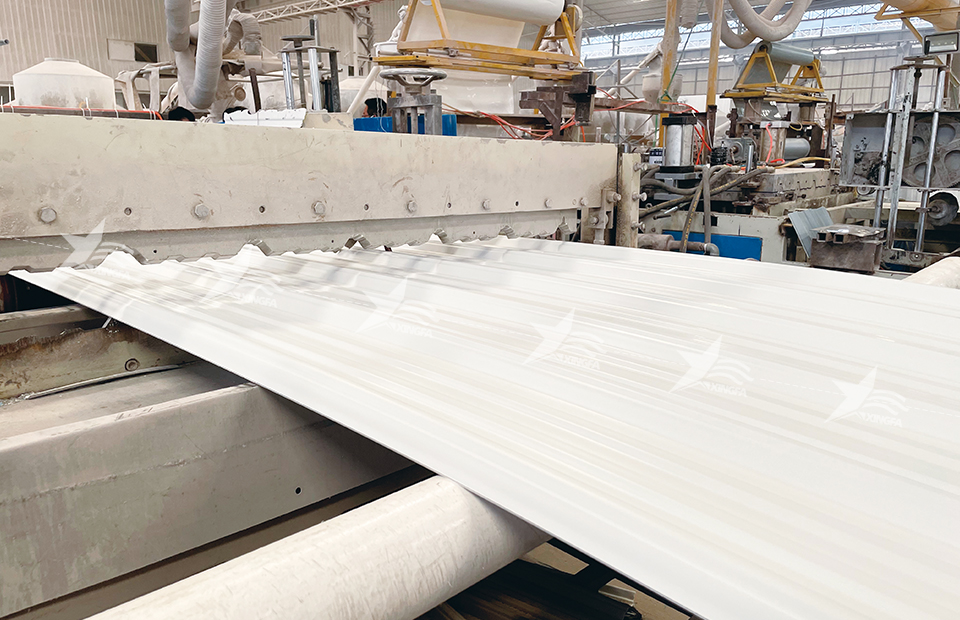
Five Core Selection Criteria for High-Performance PVC Factory Roofing Sheets
- Compliance with Fire Safety Standards to Meet Mandatory Inspection Requirements
Industrial factories and warehouses are classified as high-occupancy or high-value storage facilities, where fire safety is a non-negotiable regulatory requirement. A qualified PVC factory roofing sheet must achieve a B1 fire rating (difficult-to-ignite), demonstrating self-extinguishing behavior upon flame removal and zero molten droplet generation. Only products meeting this standard satisfy mandatory fire inspection criteria—thereby preventing project delays, safety incidents, and regulatory sanctions.
- Superior Acid–Alkali and Corrosion Resistance for Demanding Industrial Environments
Facilities such as chemical plants, ceramic manufacturing sites, coastal industrial zones, and livestock farms are routinely exposed to aggressive corrosive agents—including acidic/alkaline vapors and high-salinity aerosols. High-performance PVC roofing sheets must employ precisely controlled calcium carbonate filler content, incorporate UV-stabilized modifiers and acid–alkali-resistant compound formulations, and undergo stringent accelerated corrosion and aging testing. Such rigor ensures long-term structural integrity and service life under harsh conditions—minimizing maintenance frequency and lifecycle costs.
- High Impact Toughness and Installation Efficiency to Reduce Total Project Costs
Large-scale industrial roofing projects place significant demands on installation speed and labor efficiency. Premium PVC roofing sheets feature an optimized flexible compound formulation that balances impact resistance with workability—enabling secure fastening without cracking, clean cutting without edge chipping, and cold-forming capability for complex roof geometries. Integrated interlocking measurement markings and purpose-engineered waterproof accessories further streamline installation—allowing standard construction crews to achieve rapid, reliable deployment, thereby shortening project timelines and reducing material waste and labor expenses.
- Integrated Thermal Insulation, Heat Reflection, and Acoustic Dampening for Enhanced Indoor Environmental Quality
Excessive indoor heat accumulation during summer months adversely affects worker productivity, equipment performance, and product consistency. Advanced PVC roofing sheets leverage engineered hollow-core or multi-layer structural designs—combined with the inherently low thermal conductivity of PVC—to deliver effective passive cooling. This eliminates the need for supplementary insulation layers while satisfying energy-efficiency standards. Additionally, the material’s inherent sound-dampening properties attenuate airborne noise transmission, significantly improving acoustic comfort within the facility.
- Lightweight Construction with High Structural Strength to Optimize Building System Economics
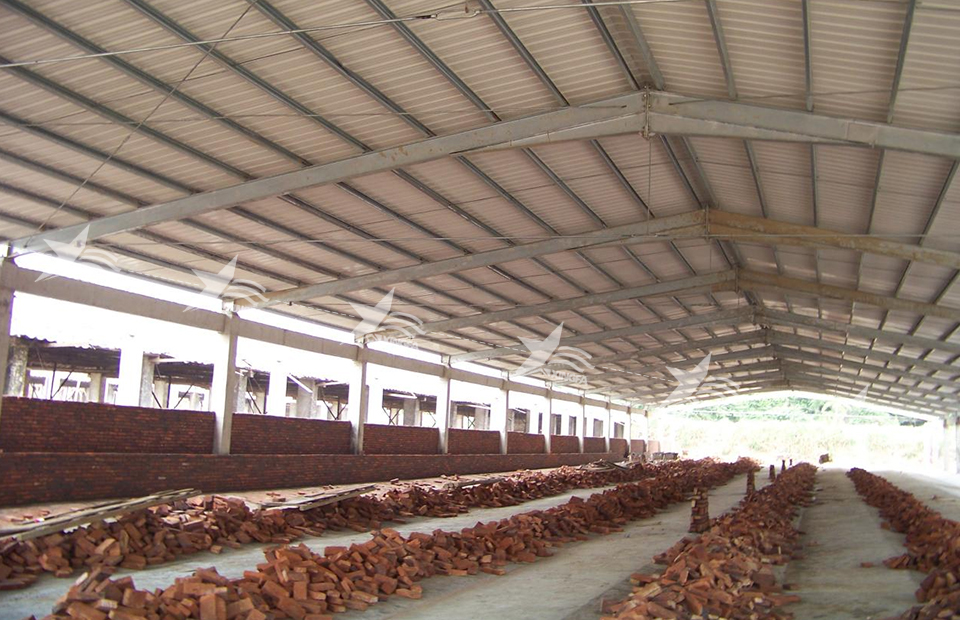
A lower unit-area mass reduces handling effort and installation complexity while substantially decreasing load demands on primary structural components—particularly purlins and supporting steel frames. This lightweight advantage translates directly into reduced initial structural investment and greater design flexibility. It is especially advantageous for retrofitting aging facilities, where existing structural capacity is often constrained: high-strength, lightweight PVC roofing sheets enable direct replacement without structural reinforcement—delivering substantial overall cost savings across the renovation project lifecycle.
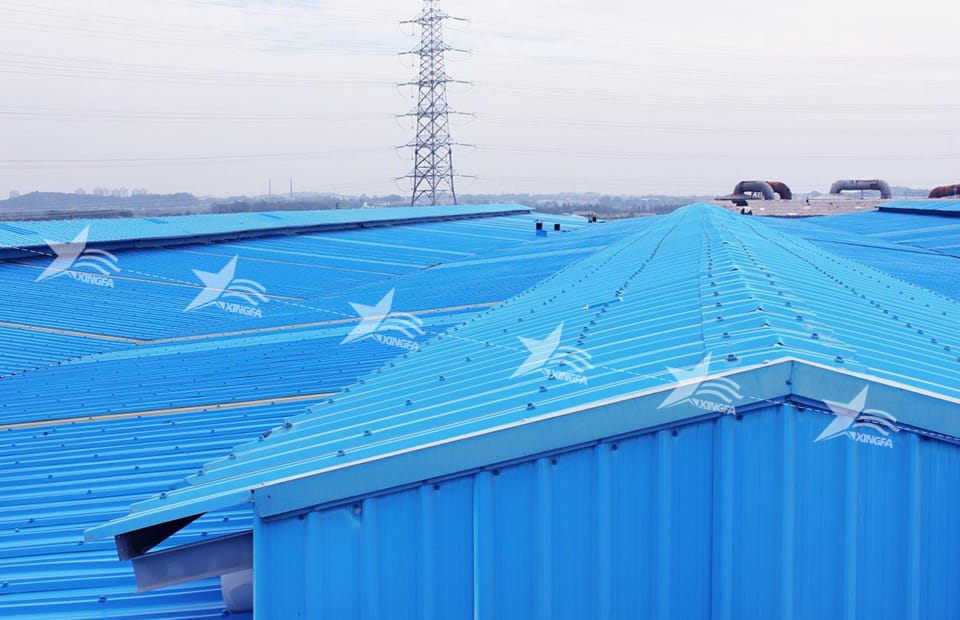
Selecting PVC Roofing Sheets for Industrial Plants: Three Critical Misconceptions to Avoid
Misconception 1: Overemphasizing Thickness While Neglecting the Balance Between Fire Resistance and Impact Toughness
Many procurement professionals fall into the “thicker is better” trap. However, some manufacturers artificially increase sheet thickness by overloading the formulation with calcium carbonate to cut production costs. While this yields a seemingly more robust product, it significantly compromises impact toughness—leading to cracking during installation—and severely undermines fire performance. As a result, such products often fail to meet mandatory safety standards for industrial applications. In contrast, high-quality PVC roofing sheets achieve optimal performance through scientifically engineered formulations that simultaneously satisfy stringent fire-resistance requirements (e.g., B1 classification) and deliver superior mechanical resilience.
Misconception 2: Prioritizing Low Upfront Cost While Overlooking Long-Term Operational Expenditure
Economically priced PVC roofing sheets are frequently manufactured using recycled feedstock and excessive calcium carbonate filler. Although initial procurement costs appear attractive, these products typically exhibit premature degradation—including color fading, chalking, and leakage—within two to three years under demanding industrial conditions. This necessitates frequent maintenance, re-roofing, and downtime, ultimately elevating total cost of ownership by over 40% compared to premium alternatives. A sound procurement strategy must therefore evaluate not only acquisition price but also certified weathering warranties, service life projections, and full lifecycle cost analysis.
Misconception 3: Underestimating the Critical Role of Integrated Support Systems and Installation Precision
Numerous buyers focus exclusively on the sheet material itself, overlooking the decisive influence of compatible accessories and professional installation support. Inadequate waterproofing components—such as specialized sealing tapes, ridge caps, or flashing systems—or improper lapping techniques due to insufficient technical guidance can readily trigger leaks, compromising roof integrity and drastically shortening system lifespan. Reputable manufacturers provide comprehensive accessory kits alongside detailed installation protocols and on-site technical assistance—ensuring consistent, code-compliant execution and long-term reliability.
An Industry-Compliant PVC Roofing Sheet: An Exemplary Solution
What, then, constitutes an ideal PVC roofing sheet meeting all the above criteria? It must demonstrably fulfill rigorous professional benchmarks across five core dimensions: fire resistance, weathering and corrosion resistance, installation efficiency, thermal insulation, and structural lightweighting with adequate load-bearing capacity.
For instance, Xingfa® PVC Roofing Sheets fully align with these requirements:
- Base material comprises food-grade virgin PVC resin;
- Proprietary “Fire–Toughness Balanced Technology” ensures simultaneous compliance with B1-level flame retardancy (per GB 8624) and exceptional impact resistance—meeting strict fire safety regulations for industrial facilities;
- Calcium carbonate filler content is rigorously capped at ≤30%, while UV stabilizers and acid/alkali-resistant additives are incorporated to withstand harsh chemical and high-salinity coastal environments—validated by 1,000-hour salt-spray testing (per ASTM B117), supporting a service life exceeding 15 years;
- Integrated lap-marking guides on the sheet surface, coupled with purpose-engineered waterproofing accessories, enable precise, leak-free installation; the material exhibits excellent nail-holding strength without splitting and clean-cut edges without chipping—boosting on-site productivity by 20% versus industry averages and reducing labor input and project duration.
Case Study: Ceramic Warehouse Retrofit in Foshan, Guangdong
A large-scale ceramic manufacturing facility in Foshan faced severe operational challenges with its aging corrugated steel roof: after four years of service, widespread rusting and leakage occurred, indoor temperatures soared to 43°C, and noncompliance with fire safety codes triggered regulatory penalties. Following replacement with Xingfa® PVC roofing sheets, interior temperatures dropped consistently below 33°C; annual maintenance expenditure decreased from ¥120,000 to ¥12,000; fire inspection clearance was successfully obtained; and after five years of continuous operation, no signs of discoloration, cracking, or leakage have been observed. The solution delivers over ¥100,000 in annual savings across energy, maintenance, and compliance-related costs.
Summary: Action-Oriented Procurement Checklist for PVC Roofing Sheets
Based on the above analysis and best practices, the following actionable checklist is recommended for informed decision-making:
- Prioritize products certified to B1 fire-resistance rating (GB 8624) to satisfy statutory fire safety approval requirements;
- Evaluate weathering and corrosion resistance—select sheets manufactured exclusively from virgin raw materials, with scientifically optimized calcium carbonate content;
- Assess mechanical toughness and installation-friendliness—opt for solutions accompanied by dedicated waterproofing accessories and intuitive design features (e.g., alignment markings, crack-resistant fastening zones);
- Where ambient temperature control is critical, specify variants with integrated hollow-section thermal barriers to reduce summer cooling loads and enhance workplace comfort;
- Favor established manufacturers offering comprehensive technical support, extended product warranties, and proven field service capabilities—ensuring sustained performance and risk-mitigated deployment.
The choice is yours. We hope this guide empowers you to identify a truly fit-for-purpose roofing solution tailored to industrial plants, warehouses, workshops, and similar demanding applications. Companies such as Foshan Chancheng Xingfa Tile Industry Co., Ltd.—a specialist in plastic building materials with 21 years of R&D expertise, mature manufacturing processes, and a fully integrated service ecosystem—are well-positioned to deliver high-value, application-specific solutions worthy of in-depth evaluation.