ES
ES  EN
EN  RU
RU  AR
AR Market Analysis of PVC Roofing Sheets for Warehouses: Pricing and Core Influencing Factors
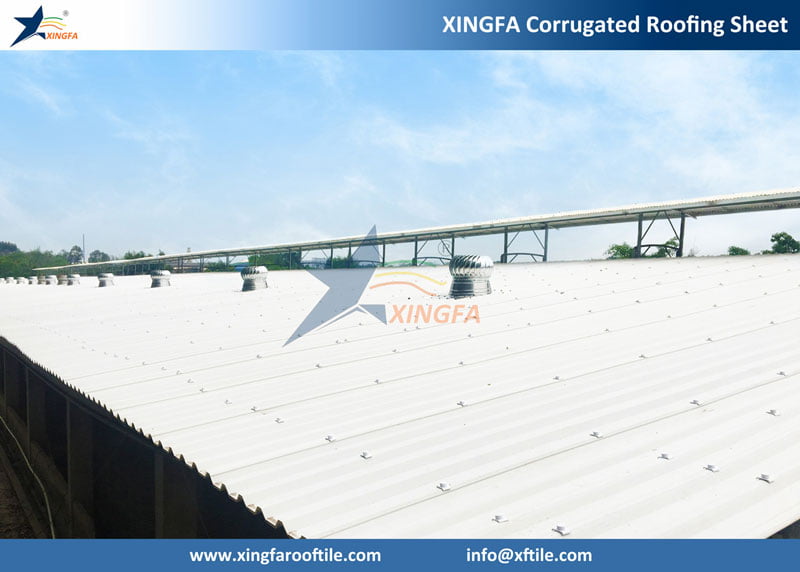
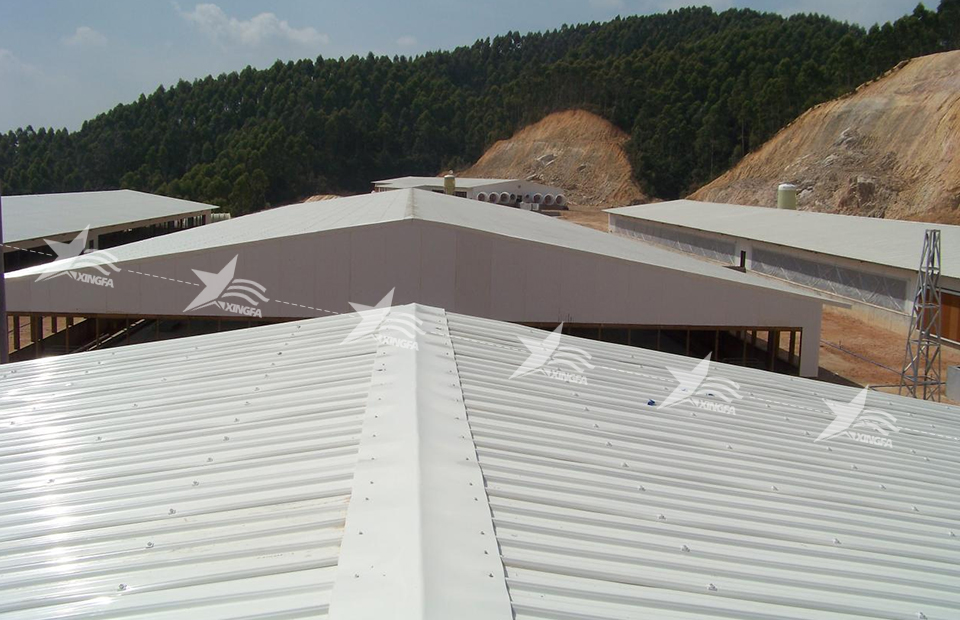
PVC roofing sheets for warehouses—valued for their lightweight yet high-strength properties, superior waterproofing and corrosion resistance, effective thermal insulation and noise reduction, as well as ease of installation—are widely adopted in logistics warehouses, industrial storage facilities, and open-air stacking sheds. However, procurement professionals frequently encounter substantial price discrepancies when soliciting quotations for identical PVC roofing sheets: unit prices range from approximately RMB 10–20 to over RMB 60 per square meter, posing significant challenges in product selection.
Notably, there is no standardized or uniform market price for warehouse-grade PVC roofing sheets. Instead, pricing is primarily determined by three core technical parameters—material formulation, sheet thickness, and surface weather-resistant coating—while secondary factors such as order volume, transportation distance, and accessory bundling exert relatively minor, yet non-negligible, influences on final transaction costs. This article systematically analyzes real-world procurement scenarios in warehouse construction projects, delineates each pricing determinant in hierarchical detail, and establishes clear price tiers alongside corresponding material selection and budgeting benchmarks.
1. Material Composition: The Foundational Determinant of Price Range
Material formulation constitutes the fundamental driver of PVC roofing sheet pricing. Specifically, the ratio of virgin to recycled resin and the structural configuration (monolayer vs. multilayer composite) directly establish baseline price differentials—and serve as the primary criterion distinguishing entry-level, mid-tier, and premium products.
Raw Material Formulation: Significant Price Differential Between Virgin and Recycled Resins
Low-end, budget-oriented PVC roofing sheets typically incorporate large proportions of post-consumer recycled plastics and heavy calcium carbonate filler, drastically reducing the content of virgin PVC resin and UV-stabilizing additives. Consequently, production costs are minimized, with ex-factory prices ranging only from RMB 18–28 per square meter. Such sheets exhibit porous microstructures, poor impact toughness, and pronounced brittleness; their limited UV resistance and aging performance render them suitable solely for temporary warehouse structures or short-term, low-durability shelters. When exposed outdoors, they commonly suffer from chalking, leakage, and mechanical failure within 3–5 years. In contrast, mid-tier, standard-duty warehouse sheets employ 100% virgin PVC base material—characterized by high resin purity and rigorously calibrated additive packages—delivering enhanced structural integrity, dimensional stability, and resistance to warping or cracking. Their typical price range is RMB 28–45 per square meter. Premium industrial-grade PVC sheets utilize modified PVC resins compounded with specialized additives—including flame retardants, low-temperature impact modifiers, and corrosion inhibitors—making them ideally suited for demanding environments such as chemical storage facilities or coastal warehouses subject to aggressive atmospheric corrosion. Accordingly, their manufacturing cost and market price are substantially higher.
Manufacturing Process: Price Differential Between Monolayer and Multilayer Composite Structures
Monolayer homogeneous PVC sheets are produced via a straightforward extrusion process: raw materials are uniformly blended and extruded into a single-layer profile. With no functional layering, this method entails lower equipment investment and labor requirements, resulting in highly competitive pricing. Conversely, multilayer ASA-coated PVC sheets are manufactured using precision co-extrusion technology, enabling distinct functional layers—each engineered for specific performance attributes (e.g., structural support, UV protection, aesthetic finish). This advanced process demands higher capital expenditure, tighter process control, and stricter yield standards. As a result, at equivalent thicknesses, multilayer ASA-composite sheets command a premium of RMB 8–15 per square meter over standard monolayer variants—and represent the prevailing choice for long-term, code-compliant warehouse roofing applications.
2. Sheet Thickness: Directly Proportional Impact on Unit Cost
Holding material composition and manufacturing process constant, sheet thickness is the most immediately observable factor influencing price. Greater thickness necessitates proportionally higher raw material consumption, thereby increasing both production cost and market price. Currently, the industry-standard thickness options for warehouse PVC roofing sheets are 2.0 mm, 2.5 mm, and 3.0 mm—each tailored to distinct operational and environmental requirements.
The 2.0 mm thin-profile variant minimizes material usage and self-weight, but offers limited structural rigidity. It is appropriate only for fully enclosed indoor warehouses or sheltered roof applications. For virgin-material monolayer sheets, its market price ranges from RMB 25–35 per square meter. The 2.5 mm thickness represents the industry’s benchmark standard, striking an optimal balance among load-bearing capacity, wind uplift resistance, and cost efficiency. It satisfies the performance requirements of the vast majority of outdoor warehouses and general-purpose logistics facilities, with prevailing market prices between RMB 32–48 per square meter. The 3.0 mm heavy-duty variant features increased material density and robust cross-sectional integrity, delivering superior resistance to hail impact, permanent deformation, and extreme climatic stressors. It is specifically recommended for typhoon-prone regions, open-air stacking yards, and warehouse roofs subjected to prolonged, intense solar exposure. Its unit price reaches RMB 42–60 per square meter. Industry-wide empirical data indicate that, for identically formulated sheets, each incremental 0.5 mm increase in thickness corresponds to a 10%–18% price escalation. Procurement personnel must therefore remain vigilant against unscrupulous suppliers who misrepresent nominal thickness or substitute thinner profiles to offer artificially low quotations.
3. Surface Weather-Resistant Coating: The Critical “Invisible” Price Differentiator
While many buyers focus exclusively on base material and thickness, the surface weather-resistant coating remains a frequently overlooked—but decisive—factor governing both service life and price segmentation. Uncoated, pure PVC substrates possess inherently poor resistance to ultraviolet radiation and environmental aging; durable performance thus hinges entirely on the quality and integrity of the protective topcoat.
Economical, low-grade monolayer PVC sheets lack a dedicated weather-resistant coating altogether. Instead, pigment is simply dispersed throughout the bulk matrix—a low-cost approach that yields rapid color fading, gloss loss, and surface chalking under sustained sunlight exposure, accelerating overall degradation. By contrast, high-performance warehouse-specific PVC sheets feature a discrete, high-purity ASA (acrylonitrile–styrene–acrylate) topcoat. Standard-grade products maintain a minimum coating thickness of 0.15 mm; the high-purity ASA resin effectively shields the underlying substrate from UV photodegradation, thermal oxidation, and acidic rain corrosion—significantly extending service life. Some substandard manufacturers reduce coating thickness or substitute generic colored films for genuine ASA resin to cut costs. These compromises are virtually undetectable to the naked eye, yet result in quotations that are RMB 5–10 per square meter lower than those of certified ASA-coated products—while simultaneously compromising durability by up to 50%. Therefore, the presence (or absence), purity, and thickness of a certified ASA weather-resistant coating constitute the definitive price boundary separating premium and economy-grade warehouse PVC roofing sheets.
4. Auxiliary Factors Affecting Final Transaction Price
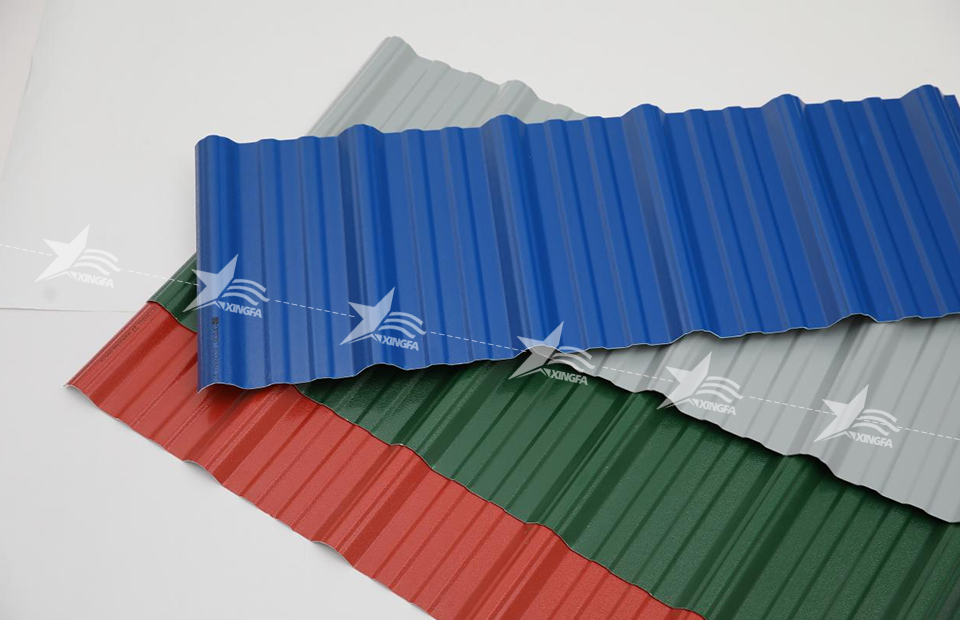
Beyond intrinsic product specifications, contextual and logistical variables significantly influence the landed cost. Bulk engineering orders typically qualify for tiered volume discounts directly from manufacturers, whereas small-lot purchases by individual contractors incur comparatively higher per-unit pricing. Long-haul transportation adds measurable freight surcharges, elevating total project cost. Furthermore, quotation inclusions vary: some vendors quote “bare-sheet-only” prices, while others bundle essential accessories—including waterproofing underlay pads, self-tapping screws, and ridge/edge sealing components. Unbundled accessory sales can substantially inflate the total installed cost. Additionally, standard colors (e.g., blue, gray, brick red) benefit from economies of scale in mass production, whereas custom color matching incurs modest surcharges.
5. Price Summary and Procurement Recommendations
In summary, warehouse PVC roofing sheets fall into clearly defined price tiers:
- Recycled-resin, thin-profile sheets (RMB 18–28/m²): Suitable only for temporary or short-term warehouse applications;
- Virgin-resin monolayer sheets (2.0–2.5 mm thick, RMB 28–40/m²): Appropriate for climate-controlled, indoor warehouse environments;
- Standard 2.5 mm ASA-coated composite sheets (RMB 35–50/m²): The optimal choice for conventional outdoor warehouses;
- Heavy-duty 3.0 mm high-purity ASA-coated sheets (RMB 48–60/m²): Recommended for severe-service conditions—including high-wind zones, open-air storage yards, and locations with intense solar irradiance.
Procurement decisions must transcend initial acquisition cost. A holistic evaluation—integrating material composition, dimensional specification, and coating quality—is essential to achieve an optimal balance between upfront investment and long-term lifecycle value. Only through such comprehensive assessment can warehouse operators ensure roofing system durability, reliability, and overall cost-effectiveness over its intended service life.