

 ES
ES  EN
EN  RU
RU  AR
AR Comprehensive Analysis of Service Life and Influencing Factors of PVC Plastic Roofing Sheets for Industrial Facilities
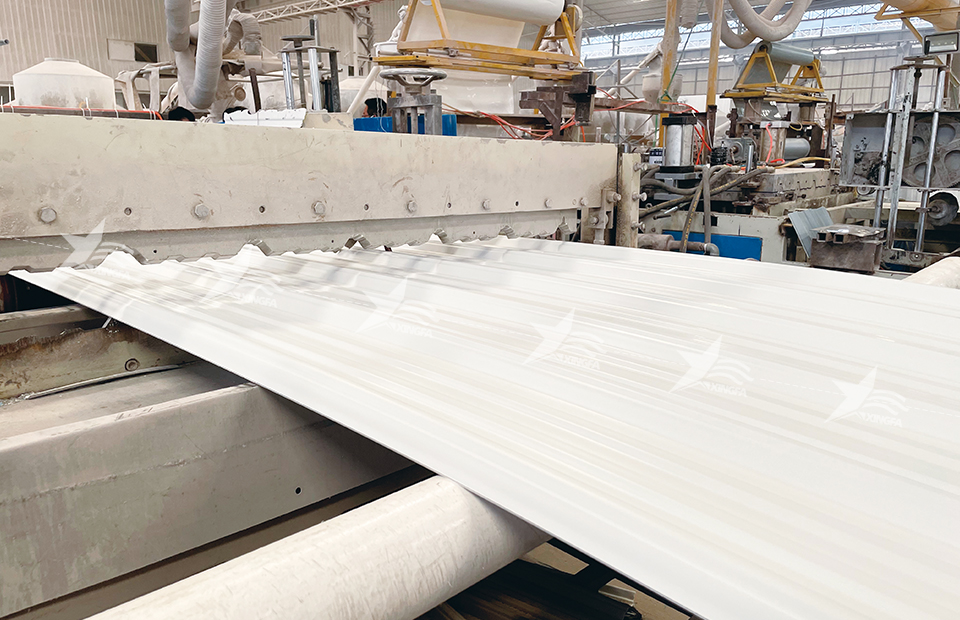
PVC plastic roofing sheets are widely used as roofing materials in industrial plants, warehouses, and steel-structured workshops. Owing to their cost-effectiveness, excellent waterproofing performance, lightweight design, seismic resilience, corrosion resistance, and ease of installation, they have largely replaced traditional alternatives such as color-coated steel sheets and asbestos-cement sheets. During plant renovation or new roof construction, enterprises consistently prioritize one critical question: the actual service life of PVC roofing sheets. Under normal operating conditions, high-quality PVC roofing sheets can achieve a service life of 15–20 years; by contrast, substandard products often exhibit premature aging and structural failure within just 3–5 years. Importantly, service life is not a fixed value—it is primarily governed by three interrelated factors: material quality, installation practices, and site-specific environmental conditions. This article provides a targeted, granular analysis of each factor to clarify the underlying determinants of service life for PVC roofing sheets in industrial applications.
1. Material Factors: Composition and Thickness Define the Fundamental Service Life Ceiling
Material quality constitutes the foundational determinant of service life for PVC roofing sheets, directly governing their weather resistance, anti-aging capability, and structural durability. Two key parameters—material composition and sheet thickness—jointly establish the baseline service life expectancy.
①Material Composition: Core Determinant of Weather Resistance and Aging Performance
From a compositional perspective, industrial PVC roofing sheets fall into two principal categories: conventional single-layer PVC sheets and ASA–PVC composite sheets—the distinction between which significantly influences longevity. Conventional single-layer PVC sheets are manufactured from blended PVC resin and filler materials, lacking any dedicated weather-resistant protective layer. Consequently, they exhibit poor resistance to ultraviolet (UV) radiation and elevated temperatures. Prolonged outdoor exposure leads to surface chalking, embrittlement, and discoloration, limiting their service life in exposed industrial settings to only 5–8 years—making them suitable solely for temporary structures.
In contrast, premium-grade industrial PVC roofing sheets employ a multi-layer ASA–PVC composite structure, delivering marked performance advantages. A high-density PVC substrate ensures robust structural integrity, wind-load resistance, and impact resistance, while an outer layer of high-purity acrylonitrile–styrene–acrylate (ASA) copolymer effectively shields against UV radiation, thermal degradation, and chemical corrosion—including acidic and alkaline exposure. This synergistic design substantially retards aging kinetics, enabling certified virgin-material composite sheets to achieve a service life of 15–20 years. Conversely, low-grade sheets incorporating excessive recycled content or over-dosed heavy calcium carbonate filler exhibit porous microstructures, reduced toughness, and diminished dimensional stability—resulting in premature cracking, delamination, and functional failure.
②Sheet Thickness: Critical Determinant of Structural Durability and Wear Resistance
When material composition remains constant, sheet thickness serves as the primary factor influencing structural durability and resistance to mechanical wear and environmental stress. Standard industrial PVC roofing sheets are available in nominal thicknesses of 2.0 mm, 2.5 mm, and 3.0 mm. Greater thickness correlates with higher material density, enhanced wind uplift resistance, superior impact absorption, improved abrasion resistance, and greater resistance to deformation under thermal cycling—collectively contributing to slower aging progression.
Specifically, 2.0-mm-thick sheets possess relatively low mechanical strength and are recommended exclusively for indoor, climate-controlled facilities. The 2.5-mm variant represents the industry-standard specification, offering optimal balance for most general-purpose industrial plants and open-air warehouse roofs. The 3.0-mm reinforced option delivers superior dimensional stability and is specifically engineered for demanding environments characterized by high wind loads, intense rainfall, and prolonged solar irradiance. Overall, each incremental increase in thickness level typically extends service life by 3–5 years, thereby significantly enhancing long-term roof system reliability.
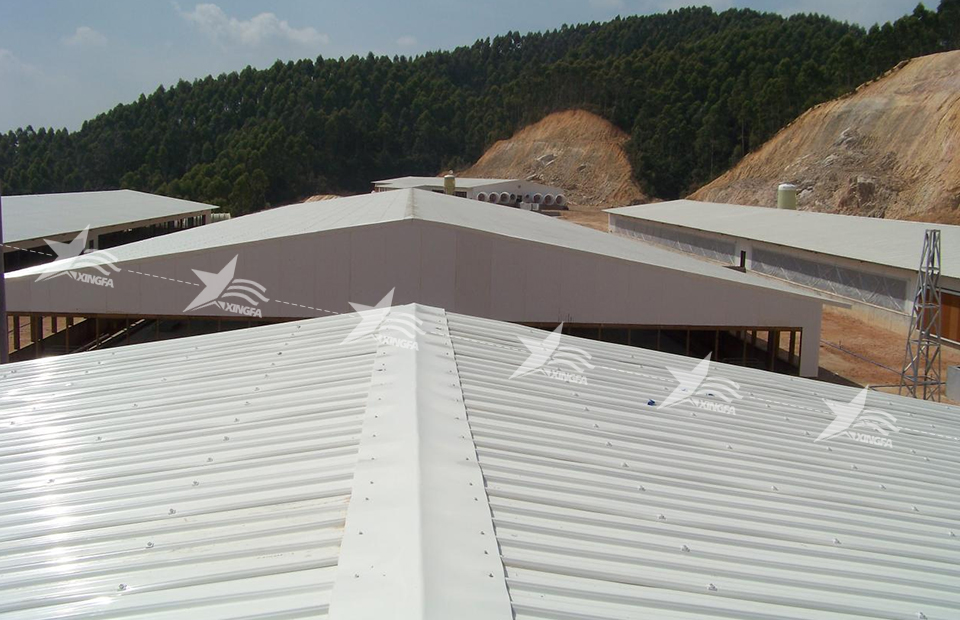
2. Installation Factors: Proper Construction Practices Mitigate Premature Aging and Failure Risks
A substantial proportion of premature failures—where PVC roofing sheets fall short of their rated service life—is attributable not to inherent material defects, but rather to noncompliant installation practices. Industrial roofs feature large spans and are subjected to high wind-induced loads, imposing far more stringent installation requirements than residential applications. Suboptimal execution introduces avoidable stress concentrations and functional deficiencies that markedly reduce service life.
Foremost among these issues is improper fastening methodology—the most prevalent installation error. Over-tightening fasteners eliminates the necessary clearance for thermal expansion and contraction. In exposed industrial settings, PVC sheets undergo significant temperature fluctuations: pronounced expansion during summer heat exposure and contraction during cold periods. Without adequate provision for dimensional change, internal stresses accumulate progressively, ultimately manifesting as localized buckling, cracking, fastener-hole fracture, and resultant water infiltration.
Secondly, insufficient provision for expansion joints poses another critical risk. Large-area industrial roofs require carefully calculated inter-sheet gaps to accommodate thermal movement. Undersized gaps induce lateral compression between adjacent sheets, leading to warping, edge lifting, and compromise of the roof’s overall structural integrity.
Additionally, inappropriate selection of ancillary components adversely affects longevity. Industrial installations necessitate purpose-engineered accessories—including EPDM or silicone-based waterproof washers and stainless-steel fasteners. Inferior hardware—such as carbon-steel fixings or non-compliant gaskets—exhibits rapid corrosion, initiating localized leaks and progressive substrate degradation that may propagate across entire roof sections. Furthermore, inadequate roof pitch, insufficient sheet overlap, and uncontrolled on-site cutting (which compromises the protective surface layer) all contribute to water ingress and accelerated localized aging—potentially reducing service life by more than 40%.
3. Environmental Factors: Site-Specific Operational Conditions Dictate Real-World Service Life
Industrial facility environments vary considerably in complexity and severity, resulting in wide disparities in actual service life—even among identical PVC roofing products. Harsh operational conditions continuously accelerate material degradation and structural fatigue.
Firstly, climatic exposure exerts profound influence. Unsheltered industrial roofs endure cumulative stressors including intense summer solar irradiance, winter freeze–thaw cycles, and recurrent high-velocity rainstorms. Frequent thermal cycling induces microstructural fatigue, promoting surface chalking, polymer chain scission, and progressive embrittlement. Relative to climate-controlled indoor applications, service life in fully exposed settings is typically reduced by 3–6 years.
Secondly, industry-specific operational hazards further modulate performance. Facilities engaged in chemical manufacturing, textile dyeing, electroplating, or metallurgical processing emit airborne acidic/alkaline mists, corrosive gases, and abrasive particulates. These agents gradually degrade the protective surface layer of PVC sheets, disrupting resin matrix integrity and accelerating chromatic fading, blistering, and eventual perforation. Under such aggressive conditions, standard PVC sheets may experience up to 50% service life reduction; only high-performance ASA–PVC composites retain sufficient chemical resistance to sustain long-term functionality. Conversely, benign environments—such as dry storage warehouses or light-manufacturing facilities with minimal atmospheric contaminants—impose negligible environmental stress, enabling PVC roofing sheets to readily achieve their full rated service life.
4. Summary and Service Life Reference Standards
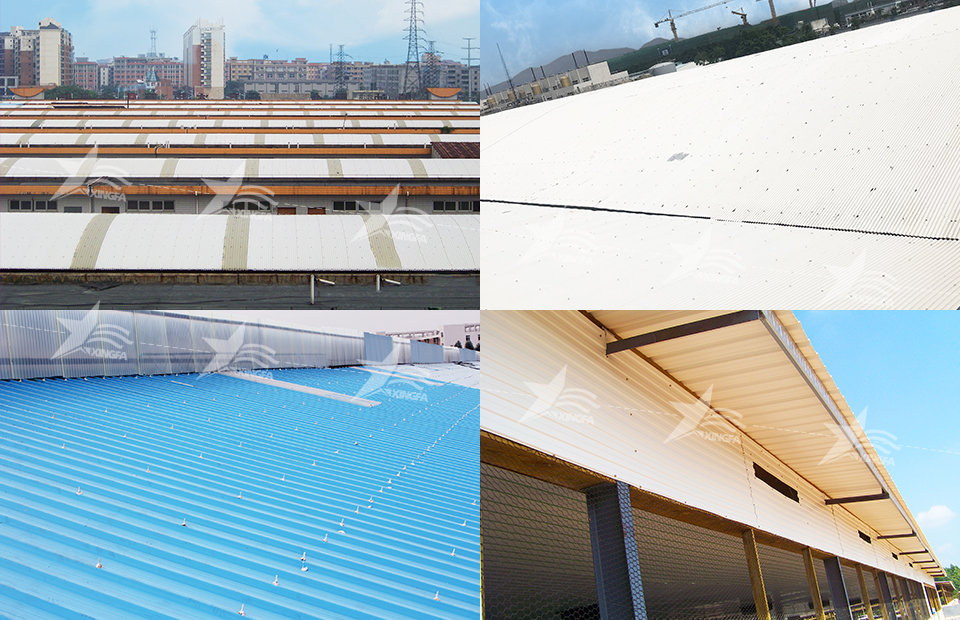
Based on a comprehensive assessment of the three core factors, the service life of PVC plastic roof tiles for industrial buildings follows well-defined ranges:
— Low-grade single-layer tiles made from recycled materials: 3–5 years;
— Standard single-layer tiles manufactured from virgin PVC material: 5–8 years;
— High-quality ASA-composite tiles of conventional thickness: 12–15 years;
— Thickened (≥2.5 mm) virgin-material composite PVC tiles, installed in accordance with industry standards and exposed to typical environmental conditions: 15–20 years.
In summary, base material quality establishes the theoretical upper limit of service life; installation craftsmanship governs the consistency and reliability of actual performance; and site-specific environmental conditions directly influence the rate of aging and degradation. To maximize the service life of industrial roof tiles, it is essential to prioritize ASA-multi-layer composite PVC tiles with a minimum thickness of 2.5 mm, strictly avoid products containing substandard recycled materials, and rigorously adhere to industrial roofing construction standards—including provision of adequate thermal expansion clearance, standardized fastening procedures, and condition-specific protective measures. Such an integrated approach effectively mitigates premature aging, cracking, and water leakage, thereby ensuring long-term structural integrity and functional stability of the factory roof system.