RU
RU  EN
EN  ES
ES  AR
AR Synthetic Resin Roofing Tiles: Correlation Between Thickness and Service Life—A Multi-Dimensional In-Depth Analysis
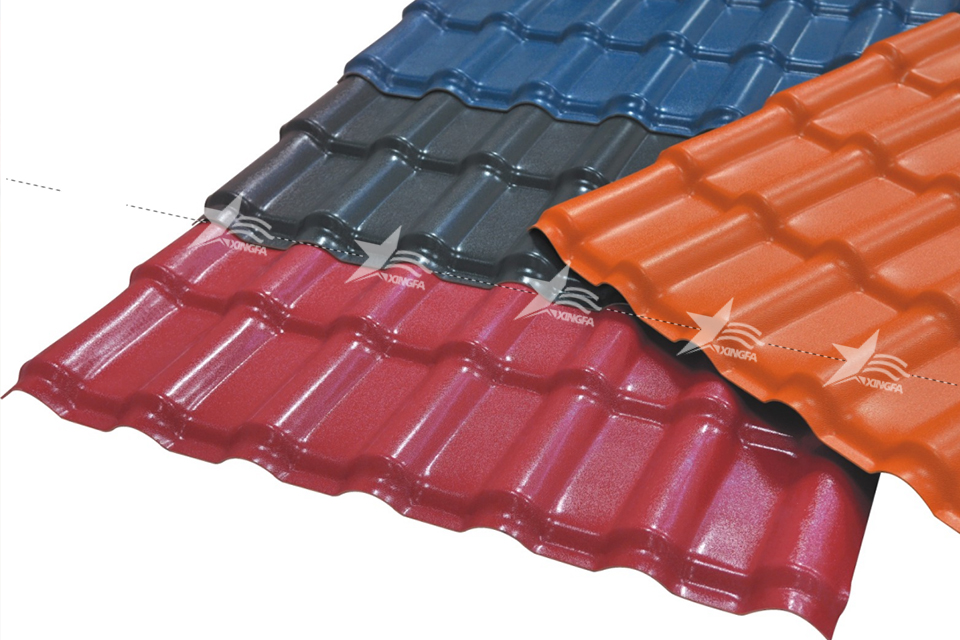
Synthetic resin roofing tiles have become the mainstream building material for residential construction, factory retrofitting, and roof renovation. Leveraging advantages such as waterproofing, corrosion resistance, lightweight design, and excellent weatherability, they are progressively replacing traditional clay tiles and color-coated steel sheets. In practical applications, service life remains the most critical evaluation criterion for end users. Among all physical parameters, thickness is a pivotal factor influencing longevity—and is intrinsically linked to product characteristics, surface coating performance, and market pricing. This article conducts a structured, four-dimensional analysis to clarify the precise relationship between thickness and service life, thereby establishing a rigorous, evidence-based framework for material selection.
1. Product Characteristics: Thickness Determines Fundamental Structural Stability
Synthetic resin roofing tiles have become the mainstream building material for residential construction, factory retrofitting, and roof renovation. Leveraging advantages such as waterproofing, corrosion resistance, lightweight design, and excellent weatherability, they are progressively replacing traditional clay tiles and color-coated steel sheets. In practical applications, service life remains the most critical evaluation criterion for end users. Among all physical parameters, thickness is a pivotal factor influencing longevity—and is intrinsically linked to product characteristics, surface coating performance, and market pricing. This article conducts a structured, four-dimensional analysis to clarify the precise relationship between thickness and service life, thereby establishing a rigorous, evidence-based framework for material selection.
The 3.0 mm thick variant represents the premium specification: its robust base material exhibits high density and structural integrity, delivering exceptional resistance to deformation, wind load, and low-temperature embrittlement. It reliably withstands demanding outdoor conditions—including heavy rainfall, snow accumulation, and prolonged solar exposure—without structural failure. Its baseline service life typically ranges from 15 to 20 years, making it the preferred choice for long-term construction projects. Evidently, increased thickness enhances structural stability, allowing inherent product advantages to be sustained over time and significantly decelerating the rate of service-life degradation.
2. Surface Coating: Thickness–Coating Compatibility Governs Weathering Protection Longevity
The ASA (Acrylonitrile–Styrene–Acrylate) weather-resistant coating serves as the “protective outer layer” of synthetic resin roofing tiles, primarily shielding the substrate against ultraviolet (UV) radiation, oxidative corrosion, and rainwater erosion. Coating quality—including uniformity, adhesion strength, and thickness—directly determines the surface aging rate. Crucially, compatibility between base-material thickness and coating performance is a decisive factor in extending overall service life. Substandard thin-gauge products frequently suffer from insufficient coating thickness, non-uniform application, and porous, low-density substrates. Such inadequate base materials cannot provide mechanical support for stable coating adhesion; consequently, prolonged exposure to sunlight and precipitation leads to premature coating delamination, fading, and chalking.
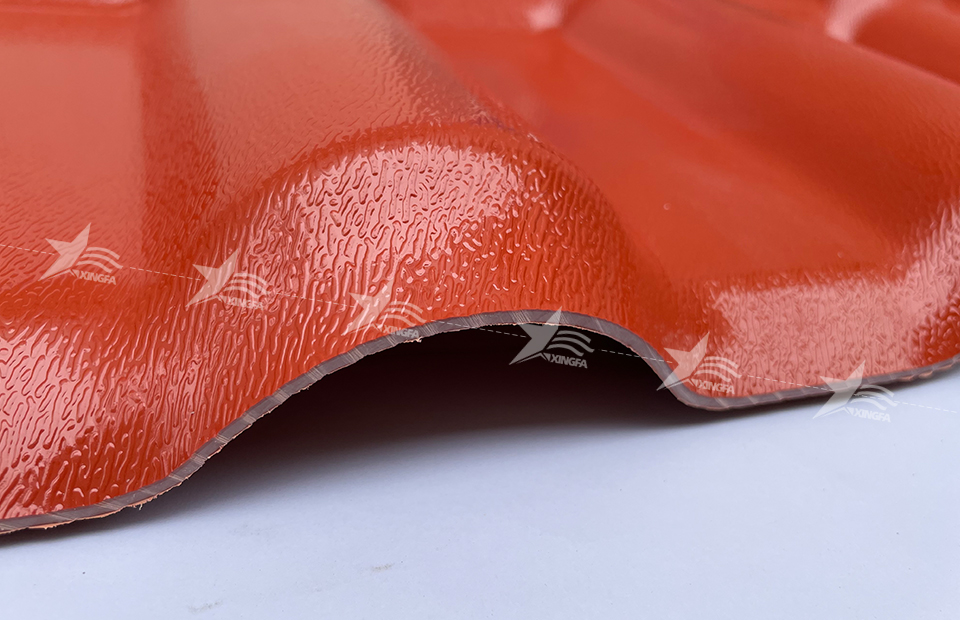
In 2.0 mm-thick products, coating adhesion is comparatively weak, and substrate deformation is pronounced, resulting in excessive tensile stress on the surface layer, which readily induces cracking and peeling. Once the protective coating fails, the underlying PVC substrate rapidly degrades, drastically shortening service life. By contrast, high-quality 2.5 mm and 3.0 mm variants feature dense, compact substrates that enable uniform, specification-compliant ASA coating application and superior interfacial bonding. The dimensional stability of thicker substrates minimizes mechanical strain on the coating, effectively “locking in” protection and preventing premature failure. Moreover, coating wear rates are inherently slower in thicker tiles, enabling sustained UV resistance and corrosion protection—thereby further extending roof system longevity.
3. Physical Thickness: Direct Determinant of Service-Life Upper Bound
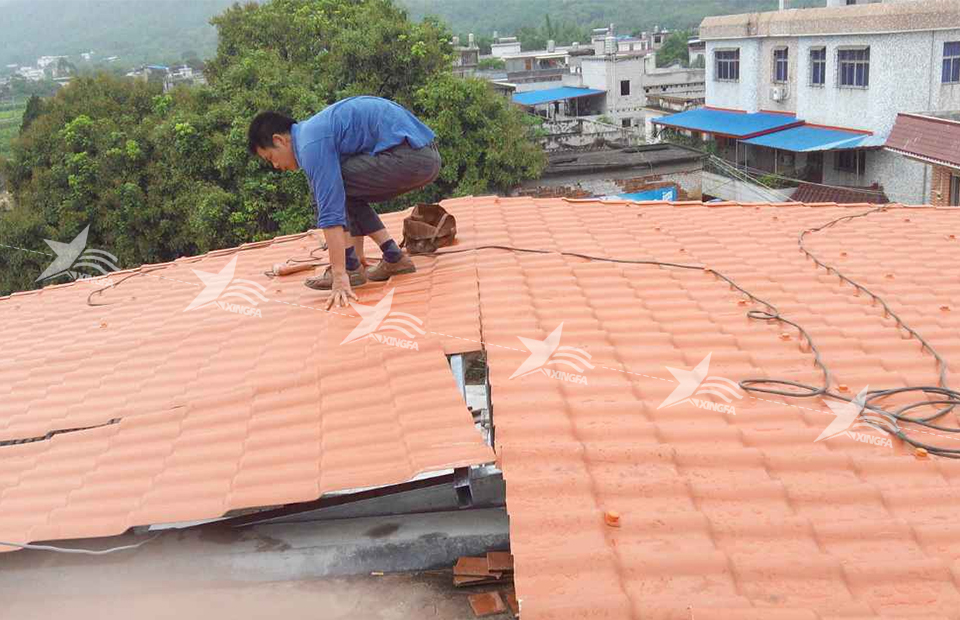
Setting aside variations in raw material composition and coating technology, thickness constitutes the most direct physical determinant of service life. Greater thickness confers enhanced resistance to wear, aging, and mechanical damage—thereby raising the theoretical upper limit of service life. Primary aging mechanisms for synthetic resin roofing tiles stem from continuous environmental exposure, including UV-induced polymer degradation, acid–alkali corrosion from rainwater, thermal-cycle fatigue due to diurnal temperature fluctuations, and abrasive wear from wind-driven sand or rain impact.
Thin-gauge tiles possess minimal substrate thickness, increasing the risk of UV penetration into the internal polymer matrix. Unimpeded UV radiation accelerates molecular chain scission, leading to progressive embrittlement and loss of toughness. Concurrently, reduced abrasion resistance renders thin tiles highly susceptible to gradual thickness loss under persistent rainwash and particulate abrasion—potentially resulting in localized thinning and water infiltration within just a few years. In contrast, thick-gauge tiles offer substantial substrate thickness reserves: UV radiation cannot fully penetrate the entire cross-section, preserving the internal structural integrity of the base material over extended periods. Even with minor surface coating degradation, the robust substrate maintains structural continuity—preventing rapid onset of leakage, fracture, or accelerated aging, and markedly delaying the overall aging trajectory.
Furthermore, thicker tiles exhibit superior mechanical integrity at vulnerable locations—including joints and perimeter edges—reducing susceptibility to cracking and water ingress. This mitigates localized failures that could otherwise trigger cascading deterioration across the entire roof system, thereby further extending service life.
4. Market Pricing: Thickness as a Proxy for Quality–Longevity Value Alignment
Market pricing for synthetic resin roofing tiles exhibits a strong positive correlation with thickness—the price differential fundamentally reflects differences in quality assurance and service-life value. Higher thickness corresponds to superior long-term cost-effectiveness. The 2.0 mm thin-gauge variant offers low initial acquisition cost and competitive unit pricing; however, its abbreviated service life and elevated failure rate—manifesting as warping, leakage, and premature aging—necessitate frequent maintenance and replacement. Consequently, its total cost of ownership over time is substantially higher, rendering it suitable only for low-budget, temporary installations.
The 2.5 mm mid-thickness variant delivers balanced cost-performance: competitively priced, it meets standard service-life expectations and is ideally suited for the majority of residential applications. It strikes an optimal compromise between upfront investment and long-term operational reliability—making it the dominant choice for home renovations and general roof refurbishment.
The 3.0 mm thick variant commands the highest unit price but delivers the highest quality, longest service life, and near-zero post-installation maintenance requirements. It supports single-installation, long-term service—making it the optimal solution for permanent dwellings, large-scale industrial facilities, and open-air architectural structures. In such applications, the elimination of recurrent replacement and repair cycles yields significant long-term economic benefits, far surpassing the lifecycle value of thinner alternatives.
5. Summary of Thickness-Driven Core Advantages for Service Life
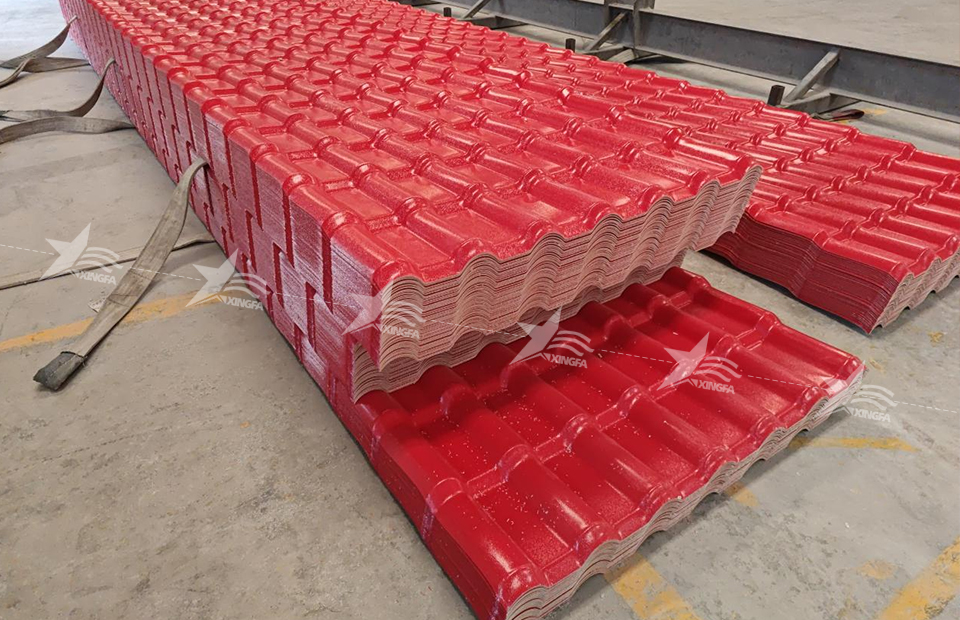
In summary, the service life of synthetic resin roofing tiles exhibits a consistent positive correlation with thickness—establishing thickness as the central determinant of durability, structural stability, and maximum achievable service life. From a structural perspective, thicker tiles feature denser, more dimensionally stable substrates, offering superior resistance to deformation, impact, and extreme weather events—effectively eliminating the vulnerabilities of thin-gauge products (e.g., warping, embrittlement, and fracture). From a protective standpoint, thicker substrates provide reliable mechanical support for high-performance weather-resistant coatings, ensuring durable, long-lasting protection and retarding surface degradation. From a functional standpoint, greater thickness reserves enhance resistance to abrasion and environmental erosion—substantially extending usable service life. From a value perspective, although thicker tiles entail higher initial investment, their minimal maintenance needs and extended replacement intervals yield significantly lower total cost of ownership over time.
In essence, thickness defines the foundational service-life ceiling. Under identical material composition and manufacturing process conditions, increased thickness directly improves structural stability, slows aging kinetics, and extends service life—making it the paramount criterion for selecting synthetic resin roofing tiles and ensuring long-term roof system reliability.