

 EN
 ES
 RU
 AR
Lifespan of UPVC Roofing Tiles in Tropical Humid Climates
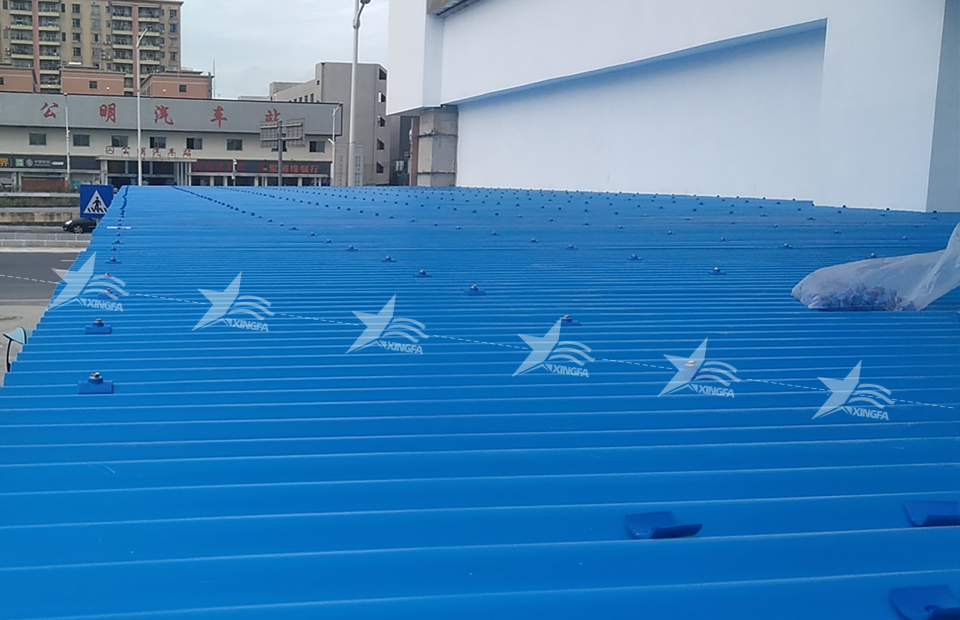
Tropical humid climates represent one of the most demanding environments for roofing materials: high annual UV radiation doses, sustained relative humidity above 80%, intense seasonal rainfall—including torrential downpours—and, in coastal zones, corrosive salt-laden aerosols. While a given UPVC roofing tile may remain functional for over two decades in temperate climates, its service life in tropical humid conditions must first be significantly de-rated—then further stratified according to product quality. For certified, high-performance UPVC roofing tiles, the typical functional service life ranges from 15 to 20 years; by contrast, low-cost, non-UV-stabilized variants often fail within just 3–6 years—a three- to fourfold difference. The following discussion is structured sequentially as “Conclusion → Structural Composition → Degradation Mechanisms → Critical Field Vulnerabilities → Key Inspection Milestones → Proven Service-Life Extension Measures,” enabling direct application in product selection and client technical communication.
1. Defining the Lifespan Range: 15–20 Years vs. 3–6 Years—The Distinction Lies Not in the Name, but in the Formulation
There is no universal answer to the question, “How long will an UPVC roof tile last?”—because products marketed under names such as “PVC tile,” “resin tile,” or “UPVC roofing tile” frequently differ substantially in formulation, layer architecture, and manufacturing process. High-performance UPVC roofing tiles featuring a co-extruded UV-resistant top layer and base material meeting minimum thickness specifications typically achieve a functional service life of 15–20 years in tropical humid climates. In contrast, low-cost, single-layer extruded tiles relying solely on pigment-based coloration commonly exhibit widespread fading, embrittlement, and cracking within just 3–6 years. When quoting or warranting service life externally, best practice is to specify a clearly bounded range (e.g., 15–20 years) explicitly tied to defined structural criteria—not an unqualified claim such as “20-year lifespan.”
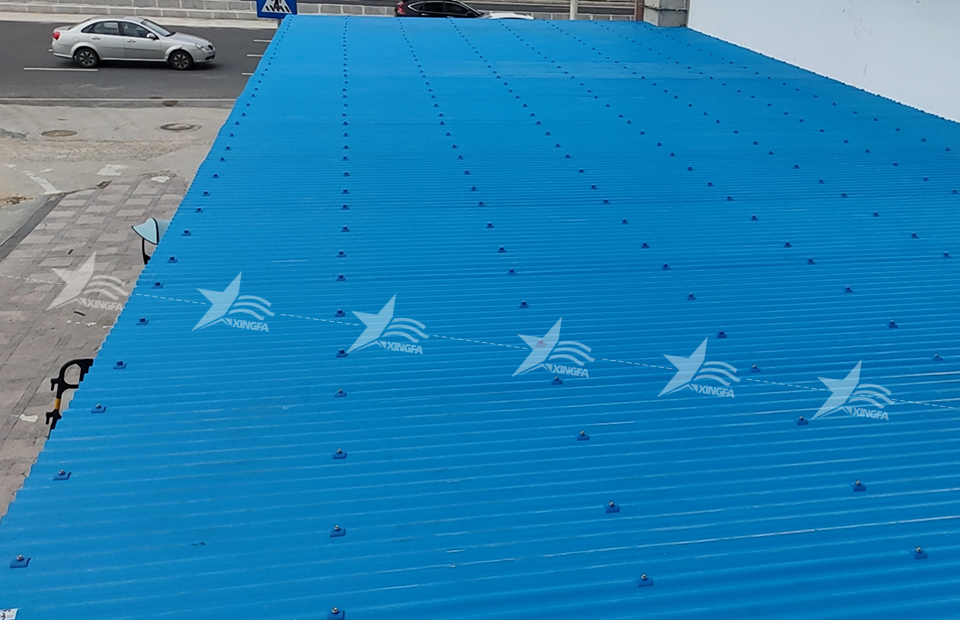
2. Service Life Is Determined by Three Integrated Structural Layers: Base Material, Weathering Layer, and Thickness
The service life of UPVC roofing tiles is not governed by any single parameter, but rather by the synergistic performance of three interdependent layers:
– The base material layer provides mechanical strength and impact resistance—critical for withstanding foot traffic, hail, and maintenance activities;
– The co-extruded weathering layer serves as the primary UV barrier—preserving color stability and surface integrity;
– Overall thickness governs the rate at which thermal-oxidative degradation penetrates inward; thinner profiles are more readily “sun-saturated,” accelerating bulk deterioration.
The overall service life is dictated by the weakest of these three layers. This explains why two tiles of identical dimensions may differ markedly in weight, cross-sectional density, and tactile rigidity—and consequently in price: cost-cutting measures often target precisely the weathering layer thickness and base material mass per unit area.
3. Ultraviolet Radiation: The Primary Determinant of Service Life in Tropical Humid Climates
In tropical humid regions, prolonged daily sunshine duration and high solar elevation angles result in significantly higher cumulative annual UV irradiance compared to temperate zones. UV photons induce scission of PVC polymer chains, manifesting as surface chalking, whitening, and irreversible embrittlement. The weathering layer functions by absorbing or reflecting incident UV energy at the surface—thereby shielding the underlying base material and preserving its mechanical integrity. To assess adequacy of the weathering layer, verify two key criteria: (1) explicit specification of a co-extruded UV-resistant layer (not merely a surface-applied coating), and (2) alignment between stated layer thickness and claimed service life. Surface-coated products, in particular, are prone to interlayer delamination within two to three years in tropical humid conditions—exposing the vulnerable base material upon exposure to rain.
4. Synergistic Effects of High Temperature and High Humidity: Color Deterioration Precedes Strength Loss
Degradation in tropical humid climates arises from the combined action of heat and moisture. Elevated temperatures accelerate thermo-oxidative aging, hastening depletion of plasticizers and thermal stabilizers. Simultaneously, persistent high humidity maintains the tile surface in a state of continuous condensation and intermittent rainwater immersion—accelerating surface oxidation and compromising sealant integrity at joints and overlaps. Field observations consistently follow this progression: initial subtle color variation and gloss reduction, followed by surface chalking, and ultimately embrittlement and cracking. Color change is the earliest observable indicator—but it must not be dismissed as purely aesthetic. Its appearance signals active consumption of the weathering layer; subsequent loss of mechanical strength is therefore an inevitable, albeit delayed, consequence.
5. Actual Service Life Is Often Curtailed by Detailing and Fastener Performance
Many roofs fail not due to tile degradation per se, but because of premature leakage. In tropical humid climates, extreme rainfall intensity drives water infiltration through weak points along lap joints, ridges, gutters, and eaves. In coastal areas, salt fog accelerates corrosion of metallic fasteners—leading to bolt fracture and subsequent tile uplift under negative wind pressure. Consequently, the effective service life of the roof system equals the lesser of (a) the intrinsic tile service life and (b) the durability of critical interface details. Empirical evidence shows that when the tile substrate remains sound beyond ten years, components such as sealing gaskets, waterproof underlay pads, and gutter terminations have often already exceeded their design life and require replacement. Treating these elements as consumables yields more realistic service-life expectations.
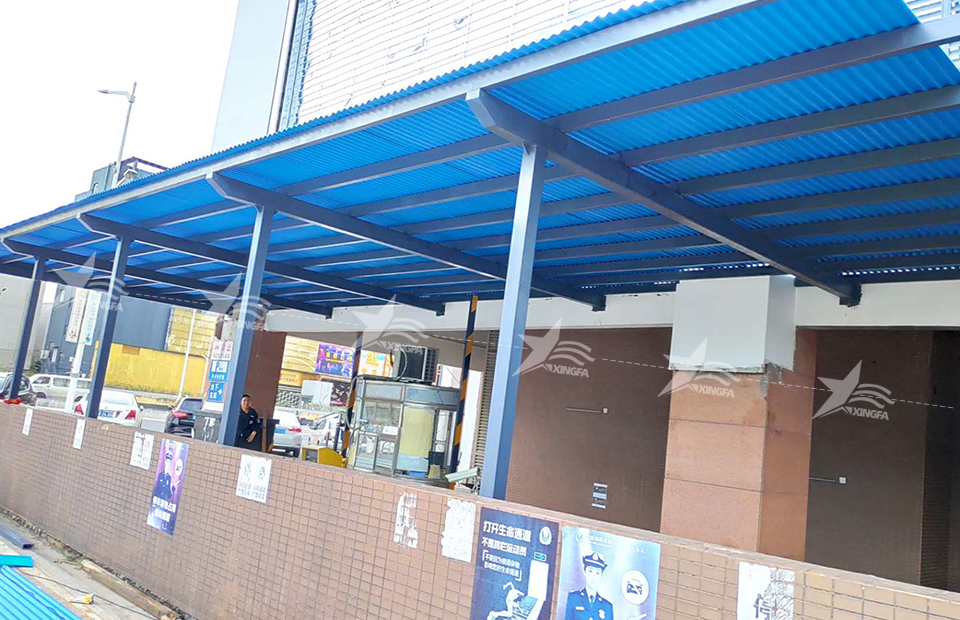
6. Key Inspection Milestones: What to Assess at Year 5, Year 10, and Year 15
Service-life evaluation can be anchored to three definitive inspection milestones:
– At Year 5: Examine for color variation and surface gloss loss. Pronounced whitening or localized peeling indicates insufficient weathering layer thickness.
– At Year 10: Assess embrittlement—apply gentle pressure to the tile trough and inspect screw holes for enlargement or micro-cracking. Concurrently evaluate gutter and eave sealant integrity.
– At Year 15: Conduct a comprehensive post-rainy-season inspection: walk the entire roof surface, focusing on ridge lines, gutters, pipe penetrations, and windward edges. Document findings using objective, binary criteria—e.g., “presence/absence of cracks,” “evidence of water staining,” “screw loosening”—rather than subjective impressions such as “still looks new.”
VII. Three Essential Actions to Realize the Full 15–20-Year Service Life
To substantiate the 15–20-year service-life claim in tropical humid climates, three coordinated actions are indispensable:
– Product Selection: Explicitly specify co-extruded UV-resistant layer construction; require documented layer thickness and base material mass per unit area; and request third-party weathering test data—or verified field performance records—from comparable tropical humid installations.
– Installation Best Practice: Fix fasteners exclusively at wave crests; use compressible waterproof washers; allow adequate thermal expansion clearance; determine purlin spacing based on tile thickness and local wind load requirements; and ensure fully sealed, mechanically robust detailing at ridges, eaves, and gutters.
– Operational Maintenance: Clear leaves and debris from gutters and tile valleys prior to each rainy season; conduct full inspections of fasteners and sealing components every five years; and perform targeted windward-edge inspections before and after each typhoon event.
Only when all three actions are rigorously implemented can the 15–20-year service life be reliably achieved. Implementing only the first two typically results in system-level failure around the 10–11 year mark—driven primarily by premature degradation of interface details.