EN
EN  ES
ES  RU
RU  AR
AR Analysis of Service Life and Multidimensional Influencing Factors of Synthetic Resin Tiles in Cold Regions
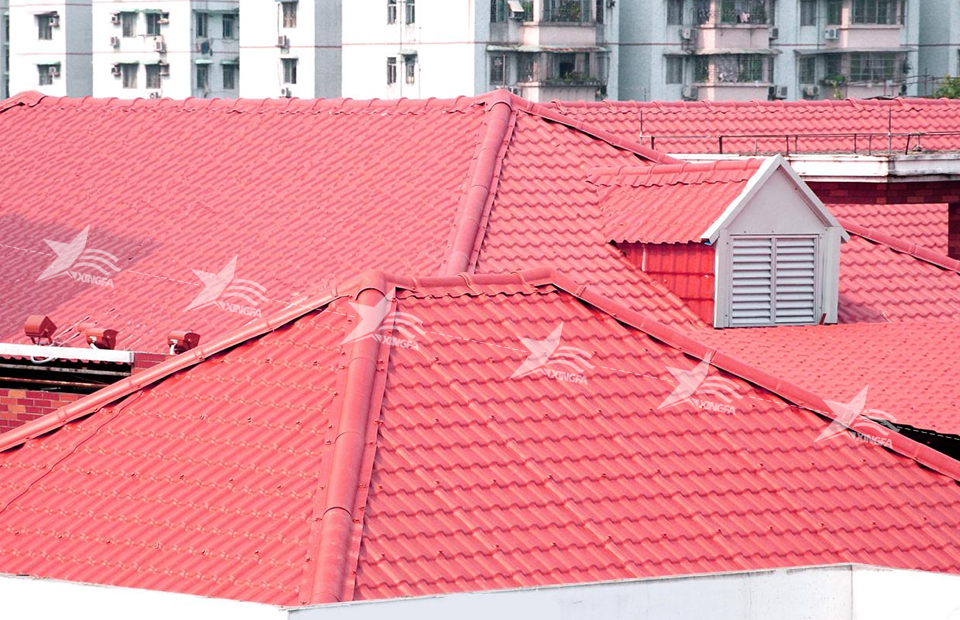
Many users hold a fixed perception regarding the service life of synthetic resin tiles, commonly assuming a uniform lifespan of 15–20 years—overlooking the pivotal role of climatic and environmental conditions. In northern China’s cold and subarctic regions, winter is characterized by severe low temperatures, frequent freeze–thaw cycles, heavy snow accumulation, and extreme diurnal temperature fluctuations—conditions markedly distinct from the mild climates of southern China. Consequently, the actual service life of synthetic resin tiles in cold regions varies significantly depending on material quality, climatic severity, site-specific operational conditions, corrosive exposure, and installation practices. This paper systematically examines the real-world service life and degradation patterns of synthetic resin tiles in cold regions, integrating insights from material science with multidimensional analyses of regional climate characteristics, material compatibility, structural loading conditions, corrosive environments, and installation standards.
1. Climatic Environment: Impact of Low-Temperature Embrittlement and Freeze–Thaw Cycling on Service Life
(A) Material Degradation Due to Low-Temperature Embrittlement
The primary matrix of synthetic resin tiles is polyvinyl chloride (PVC), a high-molecular-weight polymer. Conventional low-grade resin tiles exhibit poor low-temperature resistance; under extreme winter conditions ranging from −10 °C to −35 °C prevalent in northern China, molecular mobility declines sharply, resulting in significant loss of toughness, increased stiffness, and pronounced embrittlement. Under routine wind and snow loads—or during manual snow removal—such tiles are highly susceptible to cracking and fracture, substantially reducing service life. In contrast, premium-grade, virgin-material ASA-composite resin tiles undergo targeted low-temperature modification, incorporating cold-resistant and impact-enhancing additives. These advanced formulations maintain structural integrity down to approximately −30 °C, exhibiting minimal brittleness and delivering a stable baseline service life of 12–18 years. Conversely, low-cost tiles manufactured from recycled materials typically fail within just 3–6 years in high-altitude or subarctic environments.
(B) Structural Fatigue Induced by Repeated Freeze–Thaw Cycles
In cold regions, particularly during transitional seasons (e.g., late winter and early spring), diurnal temperature swings are exceptionally large: daytime melting followed by nighttime refreezing subjects roofing tiles to prolonged and repeated freeze–thaw cycling. Meltwater infiltrates interlocking seams between adjacent tiles; upon nocturnal freezing, volumetric expansion exerts sustained mechanical pressure on both the tile body and seam interfaces. Over time, this leads to edge curling, widening of joints, and eventual failure of waterproofing seals. Cumulative freeze–thaw stress induces progressive structural fatigue and gradual deterioration of material toughness. Compared to temperate, thermally stable regions, the natural aging rate of synthetic resin tiles in cold climates accelerates by 20%–30%.
2. Material Characteristics: Raw Material Formulation Determines Low-Temperature Durability Ceiling
(A) Divergence in Base-Material Low-Temperature Formulations
Roofing tiles specifically engineered for cold-region applications differ fundamentally from standard ambient-temperature variants in their base-material formulation. High-performance cold-climate tiles utilize high-purity virgin PVC as the primary matrix, compounded with specialized cold-stabilizers and low-temperature impact modifiers. Calcium carbonate filler content is minimized to ensure high material density and inherent flexibility—enabling retention of favorable elongation properties even at subzero temperatures. By contrast, economy-grade universal tiles incorporate excessive filler and post-consumer recycled content, yielding rigid, brittle matrices with severely compromised low-temperature performance. Such products are ill-suited to northern China’s harsh winters and prone to systemic embrittlement and catastrophic failure.
(B) Protective Function of the ASA Weathering Layer Under Low-Temperature Conditions
High-quality synthetic resin tiles feature a top-layer coating of high-purity acrylonitrile–styrene–acrylate (ASA) copolymer—a durable, UV-resistant weathering layer that also mitigates low-temperature-induced material degradation. A uniformly applied, adequately thick ASA co-extruded layer effectively buffers thermal stresses arising from rapid temperature fluctuations, thereby preventing localized stress concentration and inhibiting microcrack initiation. In contrast, single-layer PVC tiles lacking a certified ASA surface layer lack critical protective functionality. Under cold-region wind and snow abrasion, their unprotected surfaces rapidly chalk, erode, and delaminate—exposing the vulnerable base material directly to freeze–thaw damage and accelerating overall service-life reduction.
3. Operational Loading Conditions: Snow and Wind Loads Accelerating Aging and Degradation
(A) Sustained Static Load from Prolonged Snow Accumulation
In high-latitude, snow-prone regions of northern China, roofs often bear persistent, heavy snow loads throughout winter. Standard thin-profile or low-toughness resin tiles subjected to such long-term static compression gradually deform, sag, and lose wave profile integrity—compromising roof structural stability. Continuous compressive stress progressively degrades material toughness, increasing susceptibility to cracking and leakage in later service stages. This static overload constitutes one of the principal causes of premature roof system failure in cold regions. In contrast, cold-optimized, 3.0-mm-thick resin tiles—designed with enhanced structural rigidity and superior compressive strength—effectively resist snow-induced deformation, exhibiting markedly slower degradation kinetics.
(B) Dynamic Impact Loads from High Winds and Hailstorms
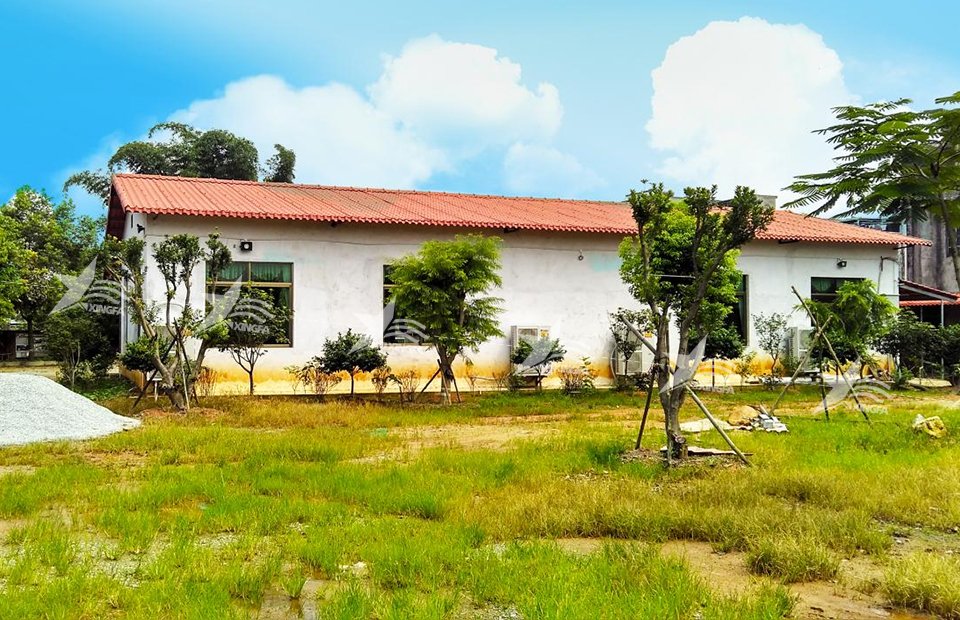
Cold regions frequently experience strong winds, and hailstorms are common in early spring. At low ambient temperatures, tile toughness is inherently diminished; when combined with wind-induced uplift forces and hailstone impact, microscopic cracks may form undetected. Repeated dynamic loading progressively accumulates subsurface damage, which eventually propagates into visible fractures and water infiltration pathways—indirectly shortening overall service life. Resin tiles formulated with advanced low-temperature toughening agents demonstrate significantly improved impact resistance, enabling effective mitigation of weather-related dynamic degradation.
4. Corrosive and Hygrothermal Environments: Unique Aging Triggers in Cold Regions
A widespread misconception holds that cold regions pose negligible corrosion risk. In reality, several region-specific mechanisms contribute to accelerated material degradation. First, de-icing salts and snow-melting agents applied to adjacent infrastructure are carried onto roofs by meltwater runoff, generating mild acidic or alkaline corrosion that gradually erodes the tile surface. Second, in enclosed industrial facilities—such as livestock barns or chemical plants—winter indoor humidity and corrosive gases remain trapped due to tightly sealed windows and doors, leading to condensation formation on the underside of the roof. This condensed moisture persistently attacks the inner layers of the tile. Furthermore, although ambient air in cold regions tends to be dry, large diurnal humidity variations subject roofing surfaces to continuous wet–dry cycling—promoting dust accumulation, mild fungal growth, and accelerated depletion of the surface weathering layer. Consequently, in industrially contaminated cold-region sites, the service life of synthetic resin tiles is reduced by approximately 15% relative to non-corrosive, arid environments.
5. Installation Environment: Proper Construction Practices as a Critical Lifespan Determinant
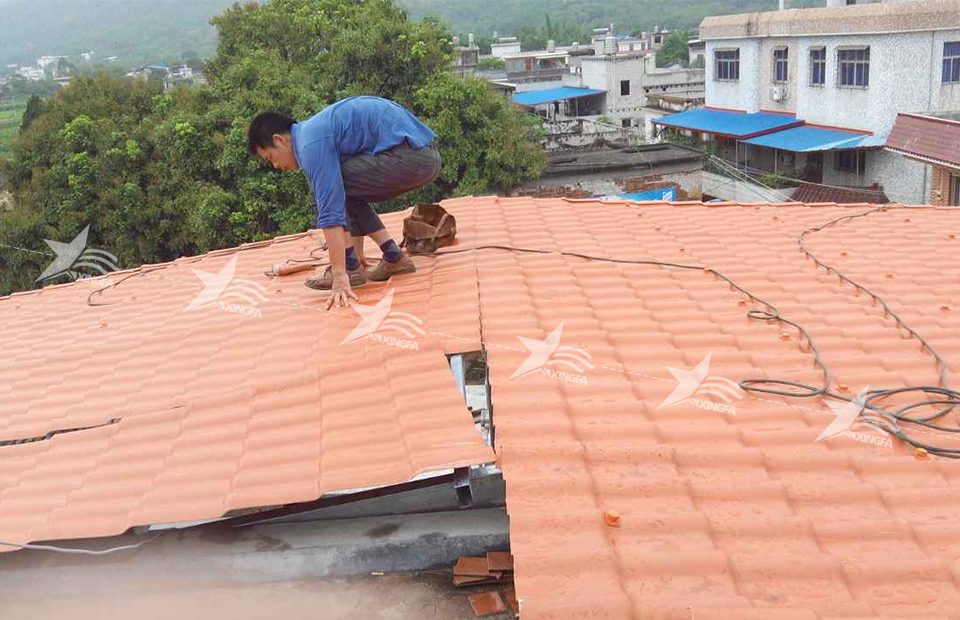
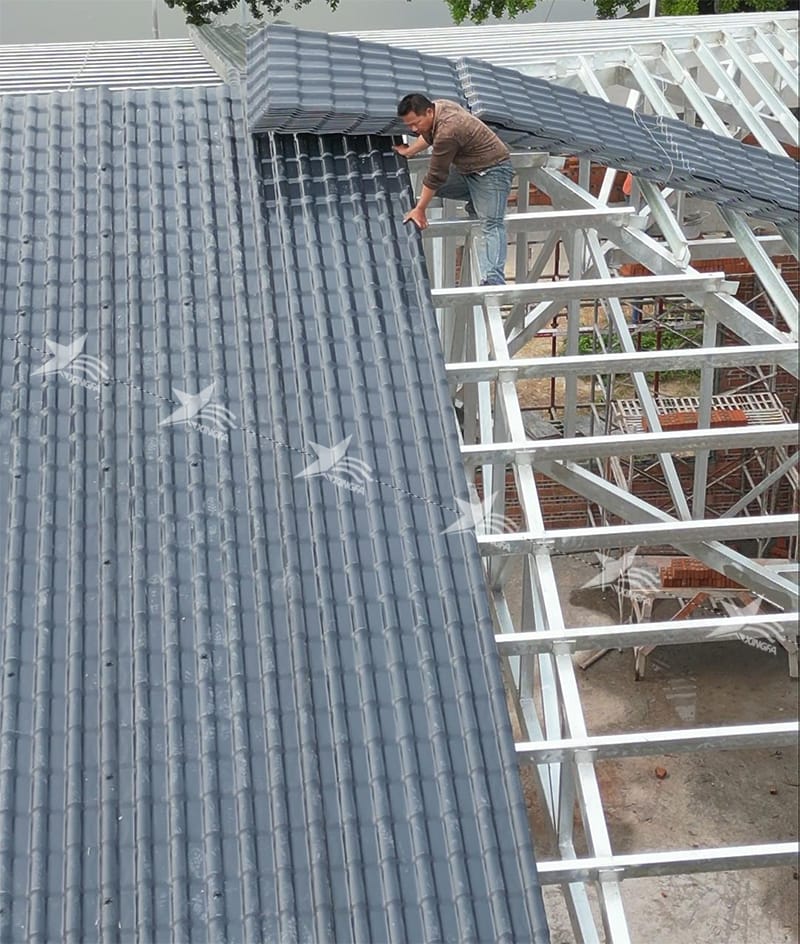
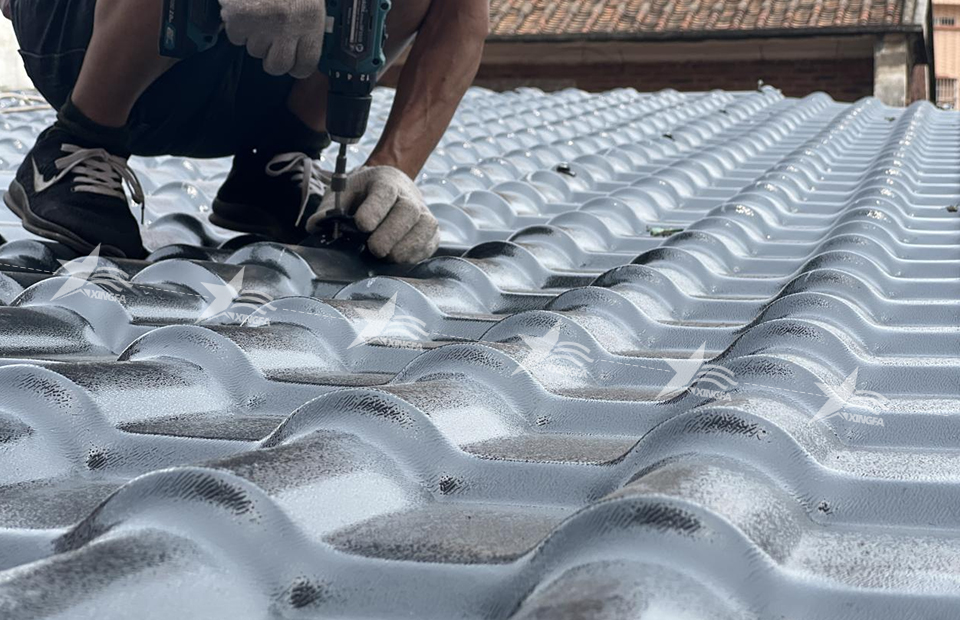
Installation protocols require heightened rigor in cold climates, as noncompliant practices significantly amplify adverse climatic effects. Synthetic resin tiles possess relatively high coefficients of thermal expansion and contraction. Given the extreme diurnal temperature differentials in northern China, insufficient provision of expansion joints or over-tightened fasteners during installation leaves no margin for low-temperature shrinkage—resulting in screw-hole tearing and tile fracturing. Similarly, excessive purlin spacing or inadequate tile overlap width compromises snow-load resistance and accelerates deformation and breakage. Conversely, adherence to cold-region-specific installation standards—including appropriate expansion-gap allowances, optimized purlin spacing, and precise fastener torque control—effectively eliminates construction-induced premature aging risks and maximizes service life potential.
6. Summary of Service-Life Ranges
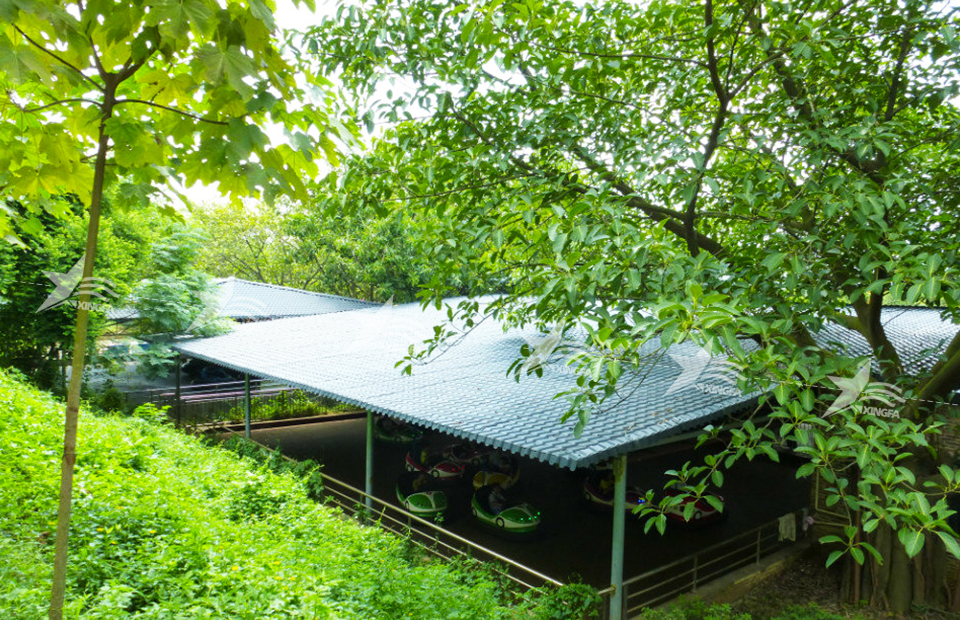
Integrating all aforementioned factors, the service life of synthetic resin tiles in cold regions falls within well-defined ranges:
- Low-grade, recycled-material tiles: 3–6 years;
- Standard-grade, virgin-material tiles: 10–12 years;
- Premium-grade, cold-optimized, thick-section (≥3.0 mm), ASA-composite tiles—installed per specification and deployed under typical operational conditions: 12–18 years.
Although service life in cold regions is generally somewhat shorter than in southern, temperate zones, selecting appropriately formulated low-temperature-resistant materials, specifying adequate thickness, and implementing rigorous installation standards collectively ensure long-term, reliable performance. As such, synthetic resin tiles represent a highly cost-effective, durable, and corrosion-resistant roofing solution for industrial and commercial buildings across northern China.