EN
EN  ES
ES  RU
RU  AR
AR Analysis of Service Life of Synthetic Resin Tiles in Coastal Climates
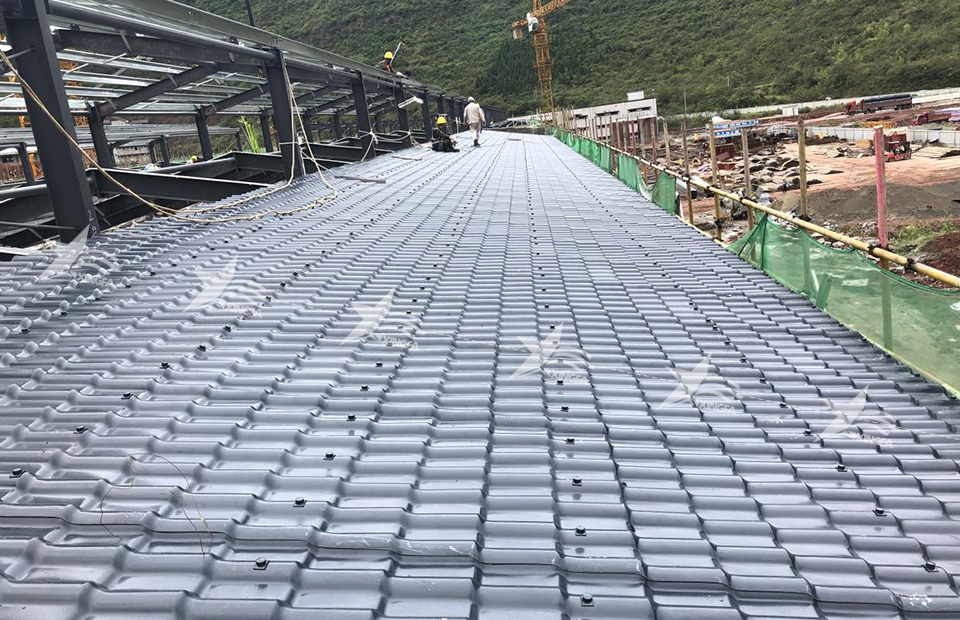
Synthetic resin tiles—valued for their lightweight nature, waterproofing capability, corrosion resistance, and anti-aging properties—are widely adopted in roof renovation projects across residential buildings, industrial facilities, and cultural-tourism structures in coastal regions. However, the unique coastal climate—characterized by high salinity fog, intense ultraviolet (UV) radiation, frequent typhoons and heavy rainfall, and persistently high temperature and humidity—significantly accelerates tile aging and degradation. Consequently, the actual service life of such tiles often deviates markedly from their theoretical lifespan. This paper conducts a systematic analysis of service-life determinants under coastal conditions, focusing on five core dimensions: climatic environment, product characteristics, raw material composition, tile thickness, and installation practices.
1. Primary Impact of Coastal Climatic Environment on Tile Service Life
The coastal climate constitutes the foremost external factor governing the actual service life of synthetic resin tiles. The synergistic effect of multiple extreme meteorological conditions results in continuous, cumulative degradation. First, high salinity fog induces severe corrosion: elevated chloride ion concentrations in coastal air readily deposit onto tile surfaces, gradually penetrating protective coatings and disrupting the molecular structure of the resin matrix—leading to color fading, surface chalking, and embrittlement. In substandard tiles, this mechanism can effectively halve service life.
Second, intense UV radiation combined with high temperature and humidity drives photo-oxidative and thermal aging. During summer months, prolonged exposure to strong sunlight breaks chemical bonds in the polymer chains, initiating photo-oxidation; meanwhile, sustained high temperature and humidity accelerate thermal degradation, weakening interlayer adhesion and resulting in delamination and peeling.
Third, recurrent typhoons, torrential rain, and short-duration convective weather events cause mechanical damage. Sustained high winds exert tensile stress on roof tiles, promoting loosening and edge curling; prolonged rainwater runoff and instantaneous hail impact generate micro-cracks in tiles with insufficient impact resistance. Once moisture infiltrates these cracks, internal degradation is accelerated, substantially reducing service life. Empirical data indicate that adverse coastal climatic conditions increase the aging rate of conventional synthetic resin tiles by over 30%.
2. Constraints Imposed by Product Characteristics and Weather Resistance
The inherent weather resistance, corrosion resistance, and impact resistance of synthetic resin tiles constitute the foundational prerequisites for suitability in coastal environments. High-performance tiles exhibit exceptional resistance to salt fog, acids/alkalis, and UV radiation. Their dense, impermeable surface layer effectively blocks chloride ion and moisture penetration, maintaining color stability and dimensional integrity under prolonged solar exposure—enabling a theoretical service life exceeding 25 years. In contrast, low-grade tiles possess poor weatherability due to inadequate surface protection, rendering them highly vulnerable to coastal salt fog and UV exposure; severe fading, chalking, and cracking commonly occur within just 2–3 years.
Furthermore, toughness and thermal stability are critical. Coastal regions experience pronounced diurnal and seasonal temperature fluctuations. Premium tiles feature high heat-deflection temperatures and retain flexibility at low temperatures, enabling reliable performance across repeated thermal cycling. Conversely, inferior products suffer from poor thermal stability: they soften and deform under high temperatures and become brittle and prone to fracture at low temperatures—leading to premature failure under long-term thermal stress. Additionally, superior self-sealing waterproofing properties prevent rainwater infiltration into the substrate, thereby mitigating internal corrosion and serving as a key enabler of extended overall roof system longevity.
3. Raw Material Composition Determines Fundamental Durability Limits
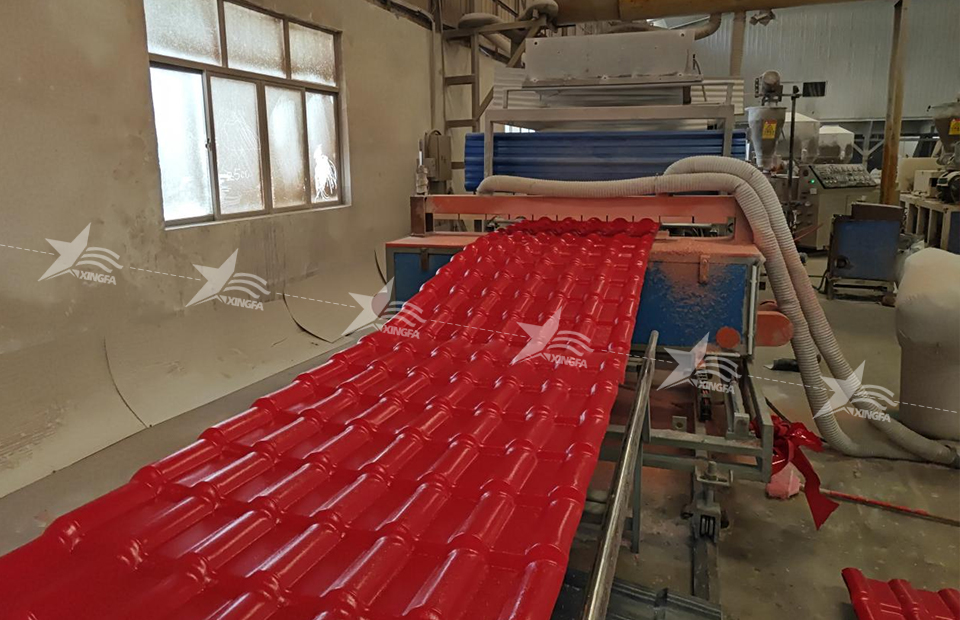
Raw material formulation represents the core intrinsic determinant of tile service life. Currently, ASA/PVC composite resin tiles represent the mainstream solution optimized for coastal applications. High-quality products utilize virgin PVC substrates paired with high-purity ASA weather-resistant top layers, supplemented with specialized UV absorbers, antioxidants, and salt-fog stabilizers. This yields a stable molecular architecture with outstanding resistance to aging and corrosion—specifically engineered for harsh coastal conditions.
Inferior tiles, by contrast, frequently employ recycled plastic feedstocks heavily adulterated with calcium carbonate fillers—dramatically reducing material purity and molecular stability—and omit dedicated weather-resistance additives. Such tiles exhibit weak surface protection, rendering their base materials highly susceptible to degradation by salt fog and UV radiation. They not only lack sufficient hardness and toughness but also commonly suffer from delamination, chalking, and cracking. Moreover, certain low-end products rely solely on monolayer extrusion without a composite weather-resistant layer, rendering them wholly unsuitable for high-corrosion coastal environments and drastically curtailing service life.
4. Differential Service-Life Impacts of Tile Thickness and Structural Design
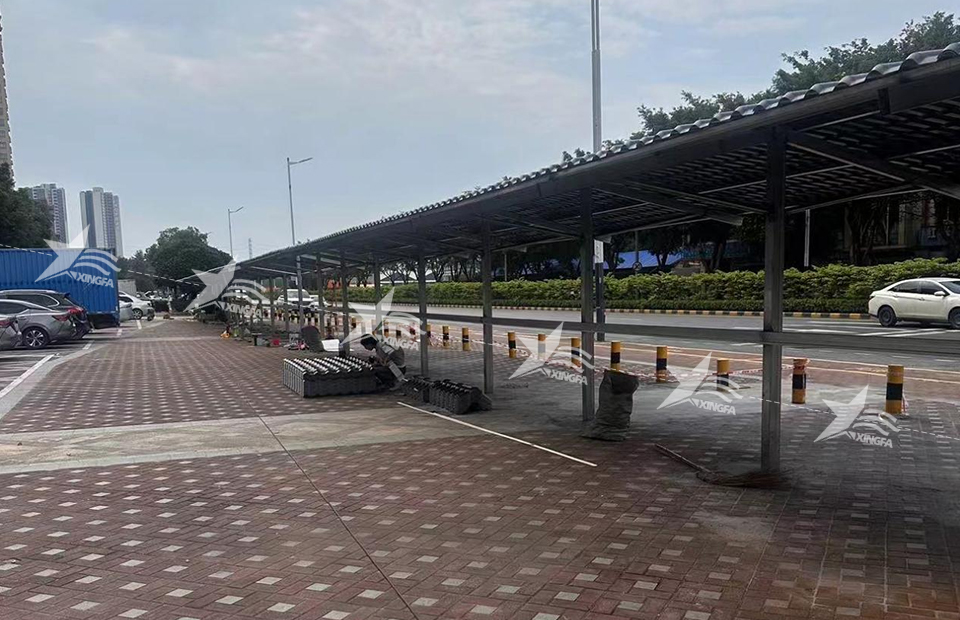
Tile thickness directly governs impact resistance, wind-load capacity, and long-term durability—making it a pivotal selection criterion for coastal applications. Significant service-life disparities exist across thickness grades. Industry standards define 2.0–2.5 mm as standard thickness, suitable for inland, temperate climates. Under coastal conditions—characterized by high wind loads and aggressive corrosion—this thickness offers inadequate impact resistance, rendering tiles vulnerable to typhoon- and hail-induced damage and limiting service life to only 10–15 years.
A 3.0-mm thick tile is the recommended specification for coastal use. Its robust substrate and enhanced structural integrity significantly improve wind-load and impact resistance—enabling effective mitigation of typhoon damage—while simultaneously retarding the penetration of salt fog and UV radiation. When combined with a high-performance ASA top layer, such tiles achieve a stable service life of 25–30 years. Tiles below optimal thickness not only exhibit inferior physical resilience but also age markedly faster under sustained mechanical loading and environmental stress—failing to meet the long-term functional requirements of coastal roofing systems.
5. Installation Practices: Enhancing or Compromising Service Life
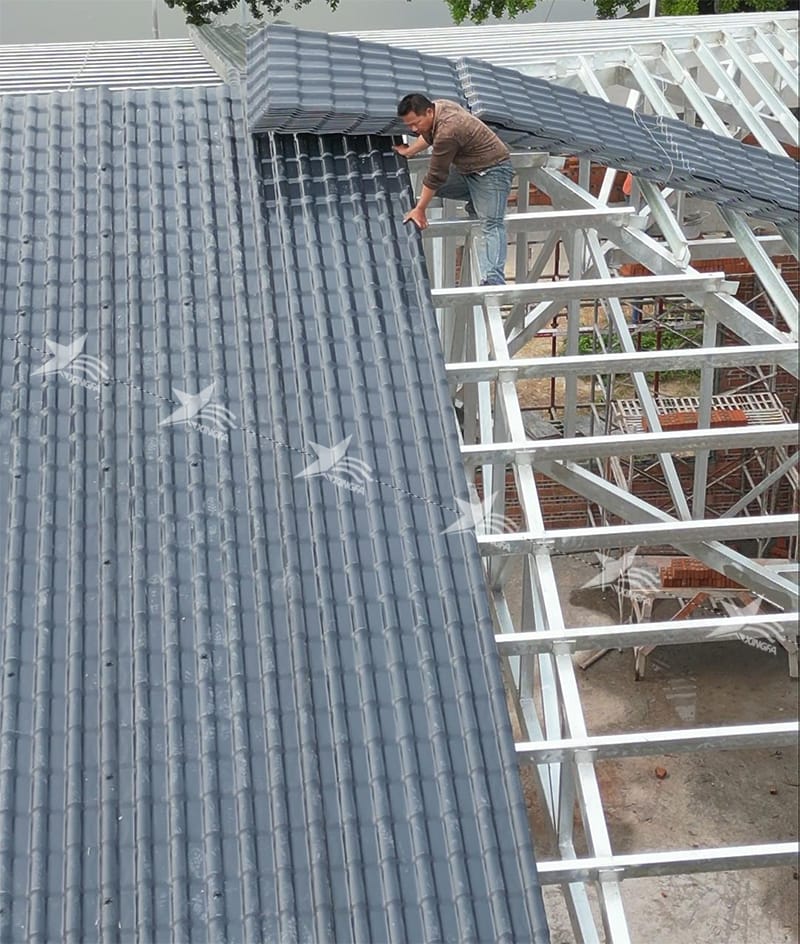
Proper installation is essential to realizing the designed service life of synthetic resin tiles—even premium products will experience significantly shortened lifespans if installed incorrectly. In coastal regions, installation must rigorously address three critical aspects: wind resistance, waterproofing, and corrosion prevention. First, roof pitch must be carefully controlled: insufficient slope leads to water ponding, which accelerates tile corrosion, promotes mold growth, and degrades surface integrity over time.
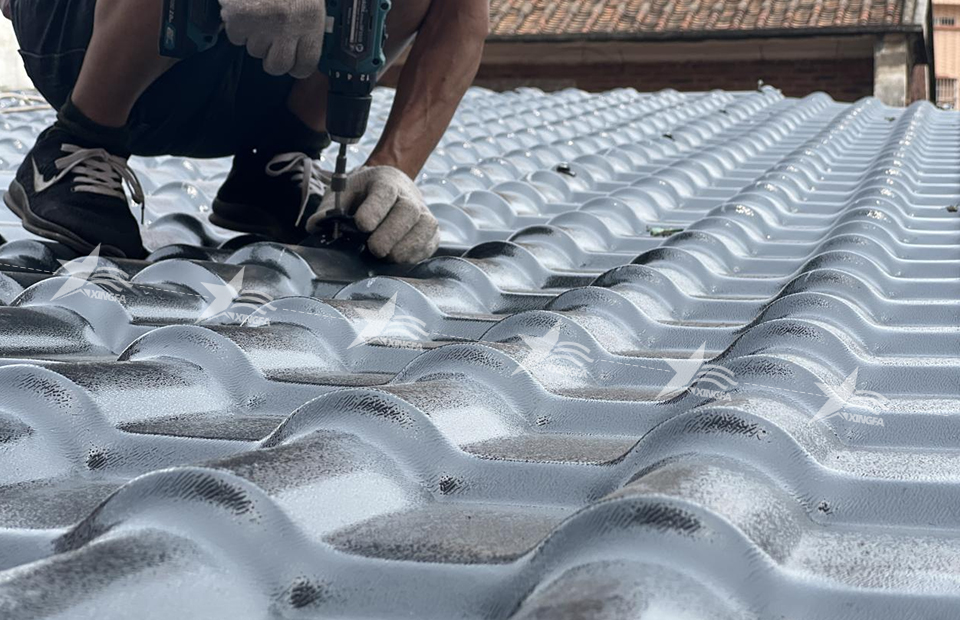
Second, fastener installation requires strict adherence to best practices. Stainless-steel, waterproof fasteners specifically designed for roofing applications must be used to prevent rust-induced loosening. Screw torque must be precisely calibrated: excessive tightening induces tile deformation and cracking, whereas insufficient torque increases the risk of edge curling and leakage during typhoon events. Furthermore, tile overlap width must comply with coastal wind-resistance standards; inadequate overlap permits ingress of rainwater and salt-laden air between layers, accelerating internal degradation.
Finally, any minor damage incurred during handling—such as cuts or impacts—must be promptly sealed. Unsealed micro-damages serve as entry points for corrosive agents, with degradation progressively expanding from these initial breach sites.
6. Conclusion
The service life of synthetic resin tiles in coastal regions is the result of a multidimensional interplay among environmental conditions, product design, material composition, dimensional specifications, and installation practices. The unique coastal climate—characterized by high salinity fog, intense ultraviolet (UV) radiation, and frequent typhoons and heavy rainfall—constitutes the primary external factor accelerating tile degradation. Internally, the raw material formulation, inherent weathering resistance of the product, and tile thickness collectively determine its fundamental durability ceiling. Meanwhile, adherence to standardized, professional installation procedures serves as the critical enabler for realizing the product’s designed service life.
Compared with inland environments, coastal regions impose significantly higher performance requirements on resin roofing tiles. To effectively withstand aggressive marine climatic conditions and fully leverage the product’s long-term durability, only premium-grade tiles—manufactured from 100% virgin raw materials, featuring a reinforced 3.0 mm thickness, and incorporating high-weatherability ASA composite layers—should be selected. These must be installed using certified, wind-resistant, and waterproof construction protocols. Such an integrated approach enables stable, reliable performance for over 25 years. Conversely, substandard materials, undersized tiles, or noncompliant installation practices inevitably lead to premature roof deterioration and structural failure, substantially diminishing both functional performance and cost-effectiveness.