RU
 EN
 ES
 AR
Why UPVC Roofing Tiles Are Widely Adopted in Tropical Humid Climates

Tropical humid climates involve more than mere “heat”—they present a synergistic combination of high temperatures, intense ultraviolet (UV) radiation, year-round high humidity, salt-laden sea spray, short-duration torrential rainfall, and typhoons. Roofs in such environments face compound aging: metal roofing panels may corrode through within a few years; conventional plastic tiles often embrittle within two to three years; clay tiles absorb moisture and crack under freeze–thaw cycles (even in marginal cases); and timber roof structures are prone to mold and decay. UPVC roofing tiles have been extensively adopted across Southeast Asia, coastal South America, and southern China precisely because their intrinsic material properties align comprehensively with this demanding set of environmental stressors. This article explains the rationale across seven key dimensions: UV resistance, moisture absorption and mold resistance, salt-spray and acidic-rain corrosion resistance, stormwater drainage performance, wind uplift resistance, thermal insulation and condensation control, and maintenance requirements—along with essential selection prerequisites.
1. High Temperature and Intense UV Radiation: Surface UV-Resistant Layer Preserves Color and Structural Integrity
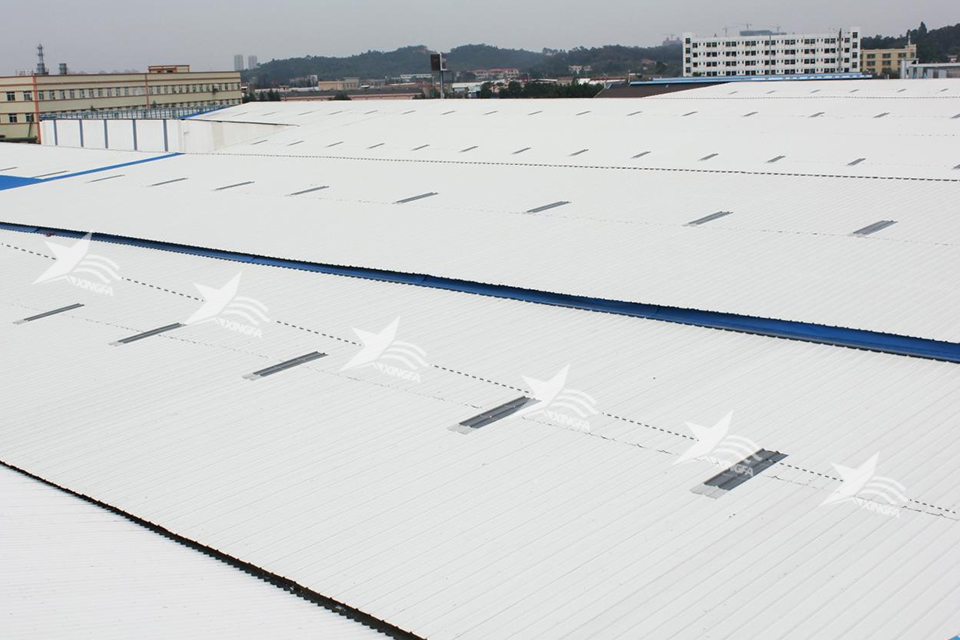
Sunshine duration in tropical humid regions significantly exceeds that in temperate zones, and UV irradiance is correspondingly higher. Prolonged UV exposure causes molecular chain scission in PVC-based substrates, resulting in fading, chalking, and embrittlement. The critical differentiator for UPVC roofing tiles lies in a co-extruded surface layer engineered specifically for UV resistance and weatherability—effectively shielding the underlying substrate from direct UV penetration. Additionally, light-colored tile surfaces reflect a substantial portion of incident solar radiation, thereby reducing surface temperature and further retarding thermal–photochemical degradation. This protective layer represents a decisive performance threshold: low-cost PVC tiles lacking a dedicated UV-resistant layer typically exhibit pronounced fading and whitening within three years in tropical humid environments—the primary cost differential between premium and budget products stems precisely from this feature.
2. Year-Round High Humidity: Low Water Absorption Prevents Swelling, Softening, and Biological Growth
Relative humidity in tropical humid climates remains persistently above 80%. Materials susceptible to moisture absorption suffer reduced mechanical strength, surface mold and algal growth, and accelerated joint degradation due to water ingress. UPVC is a closed-cell polymeric material with exceptionally low water absorption—effectively preventing moisture penetration into its bulk. Consequently, it neither swells nor softens upon prolonged exposure, and exhibits negligible susceptibility to mold or fungal colonization. Its smooth, dense surface also offers poor adhesion conditions for mosses and lichens; post-monsoon rain naturally rinses away any superficial deposits. This advantage is especially pronounced in regions with monsoon seasons lasting up to six months: clay and concrete tiles retain moisture over extended periods, fostering successive layers of algae and moss—increasing dead load and obstructing drainage—whereas UPVC tiles require virtually no dedicated anti-fouling maintenance.

3. Salt Spray and Acidic Rain: Chemical Inertness Ensures Corrosion Resistance
Many tropical humid zones coincide with coastal areas or industrial corridors where sea-borne salt aerosols and anthropogenic acidic pollutants combine with rainfall to form aggressive corrosive media. In such conditions, color-coated steel and galvanized roofing panels frequently develop rust spots within one to two years; rust runoff stains façades, and perforation ultimately leads to leakage. By contrast, UPVC is a chemically inert polymer—unreactive toward common acids, alkalis, and salts—and contains no oxidizable metallic components. Thus, it is fundamentally immune to “rust” as a failure mode and requires no periodic repainting or anti-corrosion treatments. This property delivers immediate, tangible benefits for buildings located on islands, in port cities, or near chemical industrial parks—both residential and industrial.
4. Short-Duration Intense Rainfall: Optimized Profile Geometry Ensures Adequate Drainage Capacity
Tropical rainfall is characterized by high intensity and short duration—single afternoon downbursts often equaling an entire day’s precipitation in temperate regions. Roofing system performance under such conditions depends primarily on hydraulic capacity (i.e., effective drainage cross-section) and seam integrity—not solely on base material properties. UPVC roofing tiles feature a profile with wide wave pitch and deep troughs, yielding a large effective drainage cross-sectional area per unit length and efficient water channeling. When combined with sufficient overlap length and properly installed ridge caps, eave flashings, and valley trim accessories, the system rapidly evacuates concentrated runoff—minimizing risks of backflow or overtopping at ridges. Conversely, reducing overlap width to cut material costs—a common construction oversight in tropical humid regions—compromises hydraulic performance regardless of tile quality, inevitably leading to leakage during extreme rainfall events.

5. Typhoons and Strong Winds: Lightweight Design Enables Robust Wind-Uplift Mitigation
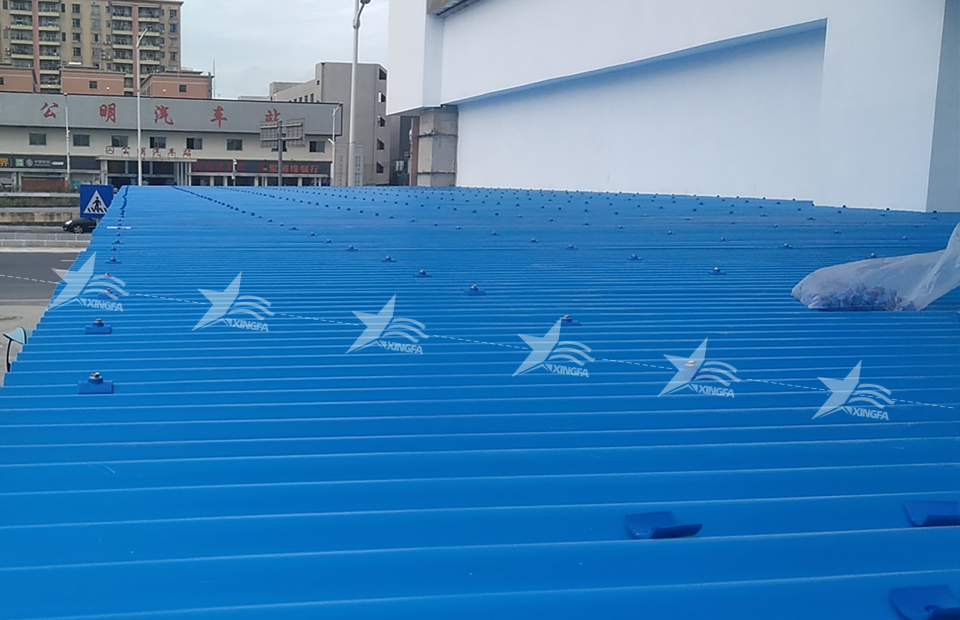
Tropical humid regions frequently lie within typhoon-prone zones, where high negative wind pressures impose severe uplift loads on roofs. Tile detachment is a typical failure mode. UPVC tiles’ low self-weight reduces structural demand on rafters and purlins—making them particularly suitable for retrofit projects without major structural reinforcement. Their light mass also facilitates denser fastener spacing: compatible wind-resistant screws can be installed at wave peaks, paired with EPDM or similar compression gaskets to ensure watertightness; edge and corner zones can be further reinforced. However, it must be emphasized that low weight does not automatically equate to adequate wind resistance. Excessive purlin spacing, insufficient fastener density, or inadequate eave reinforcement will still result in tile uplift under high winds. Therefore, wind-resistance performance must be explicitly addressed in technical specifications—including anchorage details—not merely evaluated on board price alone.
6. Thermal Insulation and Condensation Control: Enhancing Indoor Comfort in Humid Climates
In tropical humid climates, roofing systems must simultaneously mitigate solar heat gain *and* suppress interior surface condensation. UPVC’s thermal conductivity is markedly lower than that of metals, enabling it to slow summertime heat transfer into occupied spaces—avoiding the radiant “hot ceiling” effect commonly observed with color-coated steel roofs. Moreover, under conditions of high humidity coupled with diurnal temperature fluctuations, metal roofs readily develop interior surface condensation, leading to dripping and potential moisture damage. In contrast, polymeric roofing surfaces exhibit significantly lower condensation propensity. For enhanced performance, hollow-core UPVC tiles incorporate an air gap that further impedes conductive heat transfer—improving thermal insulation while also dampening raindrop impact noise. This dual benefit meaningfully elevates occupant comfort in regions subject to prolonged rainy seasons and frequent, acoustically intrusive rainfall.
7. Maintenance Requirements and Prerequisite Conditions for Selection
From a maintenance perspective, UPVC roofing tiles eliminate the need for anti-corrosion painting or periodic recoating. Routine upkeep is limited to pre-monsoon cleaning of gutters and valleys, plus periodic inspection of gaskets and perimeter flashing—requiring only low-cost consumables and minimal labor input. This simplicity makes UPVC especially appropriate for areas with limited access to professional property management services. Nevertheless, widespread successful application hinges on several non-negotiable prerequisites:
(1) selection of products featuring a certified UV-resistant co-extruded surface layer and adequate nominal thickness;
(2) fastening exclusively at wave peaks using compatible wind-rated screws with waterproof compression washers, and allowing for thermal expansion;
(3) purlin spacing strictly determined by tile thickness and local wind-load design criteria;
(4) comprehensive detailing at ridge, eave, and gutter interfaces;
(5) verification of compliance with local fire safety regulations and architectural appearance guidelines.
Only when all these conditions are rigorously met can UPVC roofing deliver service life commensurate with its investment cost.