RU
RU  EN
EN  ES
ES  AR
AR Analysis of Service Life Differences Between Single-Layer and Multi-Layer Synthetic Resin Roofing Tiles and Key Influencing Factors
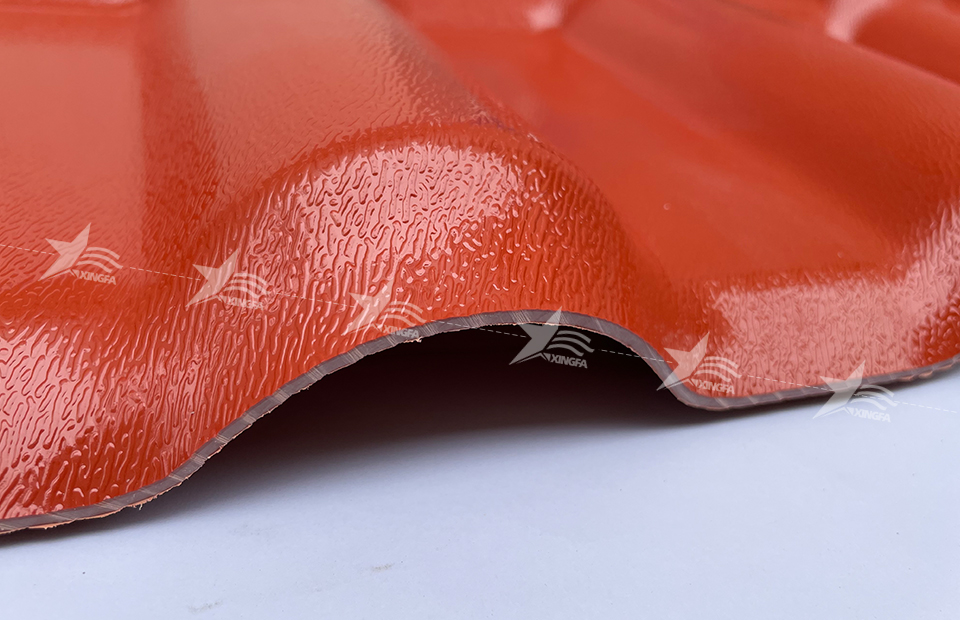
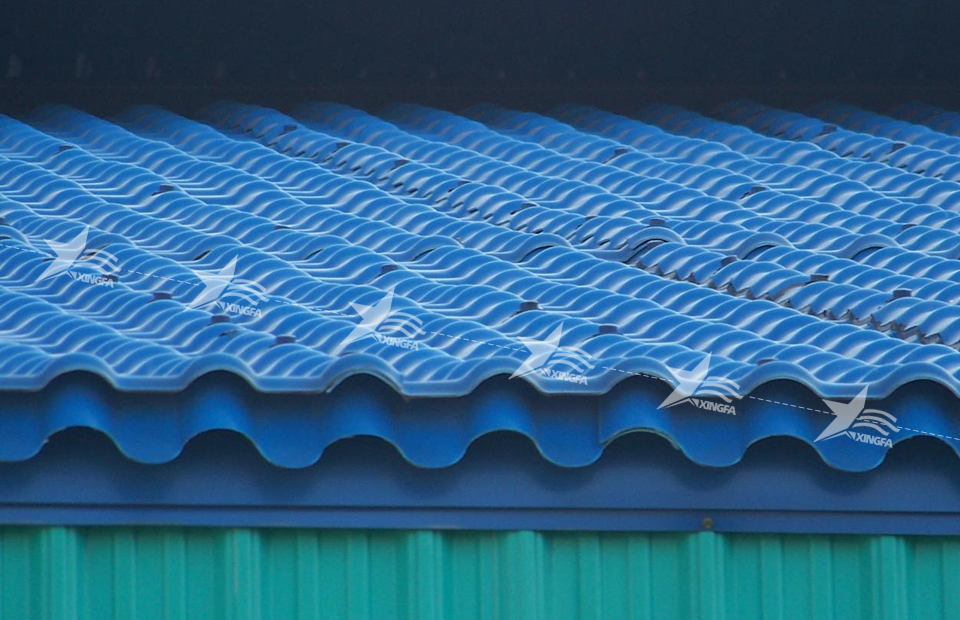
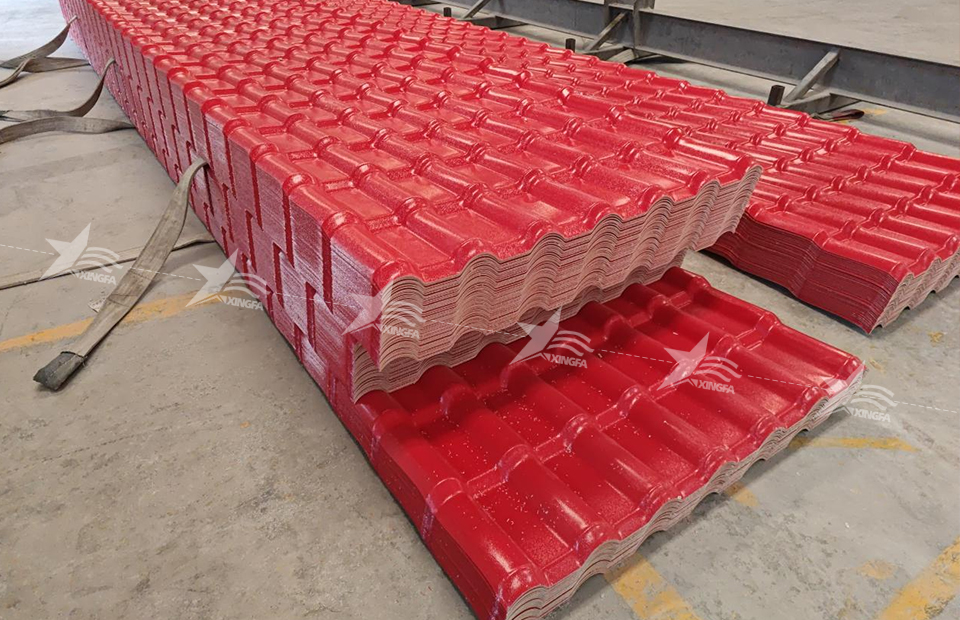
Synthetic resin roofing tiles—valued for their lightweight construction, corrosion resistance, waterproofing capability, weather durability, noise reduction, and seismic resilience—are widely deployed in residential roofing, industrial plant refurbishments, and historic-style architecture. Currently, commercially available resin tiles fall into two primary structural categories: single-layer monolithic tiles and multi-layer composite tiles. Even when thicknesses are identical, these two types exhibit marked differences in service life. Many end users focus solely on thickness during procurement while overlooking critical distinctions in structural layering—leading to premature degradation issues such as aging, chalking, cracking, and water leakage. This article conducts a systematic analysis of service life disparities between the two tile types from three interrelated perspectives: (1) intrinsic material properties; (2) structural and functional distinctions between single-layer and multi-layer configurations; and (3) core determinants of service life—providing a scientifically grounded basis for informed material selection.
1. Core Material Characteristics of Synthetic Resin Roofing Tiles
The principal raw materials for synthetic resin roofing tiles are polyvinyl chloride (PVC) resin and acrylonitrile–styrene–acrylate (ASA) weather-resistant resin. The inherent performance divergence between these two polymers forms the foundational basis for the service life differentiation between single-layer and multi-layer tiles. PVC serves as the primary structural matrix due to its excellent toughness, dimensional stability, and cost-effectiveness. However, it suffers from pronounced limitations: prolonged outdoor exposure to ultraviolet (UV) radiation, elevated temperatures, and moisture induces oxidative degradation, surface chalking, and embrittlement—rendering its weatherability inadequate for long-term exterior applications.
In contrast, ASA is an advanced engineering polymer engineered specifically for exceptional UV resistance, anti-aging performance, and chemical corrosion resistance. It effectively withstands thermal cycling, acidic/alkaline rainwater erosion, and abrasive wind-sand abrasion—making it indispensable for ensuring extended outdoor service life. Yet ASA exhibits relatively low rigidity and insufficient mechanical strength when used alone, rendering it unsuitable as a load-bearing structural component for roofing systems.
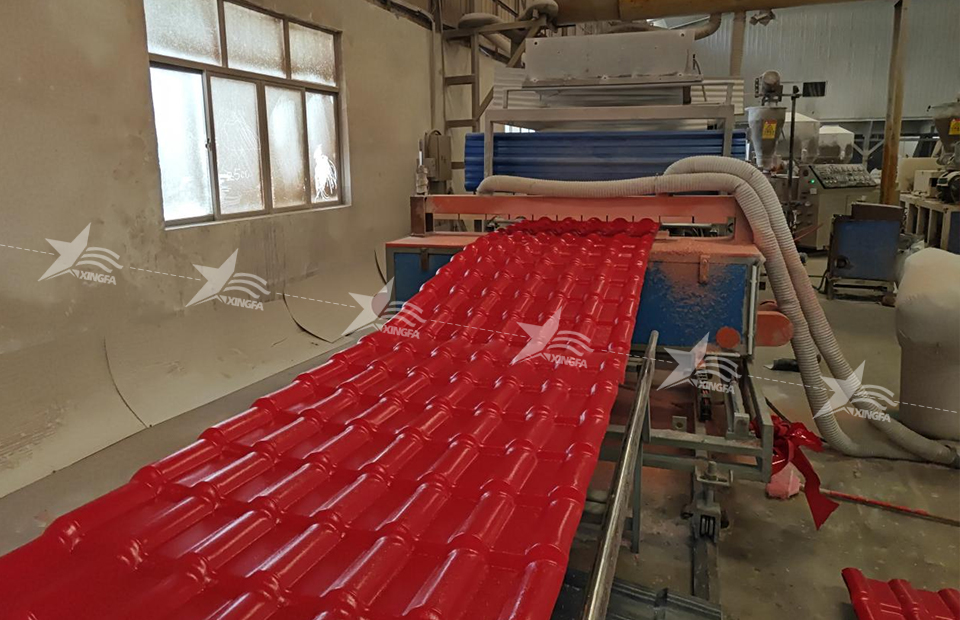
Leveraging the complementary attributes of PVC and ASA, two distinct manufacturing architectures have evolved: single-layer co-extrusion and multi-layer lamination. Single-layer tiles employ a homogeneous material blend, whereas multi-layer tiles utilize functionally stratified construction—precisely allocating roles to individual layers—to fully exploit the synergistic advantages of both resins. This fundamental material architecture difference establishes the root cause of divergent longevity outcomes.
2. Structural and Performance Distinctions Between Single-Layer and Multi-Layer Synthetic Resin Tiles
- Single-Layer Synthetic Resin Tiles
Single-layer tiles feature a uniform, monolithic structure fabricated via one-step extrusion molding. The entire tile comprises a homogenized mixture of PVC, ASA, and auxiliary additives—fully blended, melted, and extruded simultaneously. Consequently, material composition, density, and formulation remain consistent throughout the cross-section.
While this approach offers process simplicity and lower production costs, it harbors a critical design limitation. To control manufacturing expenses, most single-layer tiles incorporate minimal ASA content—sometimes substituting colorants entirely for genuine weather-resistant resins—resulting in inherently weak surface weatherability. Since the surface and bulk share identical material properties, UV-induced degradation proceeds uniformly across the entire tile. Once the surface begins to fade and chalk, the underlying PVC substrate becomes directly exposed to environmental stressors, accelerating embrittlement and cracking. Under comparable thickness conditions, typical service life for single-layer tiles ranges from 8 to 12 years. Prolonged use commonly leads to global deformation, water infiltration, and systemic failure—rendering them suitable only for temporary structures or simple shelters with short-term functional requirements.
- Multi-Layer Synthetic Resin Tiles
Premium multi-layer tiles on the market predominantly adopt a three-layer laminated architecture, with clearly defined functional roles per layer and manufactured using advanced dual- or triple-layer co-extrusion technology. Each layer features precisely optimized material composition and thickness to address the performance deficiencies inherent in single-layer designs.
The top layer consists of high-purity ASA resin, uniformly thick and highly concentrated, dedicated exclusively to UV shielding, atmospheric corrosion resistance, and abrasion protection—ensuring long-term color retention and resistance to chalking. The middle layer comprises high-density PVC, engineered for superior structural integrity, wind-load resistance, and impact resilience—preventing roof deformation and fracture. The bottom layer functions as a wear-resistant inner barrier, mitigating interior humidity penetration and preventing moisture-induced substrate degradation, while concurrently enhancing overall roof system ductility.
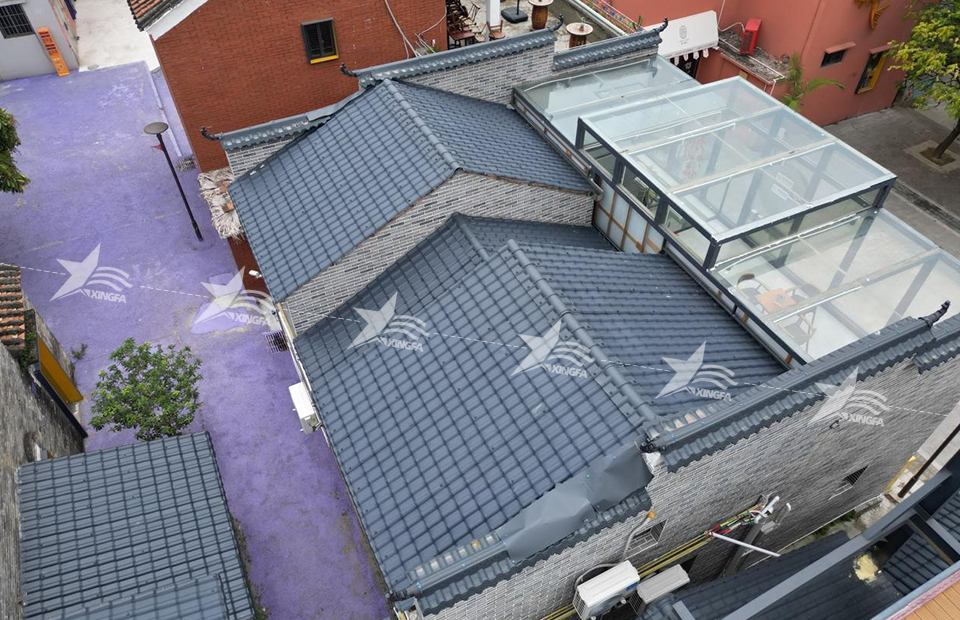
This functional segregation—separating weather protection, structural support, and moisture barrier functions—enables independent performance optimization. Localized surface aging does not compromise structural integrity or functional performance. Under standard manufacturing specifications, multi-layer tiles achieve a service life of 15–25 years under normal outdoor conditions—significantly exceeding that of single-layer counterparts—and are ideally suited for permanent, long-life applications including residential dwellings, industrial facilities, and heritage-inspired architectural projects.
3. Core Determinants of Synthetic Resin Tile Service Life
- Layered Material Composition and Weather Resistance
The fundamental driver of service life disparity lies in material utilization efficiency and weathering resistance. In single-layer tiles, ASA is diluted within a homogeneous matrix, drastically reducing its effective concentration and thus diminishing overall weatherability. Degradation occurs uniformly and irreversibly across the entire cross-section. Conversely, multi-layer tiles concentrate high-purity ASA exclusively in the outermost protective layer—delivering targeted, high-efficiency weather resistance. Aging remains confined to superficial wear, while the internal structural layers retain full integrity, thereby fundamentally decelerating the progression of systemic deterioration.
- Structural Resistance to Aging and Deformation
Roofing systems face persistent environmental stresses—including thermal expansion/contraction cycles, wind pressure, hail impact, and sand abrasion. Single-layer tiles, with their uniform mechanical profile, exhibit suboptimal balance between flexibility and rigidity: they tend to soften and deform at elevated temperatures and become brittle and prone to fracture at low temperatures. Cumulative stress accumulation inevitably triggers global structural relaxation and cracking. Multi-layer tiles integrate a soft–hard hybrid architecture: the outer layer provides weather resistance and abrasion tolerance, while the rigid middle layer ensures dimensional stability and mechanical robustness. This configuration delivers superior resistance to environmental fatigue, significantly extending structural service life.
- Distinctive Aging and Wear Mechanisms
Single-layer tiles follow an “integrated aging model”: once surface fading and chalking commence, the underlying substrate deteriorates in parallel, causing aging rates to accelerate progressively until complete functional failure occurs within a relatively short timeframe. Multi-layer tiles operate under a “surface-wear model”: only the outer ASA layer undergoes minor, gradual degradation, while the middle and base layers remain unaffected. As a result, structural integrity, waterproofing efficacy, and load-bearing capacity remain stable over extended periods—substantially prolonging total service life.
4. Conclusion
In summary, structural layering—alongside thickness—is a pivotal determinant of synthetic resin tile longevity. Single-layer tiles offer economic advantages and straightforward manufacturing but suffer from poor weather resistance, uniform aging susceptibility, and limited service life—making them appropriate only for short-duration, non-permanent applications. Multi-layer tiles, through purpose-driven functional stratification, maximize the intrinsic strengths of each constituent material, delivering comprehensive enhancements in weather protection, structural stability, and anti-aging performance—thereby markedly extending service life. Under identical thickness and service conditions, multi-layer composite tiles typically achieve service lives approximately twice that of single-layer alternatives. For long-term building applications, multi-layer resin tiles demonstrate superior cost-effectiveness and durability—establishing them as the optimal choice for enduring, high-performance roofing solutions.