

 RU
RU  EN
EN  ES
ES  AR
AR Solving Key Pain Points of Industrial Factory Roofing: How the “Triple-Balance Construction Method” for PVC Factory Roofing Tiles Reduces Whole-Life-Cycle Costs PVC Factory Roofing Tiles – The Triple-Balance Solution
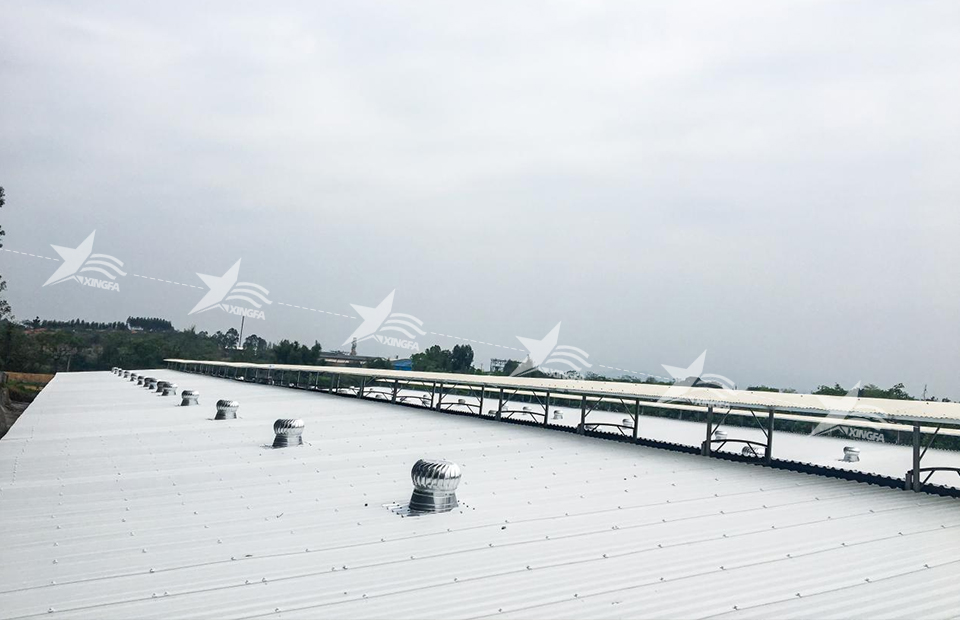
Ⅰ. Common Pain Points in Industrial Factory Roofing: Why Conventional Roofing Materials Consistently Underperform
In industrial factories, warehouses, and agricultural greenhouses, roofing material performance directly impacts operational efficiency, production continuity, and regulatory compliance—particularly regarding safety and fire protection. Conventional roofing materials suffer from persistent, unresolved shortcomings: color-coated steel tiles are prone to corrosion and leakage, typically requiring refurbishment every 3–5 years; ceramic tiles impose excessive structural load, significantly increasing building framework costs; and standard PVC roofing tiles often fail to meet mandatory fire safety standards—rendering them ineligible for fire code approval—or rely on excessive calcium carbonate (calcium powder) loading to cut costs, resulting in high brittleness, cracking susceptibility, rapid color fading, and surface powdering within just 2–3 years under aggressive conditions such as chemical exposure or coastal salt fog.
These deficiencies not only drive annual maintenance expenditures into the hundreds of thousands of RMB but also compromise product quality, introduce occupational safety hazards, and expose enterprises to regulatory penalties—including fines—for noncompliance with fire safety requirements. Consequently, they represent a long-standing, systemic challenge for numerous industrial operators.
Breaking the Performance Trade-Off Paradigm: The Triple-Balance Construction Method Redefines Industry Standards for PVC Factory Roofing Tiles. Traditional solutions remain trapped in a “performance trade-off” dilemma: achieving fire compliance often compromises impact resistance; enhancing weatherability inevitably escalates cost; and optimizing installation efficiency frequently sacrifices structural integrity. Drawing upon 21 years of R&D and manufacturing expertise in advanced roofing materials, Xingfa Roofing has developed the Triple-Balance Construction Method—a holistic, system-level solution specifically engineered for PVC factory roofing tiles. This method integrates three interdependent dimensions—formulation balance, performance balance, and whole-life-cycle cost balance—to simultaneously satisfy industrial facilities’ core requirements: fire code compliance, long-term durability under harsh environmental conditions, and rapid, efficient installation. It fundamentally resolves the inherent performance contradictions plaguing conventional roofing products.
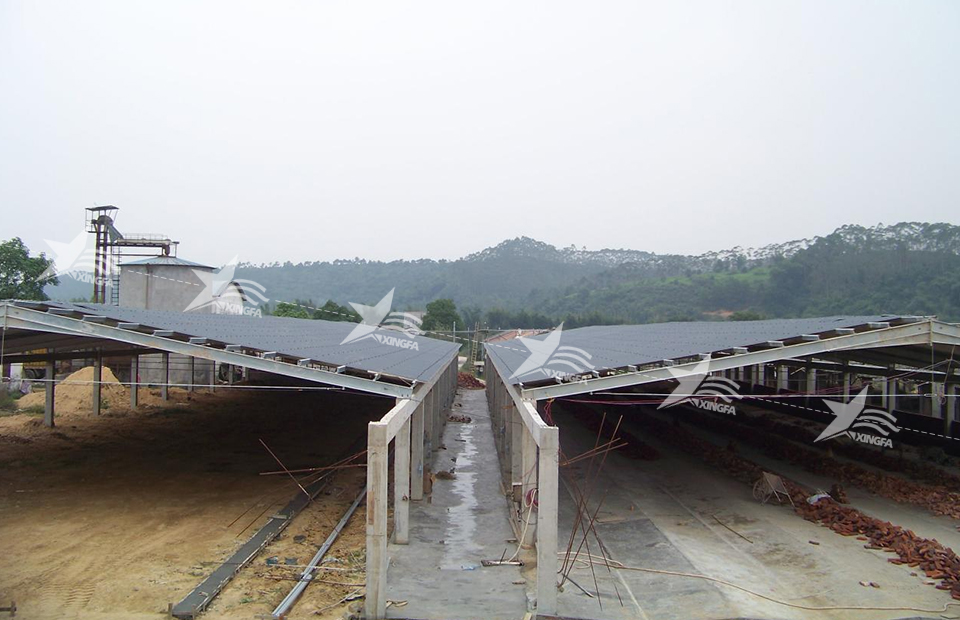
Ⅱ. The Triple-Balance Construction Method: A Detailed Overview of Its Three Core Pillars
- Formulation Balance: Ensuring Product Quality at the Material Source
The foundation of the Triple-Balance Construction Method lies in a scientifically optimized formulation system. Xingfa’s PVC factory roofing tiles utilize food-grade virgin PVC resin as the primary matrix material. Calcium carbonate filler content is rigorously capped at ≤30%—substantially lower than the industry norm—and precisely balanced with synergistic additives, including UV stabilizers, flame retardants, and acid/alkali-resistant modifiers. This disciplined approach eliminates the common practice of overloading low-cost fillers to reduce production costs—a practice that induces brittleness, premature aging, and inconsistent performance. By securing material integrity at the source, the formulation ensures long-term dimensional stability, mechanical reliability, and service life consistency.
- Performance Balance: Achieving Synergistic Compliance in Fire Resistance and Structural Toughness
Most commercially available PVC roofing tiles fail to concurrently deliver high fire resistance and superior mechanical resilience: many achieve only B2 flammability classification—insufficient for mandatory industrial fire inspections—while others sacrifice toughness to meet B1 fire rating requirements, leading to high on-site breakage rates during handling, fastening, and cutting. Leveraging its proprietary Fire-Toughness Synergy Technology, the Triple-Balance Construction Method enables simultaneous compliance with B1-class flame retardancy (self-extinguishing within 5 seconds after flame removal) and an impact strength of ≥8 MPa. The tiles exhibit exceptional workability—nails can be driven without cracking, cuts yield clean edges without chipping, and cold bending accommodates complex roof geometries.
Furthermore, the product successfully passes 1,000-hour salt-spray testing and accelerated acid/alkali corrosion aging trials. Its service life exceeds 15 years in chemically aggressive or high-salinity coastal environments. In addition, it delivers outstanding waterproofing, thermal insulation (achieving a roof surface temperature reduction of 10–15°C), and wind resistance—withstanding Category 12 typhoon-force winds—making it suitable for demanding, multi-hazard operational contexts.
- Whole-Life-Cycle Cost Balance: Optimizing Total Investment from Installation Through Long-Term Operation The Triple-Balance Construction
Method extends beyond technical specifications to holistically optimize total cost of ownership. Xingfa’s PVC roofing tiles weigh only 3.5–5.5 kg/m²—just one-fifth that of ceramic tiles and half that of color-coated steel tiles—reducing structural load demands on purlins and main frames. This translates to approximately 10% lower initial construction investment, especially advantageous for retrofitting aging industrial facilities where structural reinforcement is impractical or cost-prohibitive.
Each tile features integrated alignment markings and is supported by purpose-engineered waterproof sealing accessories. Installation requires no specialized labor: standard contracting teams can achieve proficiency rapidly, with per-tile installation speed improved by 20% versus industry benchmarks. Labor costs decrease by ~15%, and overall project timelines shorten by 3–5 days. Over the long term, the tiles’ exceptional corrosion and weather resistance drastically reduce the frequency of repairs and replacements—cutting annual maintenance expenses by up to 80%. When evaluated across the entire asset life cycle, the total cost of ownership is reduced by more than 40% compared to conventional roofing alternatives.
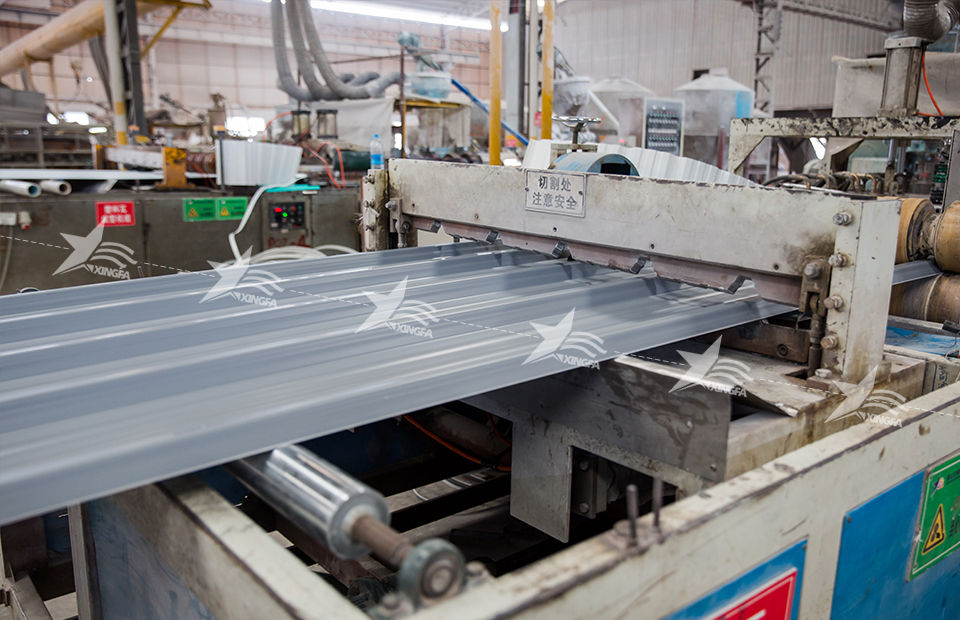
Practical Validation: Cost Reduction and Efficiency Enhancement Achieved through the Renovation of a Large-Scale Ceramic Factory’s Plant Building
Theory is gray, but practice is the sole criterion for testing truth. To demonstrate the real-world effectiveness of the “Triple-Balance Construction Methodology,” we present a case study involving the roof renovation of a warehouse at a major ceramic manufacturing facility in Foshan. The project implemented this methodology using Xingfa-brand PVC industrial roofing tiles, delivering remarkable results.
The ceramic factory faced several typical challenges prior to renovation: After four years of service, the original color-coated steel roofing panels exhibited extensive rusting and perforation. During the rainy season, frequent leaks caused moisture damage to finished ceramic tiles, reducing product pass rates to 92%. Indoor summer temperatures soared to 43°C, resulting in a 20% decline in worker productivity. Moreover, the existing roof’s fire-resistance rating was only Class B2—failing to meet the industrial park’s fire safety requirements—and triggered a monthly non-compliance penalty of RMB 5,000.
Applying the Triple-Balance Construction Methodology, Xingfa Roofing developed a customized solution: 3.0 mm-thick blue PVC corrosion-resistant corrugated roofing tiles, paired with specialized acid- and alkali-resistant sealing washers and self-tapping screws. The total installation area covered 12,000 m², completed in just 12 days—three days ahead of schedule.
Post-renovation outcomes were highly significant: Indoor warehouse temperatures dropped below 33°C; the finished-tile pass rate improved to 97%; annual maintenance costs decreased from RMB 120,000 to RMB 12,000; fire safety compliance was successfully achieved; and annual savings—including avoided penalties and reduced maintenance—reached approximately RMB 100,000. After five years of service, the roof shows no signs of fading, cracking, or leakage—earning strong endorsement from the client.
“Since adopting Xingfa PVC industrial roofing tiles, we have fully resolved long-standing issues of roof leakage and excessive indoor heat. Annual maintenance expenditures have been substantially reduced, and production efficiency has demonstrably improved.”
Summary and Outlook: Delivering Long-Term, Stable Roofing Solutions for Industrial Facilities
The Triple-Balance Construction Methodology represents 21 years of Xingfa Roofing’s deep expertise and continuous innovation in the industrial roofing materials sector. It dispels the outdated perception of PVC industrial roofing tiles as low-quality, low-cost products—and redefines performance benchmarks for such materials in industrial applications by harmonizing regulatory compliance, long-term durability, and economic viability.
As domestic industrial sectors place increasing emphasis on fire safety, energy efficiency, environmental sustainability, and operational stability over the asset lifecycle, PVC industrial roofing tiles—valued for their lightweight nature, superior corrosion resistance, thermal insulation properties, and ease of installation—are progressively replacing traditional color-coated steel and clay tiles. They are now emerging as the preferred roofing solution for modern industrial facilities.
We hope the Triple-Balance Construction Methodology provides valuable insights for your industrial building construction or renovation projects. Should you wish to obtain a comprehensive PVC industrial roofing solution—or require a tailored roof system design supported by our team of technical specialists—please contact Xingfa Roofing.