EN
EN  ES
ES  RU
RU  AR
AR PVC Roofing Tiles: Price per Square Meter (Comprehensive Material List and Cost Breakdown)
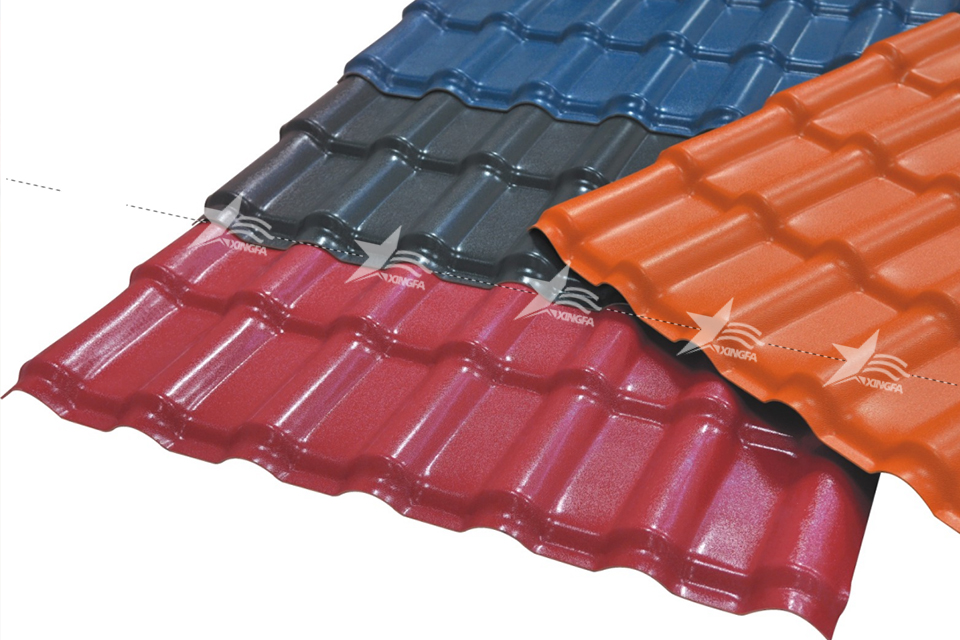
PVC roofing tiles—also known as synthetic resin roofing tiles—are widely adopted in rural self-built residences, factory retrofitting projects, canopies, and retro-style roofing applications, owing to their lightweight nature, excellent corrosion resistance, and ease of installation. Market prices vary significantly, ranging from approximately RMB 20 to over RMB 100 per square meter. This broad price spectrum is primarily driven by five interrelated factors: product composition, base material thickness, surface weather-resistant coating quality,配套 accessories, and labor costs for installation. Based on current market conditions in South China as of 2026, this article provides a detailed cost decomposition—including full material specifications and pricing—to clarify the distinct cost components of raw materials, accessories, and installation.
Impact of Product Composition on Pricing
PVC roofing tiles are primarily composed of polyvinyl chloride (PVC) resin, compounded with stabilizers, impact modifiers, and fillers; their top layer features a co-extruded acrylonitrile–styrene–acrylate (ASA) weather-resistant layer. The formulation directly determines both production cost and service life—and constitutes the principal reason for price variation among products of identical thickness.
Tiles manufactured from 100% virgin PVC resin—characterized by high resin content and precisely controlled calcium carbonate filler ratios—exhibit superior flexibility and low-temperature impact resistance, minimizing brittleness and cracking. In contrast, low-cost, substandard products often incorporate excessive amounts of calcium carbonate filler and recycled waste materials, thereby reducing raw material costs but severely compromising impact resistance, UV stability, and long-term durability. Such inferior products commonly exhibit fading, cracking, or chalking within just 3–5 years. While economy-grade tiles may suffice for temporary canopies, virgin-material formulations are strongly recommended for permanent roofing applications—including self-built homes and industrial facilities. All else being equal, virgin-material tiles command a premium of RMB 8–15 per square meter over non-standard, high-calcium-content alternatives.
-
Price Variations by Thickness and Surface Coating
① Thickness Specifications
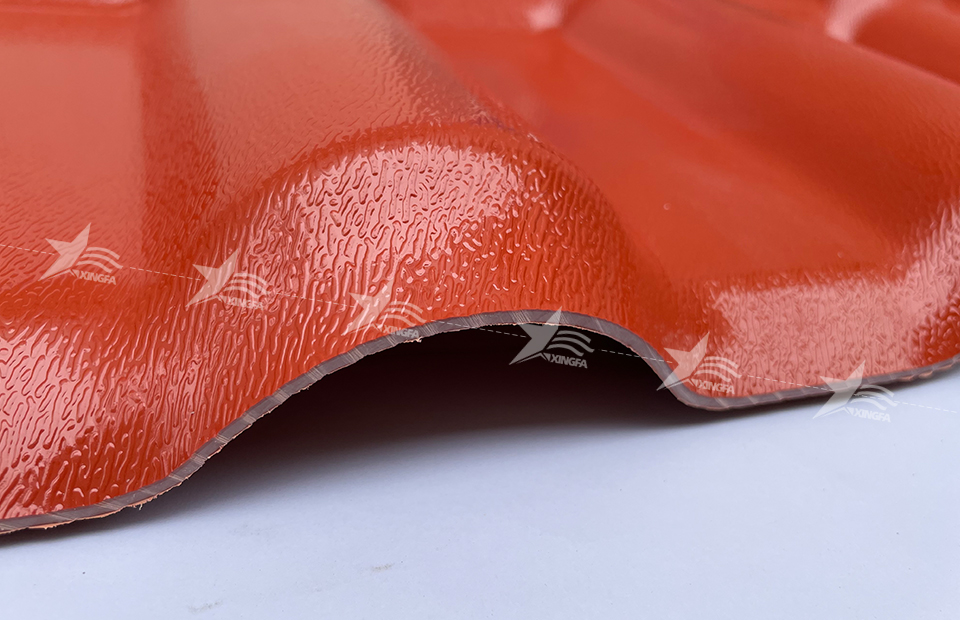
The mainstream total thickness of PVC roofing tiles ranges from 1.5 mm to 3.0 mm. Greater thickness entails higher raw material consumption and delivers enhanced wind-load resistance and hail-impact performance—consequently increasing unit cost.
– 1.5–1.8 mm: Typically used for simple canopies or temporary structures; raw material cost: RMB 20–28/m². Not recommended for primary roof applications.
– 2.0–2.5 mm: The most common specification for residential self-built homes, offering optimal balance between performance and value; raw material cost: RMB 30–42/m².
-2.8–3.0 mm: Recommended for industrial factories, coastal regions subject to salt-laden air, and snow-prone areas—providing superior structural load-bearing capacity; raw material cost: RMB 42–58/m².
*Note:* Some suppliers misrepresent nominal thicknesses; actual measured thickness may fall short. Buyers are advised to verify certified thickness measurements prior to procurement.
② ASA Weather-Resistant Coating
The co-extruded ASA layer is critical to UV resistance and color retention. Its typical thickness ranges from 0.1 mm to 0.3 mm. High-quality products feature an ASA layer ≥0.2 mm, ensuring a service life of 15–25 years under normal exposure conditions. Substandard products either employ insufficient ASA coating or omit it entirely, resulting in rapid discoloration and premature aging. Tiles with fully compliant ASA layers carry a surcharge of RMB 5–10/m² compared to basic film-laminated variants. Additional premiums apply for custom colors or high-reflectance, heat-insulating coatings—adding a further RMB 5–12/m².
-
Complete Installation Material List and Associated Costs
Beyond the main roofing tiles, ridge caps, edge trims, and fastening accessories account for 5%–10% of total material expenditure. Many quotations list only the main tile price, charging accessories separately—thereby inflating the final project cost. For reference, the material breakdown for a standard 100 m² gabled roof is as follows:
– Main PVC Roofing Tiles: Represent the largest share of material cost; priced per net roof coverage area.
– Ridge Cap Tiles (for horizontal ridges): RMB 12–22 per linear meter; quantity based on ridge length.
– Hip Cap Tiles (for diagonal ridges on four-slope roofs): RMB 13–20 per linear meter.
– Eaves Drip Edge Tiles: RMB 10–15 per linear meter. – Gable Wall Flashing Panels (for wall-to-roof junction waterproofing): RMB 11–18 per linear meter.
– Self-Drilling Screws with ASA-Capped Saddle Washers: RMB 0.6–1.0 per set; approx. 6–8 sets required per m². Essential for secure fastening and watertight sealing at penetration points—non-omissible.
– Sealants & Weatherproofing Adhesives: Used for lapping joints and penetrations; cost equivalent to RMB 1–2/m².
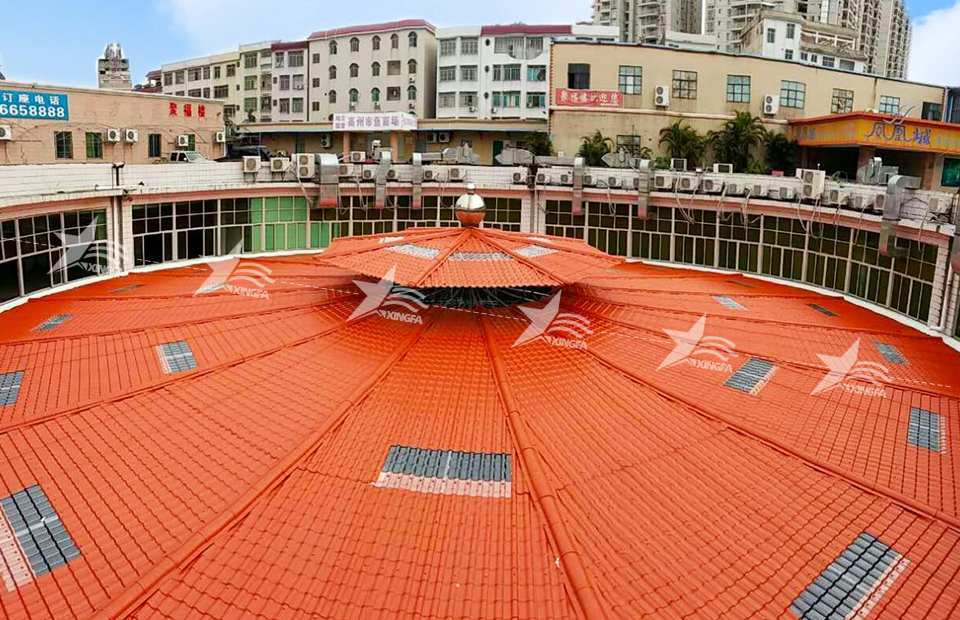
– Skylight/Translucent Panels (optional): Installed in designated daylighting zones; RMB 45–70/m².
*Note:* Purlins (steel square tubes or timber purlins) constitute part of the underlying roof structure—not a roofing tile accessory. Existing purlins may be reused during roof retrofits; however, new construction requires separate purlin procurement, which substantially increases overall project cost.
-
Installation Labor Cost Analysis
Labor pricing is influenced by roof pitch, total area, regional wage levels, and geometric complexity.
– Standard gabled roofs with large surface area and minimal angular transitions: Labor rates in South China range from RMB 12–20/m². Rates tend to be lower in county towns and higher in urban centers such as the Pearl River Delta.
– Irregular roofs featuring multiple corners, small footprints, or steep pitches: Increased cutting, handling, and alignment requirements raise labor costs by RMB 8–15/m².
Turnkey (supply + installation) pricing tiers:
– Economy-tier solutions: RMB 60–75/m²;
– Standard-tier solutions using nationally compliant, virgin-material ASA-coated tiles (2.0–2.5 mm): RMB 78–95/m²;
– Premium-tier solutions featuring 3.0 mm thick, highly corrosion-resistant, or heritage-style profiled tiles: RMB 100–130/m².
“Raw material-only” quotations cover only the main tiles—excluding accessories, labor, and transportation. “Turnkey” packages typically include main tiles, all necessary accessories, and labor—but exclude purlins and demolition of existing roofing systems, which are usually billed separately. Demolition and debris removal for existing roofs adds RMB 5–12/m².
Application-Specific Selection Guidelines and Cost Benchmarks
– Temporary Canopy / Short-Term Use: 1.8 mm standard PVC tiles; raw material cost: RMB 22–28/m²—suitable for non-permanent structures.
– Primary Roofing for Rural Self-Built Homes: 2.0–2.5 mm virgin-material ASA-coated tiles; raw material cost: RMB 33–45/m²; turnkey cost: RMB 80–90/m²; expected service life: 15–20 years.
– Industrial Facilities in Coastal or Chemically Aggressive Environments (e.g., chemical plants): 2.8–3.0 mm heavy-duty, high-weatherability tiles; raw material cost: RMB 45–55/m²; turnkey cost: RMB 95–120/m²—engineered to withstand saline aerosols and acidic corrosion.
Summary
The unit price of PVC roof tiles must not be assessed based on the main tile quotation alone; a comprehensive cost evaluation should include tile thickness, ASA coating specification, full set of accessories, installation labor, and whether structural purlins are included.
While thinner tiles (1.5–1.8 mm) offer lower initial investment, they exhibit accelerated aging and significantly higher long-term maintenance and replacement costs. For residential long-life roofing applications, tiles with a thickness of 2.0–2.5 mm—manufactured from virgin material and featuring a fully specified, co-extruded ASA layer—are strongly recommended.
Accessories must not be arbitrarily downgraded: waterproof caps, flashing panels, and weather-resistant sealant are critical components for ensuring leak-free performance. In turnkey (supply-and-installation) quotations, it is essential to verify the actual measured tile thickness and material formulation; clearly distinguish whether roof demolition and purlin supply/installation are billed separately. This helps prevent low-bid acceptance followed by costly change orders. A holistic assessment of total lifecycle cost—not just upfront price—is indispensable to achieving long-term roof stability and reliability.