ES
ES  EN
EN  RU
RU  AR
AR Analysis of the Relationship between Service Life of Synthetic Resin Tiles and Installation Techniques
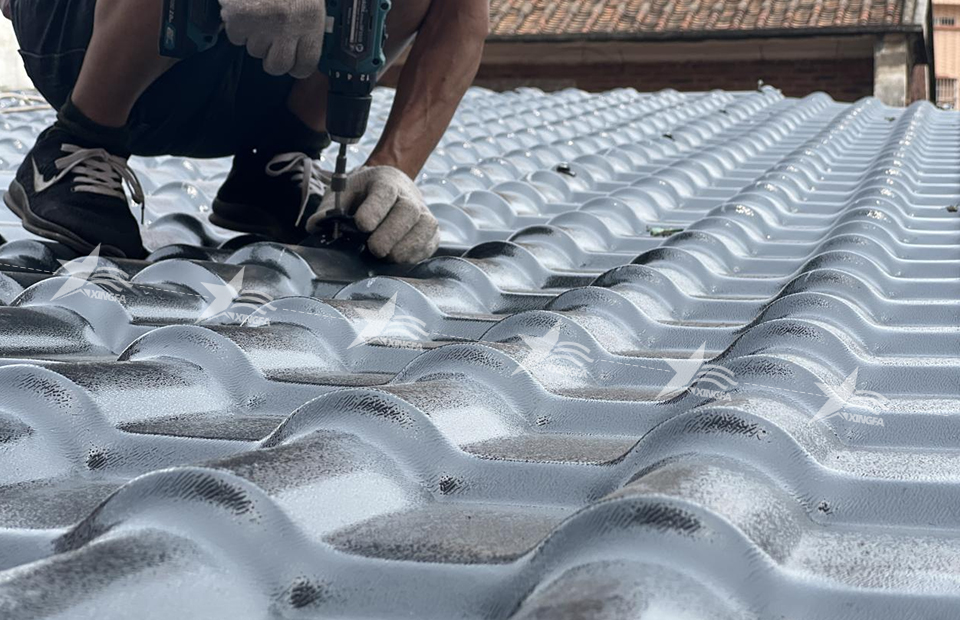
Synthetic resin tiles—valued for their corrosion resistance, lightweight nature, waterproofing capability, and anti-aging properties—are widely employed across diverse building roof applications. Their theoretical service life ranges from 20 to 30 years. However, in practice, numerous roofs exhibit premature failures—including edge curling, water infiltration, cracking, and tile detachment—within just a few years, falling significantly short of the designed service life. While inherent product quality variations contribute to performance disparities, installation technique constitutes the most critical *post-manufacturing* factor influencing actual service longevity. For tiles of identical specifications and material composition, service life under standardized, compliant installation can differ markedly from that achieved under haphazard or noncompliant practices.
1. Product Characteristics: Installation Compatibility Determines Realization of Durability Performance
Compared with conventional roofing materials, synthetic resin tiles possess high flexibility, a relatively large coefficient of thermal expansion and contraction, and exceptional surface weather resistance—attributes that impose stringent demands on installation compatibility. Although their superior flexibility enables adaptation to curved roof profiles, their comparatively low overall rigidity necessitates precise mechanical support. Improper fastener placement or uneven load distribution may induce long-term deformation—including arching, warping, and edge curling—under cyclic wind loading and thermal stress, thereby introducing latent vulnerabilities that accelerate aging and structural degradation.
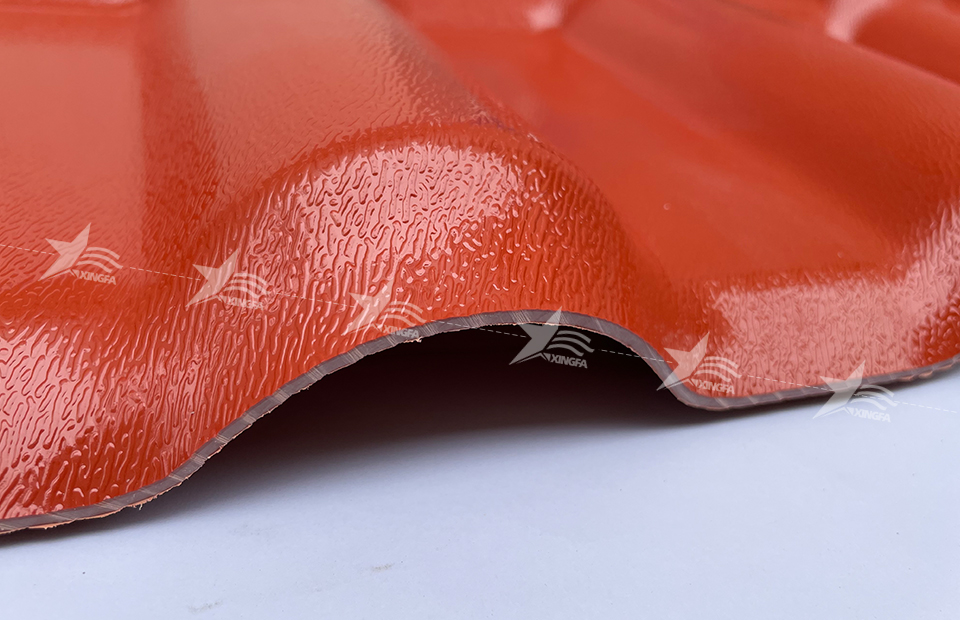
The ASA (acrylonitrile–styrene–acrylate) weather-resistant top layer serves as the primary barrier against ultraviolet radiation and aqueous corrosion. While highly dense and durable, this layer is susceptible to mechanical damage. Noncompliant on-site practices—including unauthorized foot traffic, tool impact, and aggressive cutting—can compromise the integrity of this protective surface, resulting in micro-scale breaches. Once formed, these defects permit ingress of moisture and corrosive agents into the substrate, accelerating matrix powdering and aging. Consequently, the tile’s inherent weather resistance can only be fully realized through strict adherence to prescribed installation protocols; lax or unregulated construction practices directly undermine its intrinsic material advantages and substantially curtail service life.
2. Critical Installation Details: Determinants of Long-Term Roof System Stability
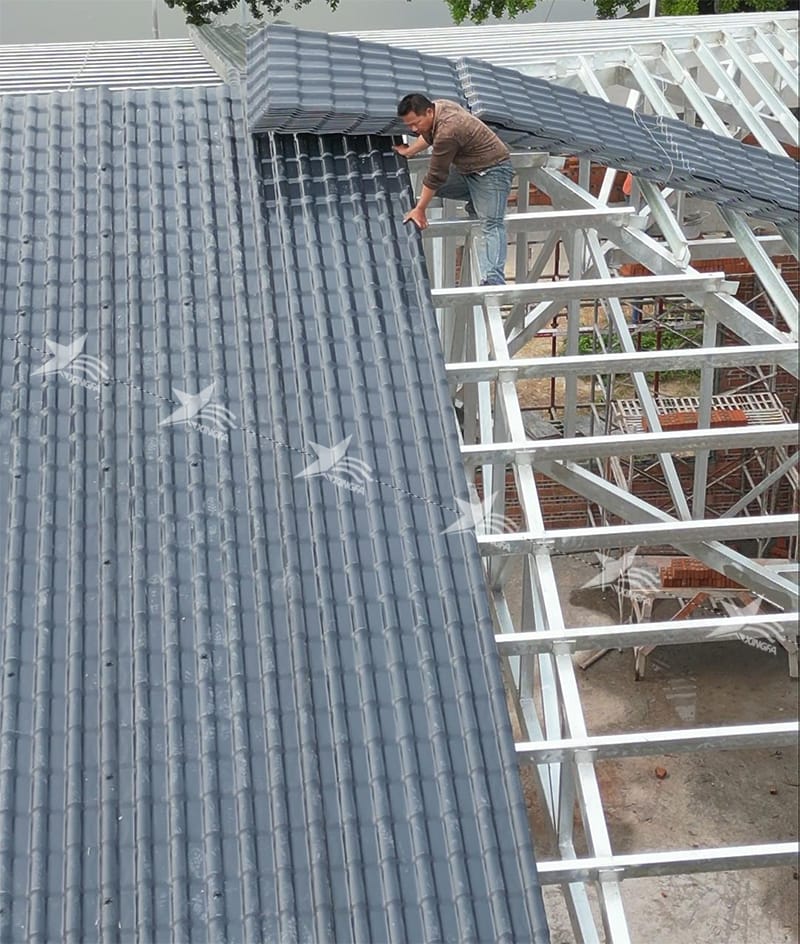
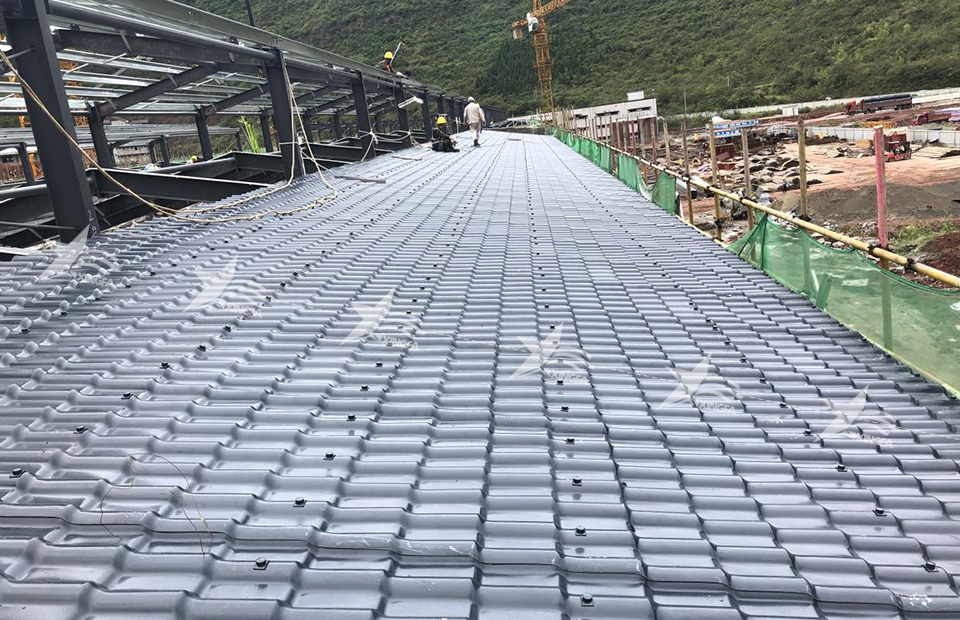
Precision and standardization in installation execution are fundamental to ensuring sustained, reliable performance of synthetic resin tiles. Regarding fastening systems, only dedicated stainless-steel, waterproof self-tapping screws equipped with integrated waterproof washers must be used; substitution with ordinary ferrous fasteners is strictly prohibited to prevent post-installation corrosion, loosening, and subsequent water penetration that degrades both fasteners and tile substrates. Moreover, screw torque must be carefully controlled: excessive tightening induces localized stress concentrations and potential fracture, whereas insufficient torque permits tile movement, widening inter-tile gaps and compromising overall roof stability.
Inter-tile overlap dimensions and roof pitch control are equally pivotal. Both longitudinal and transverse overlap widths must strictly conform to industry standards, with roof slope calibrated according to regional precipitation intensity. Inadequate overlap or compromised sealing invites rainwater backflow and capillary infiltration; persistent inter-layer moisture accumulation fosters substrate delamination and accelerated aging. Similarly, insufficient roof pitch impedes effective drainage, leading to prolonged water ponding that progressively weakens structural integrity and reduces service life.
Ridge lines, eaves, valleys, and other transitional nodes represent the most vulnerable zones in any roofing system—and typically exhibit the earliest signs of deterioration. Compliant installation mandates precise alignment, robust mechanical anchoring, and application of specialized sealants at all such interfaces to form a continuous, impermeable barrier against wind-driven rain and environmental exposure. Conversely, ad hoc assembly, omission of sealing steps, or reliance solely on passive tile contact introduces permanent structural weaknesses. Over time, progressive environmental assault leads to leakage, localized material degradation, and ultimately, systemic roof failure.
3. Common Installation Misconceptions: Detailed Analysis of Their Degrading Mechanisms on Tile Service Life
Premature aging, leakage, and tile detachment are frequently misattributed to product defects—yet in most cases, they stem directly from noncompliant installation practices. Time- and labor-saving shortcuts introduce latent flaws within the tile’s structural configuration, thermal expansion management system, and waterproofing envelope. These deficiencies evolve incrementally under climatic cycling, cumulatively eroding performance and drastically shortening service life. Below is a detailed analysis of four prevalent installation errors and their underlying degradation mechanisms.
①Omission of Thermal Expansion Gaps: Inducing Temperature-Induced Deformation and Cracking
Synthetic resin tiles exhibit pronounced thermal expansion and contraction. Accordingly, adequate expansion gap provision is non-negotiable. Some installers, prioritizing visual uniformity or procedural simplification, eliminate these gaps entirely—resulting in tightly abutted tiles with no buffering capacity. During summer heat, constrained expansion manifests as bulging, blistering, or edge curling; during winter cold, contraction widens overlap joints and compromises sealant integrity, permitting water intrusion. Repeated thermal cycling generates micro-cracks that propagate into delamination, fracturing, and interlayer separation—constituting the predominant cause of premature tile failure.
②Nonstandard Fastening Practices: Causing Loosening or Brittle Fracture
Noncompliant fastening represents the most widespread installation deficiency. First, insufficient fastener density or excessive spacing undermines wind uplift resistance; under high-wind conditions, tiles oscillate repeatedly, enlarging nail holes and eventually leading to loosening, displacement, or complete detachment. Second, overtightening concentrates compressive stress at fastener points, inducing plastic deformation and radial cracking around screw heads—exacerbated by vibration and thermal cycling. Furthermore, use of non-stainless fasteners or omission of waterproof washers triggers corrosion-induced leakage, which subsequently attacks the tile substrate, causing localized powdering and structural disintegration.
③Insufficient Overlap and Simplified Sealing: Creating Persistent Water Intrusion Pathways
Reducing overlap dimensions or omitting sealing procedures directly compromises the roof’s primary waterproofing defense. Arbitrarily narrowing longitudinal or transverse overlaps increases susceptibility to wind-driven rain penetration and interstitial seepage. At critical junctions—including ridges, hips, and roof-to-wall transitions—failure to apply supplementary sealant relies solely on passive tile contact. Accumulated debris and stagnant moisture gradually degrade the overlapped interface, promoting adhesive failure, substrate softening, and accelerated aging—ultimately culminating in widespread leakage and functional collapse of the entire roof system.
④Destructive On-Site Handling: Compromising the Surface Weather-Resistant Barrier
The ASA top layer constitutes the core defense mechanism against UV degradation and environmental corrosion; its structural and chemical integrity directly dictates service longevity. Unauthorized foot traffic, improper material stacking, and accidental tool impacts cause surface abrasion and micro-scratches. Likewise, on-site cutting or drilling without subsequent edge sealing exposes raw substrate directly to solar UV radiation and moisture—triggering rapid discoloration, powdering, and embrittlement. Such seemingly minor, invisible damage propagates progressively, undermining the entire roof’s durability and precipitating systemic service-life reduction.
4. Conclusion
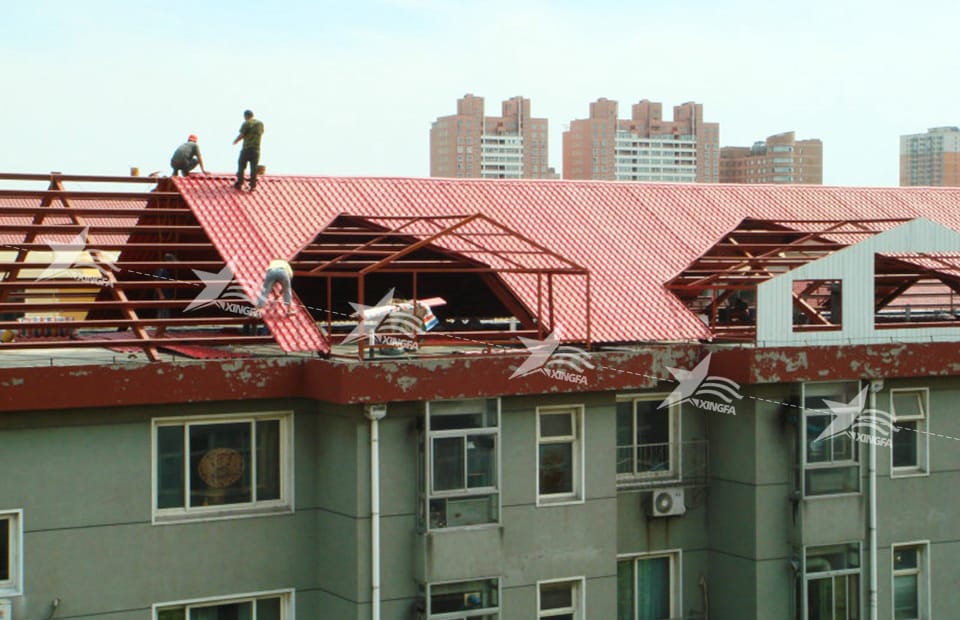
In summary, the actual service life of synthetic resin roof tiles is jointly determined by product characteristics and installation techniques. The inherent weather resistance, corrosion resistance, and dimensional stability of the product constitute the fundamental basis for long-term performance; meanwhile, standardized and meticulous installation practices serve as the critical enabler for fully realizing the product’s designed service life. Compared with the fixed quality attributes of the product itself, installation methodology represents the most direct and controllable factor influencing service longevity. Every detail—such as thermal expansion allowances, secure fastening, overlapping and sealing, and junction treatment—as well as the proactive avoidance of common installation errors, directly impacts the roof system’s durability.
Only by strictly adhering to standardized construction protocols and tailoring on-site execution to the specific material properties of synthetic resin tiles can deformation, cracking, water infiltration, and premature aging be effectively prevented. This ensures optimal utilization of the material’s performance advantages, guarantees sustained roof integrity over time, and enhances both overall project quality and long-term cost-effectiveness.