NOTICIAS
Does Synthetic Resin Roofing Tile Require Regular Maintenance?
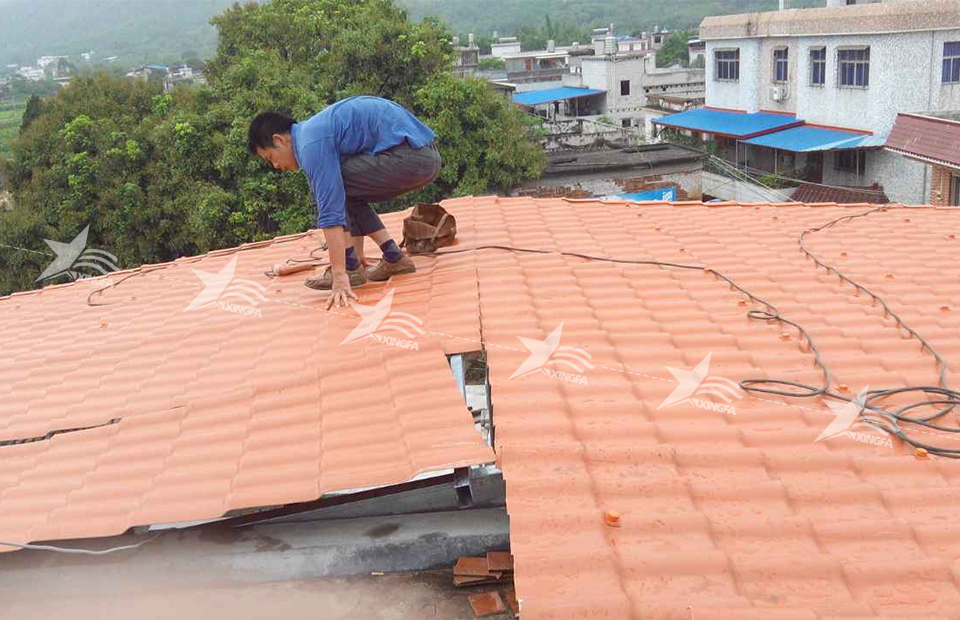
Yes, it does—though its maintenance logic differs fundamentally from that of color-coated steel roofing tiles. Synthetic resin roofing tiles are inherently corrosion-resistant and chemically stable (resistant to acids and alkalis); once installed, they require no anti-rust painting or coating. Consequently, they are widely recognized as a “low-maintenance” material. However, “low-maintenance” does not equate to “maintenance-free.” Critical ancillary components—including waterproof washers, lap-seal joints, and gutter systems—are subject to aging, cracking, and debris accumulation. Without proactive inspection and intervention, these issues may escalate into leaks and major repairs within two to three years. The correct maintenance philosophy is therefore: *low frequency, high focus on critical points, and strong emphasis on prevention.* This article addresses the topic across seven dimensions: nature of maintenance, necessity, recommended frequency, key inspection items, node-specific maintenance procedures, cost implications, and common misconceptions.
1. Clarification First: “Low-Maintenance” ≠ “Maintenance-Free”
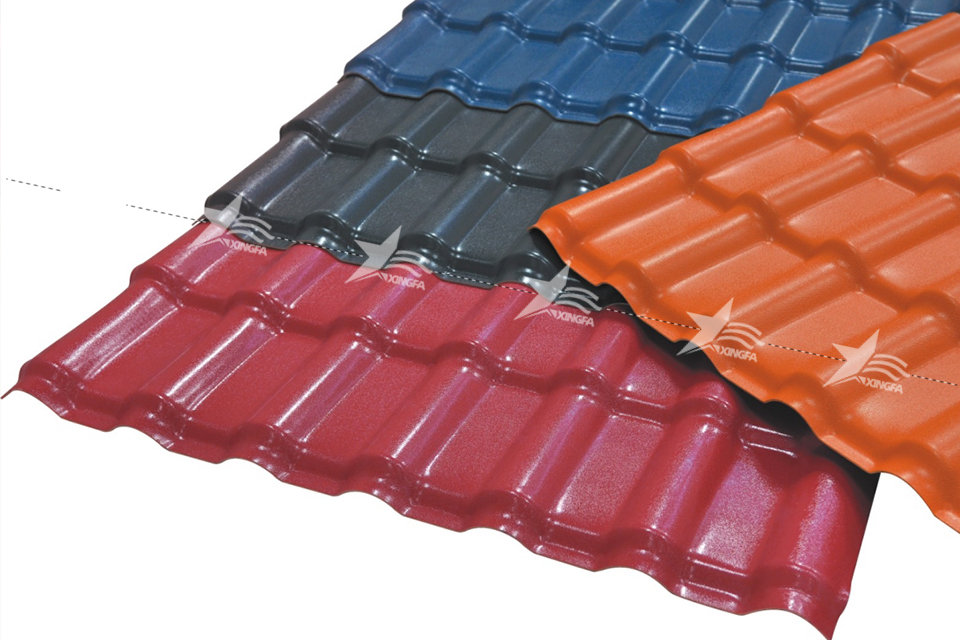
Synthetic resin roofing tiles use PVC as the base substrate and feature a co-extruded ASA (acrylonitrile–styrene–acrylate) top layer for superior weather resistance. As such, they neither rust nor decay—eliminating the need for periodic anti-corrosion painting required by metal roofing systems. Their inherent durability significantly reduces maintenance burden compared to color-coated steel tiles. However, a roof is an integrated system: beyond the tiles themselves, it comprises fasteners with rubber washers, sealants, ridge caps, flashing components, gutters, and other accessories—most of which exhibit shorter service lives than the tiles. Accordingly, maintaining synthetic resin roofing is not primarily about preserving the tiles per se, but rather about safeguarding the integrity of the entire roof system’s waterproofing and drainage performance. Recognizing this systemic perspective helps avoid the misconception that “if the tiles appear intact, no maintenance is needed.”
2. Why Regular Maintenance Is Essential
The consequences of deferred maintenance unfold gradually and often remain concealed until advanced stages. First, rubber washers beneath screws harden and crack under prolonged UV exposure; rainwater then infiltrates slowly through nail holes—initially causing only intermittent dripping during heavy rainfall, thereby delaying timely detection and remediation. Second, aged or degraded sealant at lap joints, ridges, and flashing interfaces allows water to backflow along seams, progressively compromising underlying substrates and purlins. Third, gutters and tile valleys accumulate organic debris (e.g., leaves, silt) and, in agricultural settings, animal waste—leading to persistent ponding that accelerates seam degradation and surface-layer aging. Fourth, extended service life may result in surface chalking (powdering), which further increases moisture absorption and promotes embrittlement. A unifying characteristic across all these failure modes is that early-stage correction typically requires only modest material costs (e.g., tens of RMB); delay until structural damage occurs necessitates full-scale roof replacement.
3. Maintenance Frequency Is Environment-Dependent
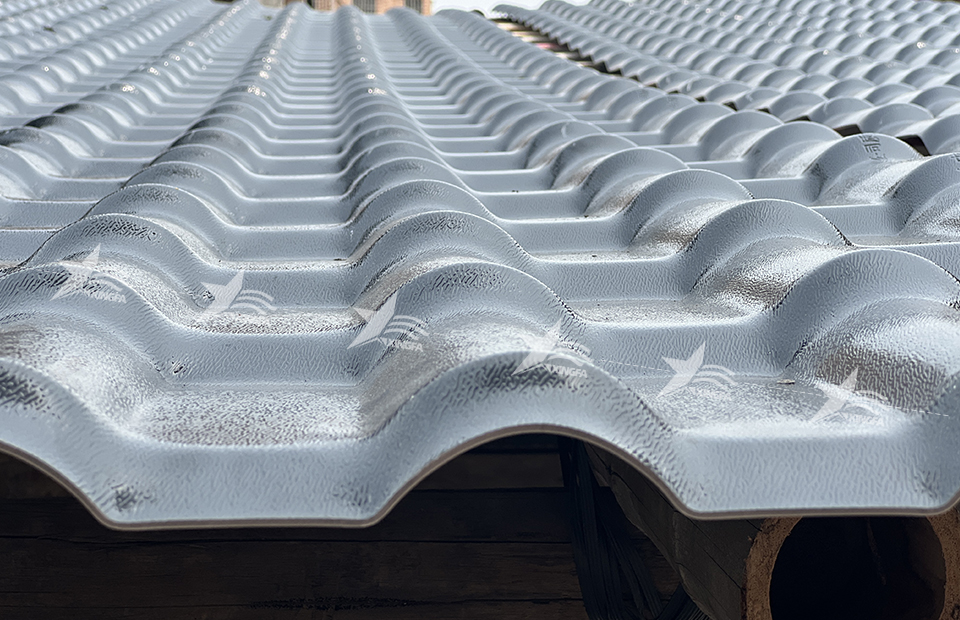
There is no universal quarterly maintenance schedule for synthetic resin roofing tiles. Instead, inspection intervals must be calibrated to local environmental conditions. For standard residential or industrial buildings located in areas with clean air and sufficient natural rainfall for self-cleaning, biannual visual inspections are recommended, supplemented by one comprehensive maintenance session prior to the rainy season each year. In contrast, livestock farms and chemical processing facilities expose roofs to ammonia gas and acidic/alkaline mists—both of which accelerate accessory degradation—warranting quarterly inspections and semiannual cleaning and assessment. Coastal regions characterized by high salinity and frequent sandstorms demand more frequent attention: salt deposits and abrasive sand particles erode the surface layer and clog tile valleys, necessitating shortened inspection intervals and targeted sand removal. In cold-climate zones, an additional pre-winter inspection is advised to mitigate risks associated with snow accumulation and freeze-thaw cycling.
4. Four Critical Inspection Points During Every Patrol
A focused inspection covering just four categories effectively captures the majority of potential vulnerabilities:
- Fastening Points: Randomly sample screws for looseness and inspect washers for cracking or detachment—pay particular attention to windward zones and the first row along eaves.
- Lap Joints & Termination Details: Examine tile-to-tile overlaps, ridge caps, gable-end flashings, and gutter interfaces for sealant cracking, lifting, or edge separation.
- Drainage Pathways: Verify that gutters, eaves, and tile valleys are free of obstructions and that water flows freely without pooling.
- Tile Surface Condition: Assess for abnormal fading, localized chalking, scratches, or micro-cracks—especially in areas subjected to foot traffic during maintenance or inspection. Conduct patrols only on consecutive clear days; secure safety harnesses and step exclusively on purlin-aligned wave troughs.
5. Annual Comprehensive Maintenance and Five-Year Specialized Assessment
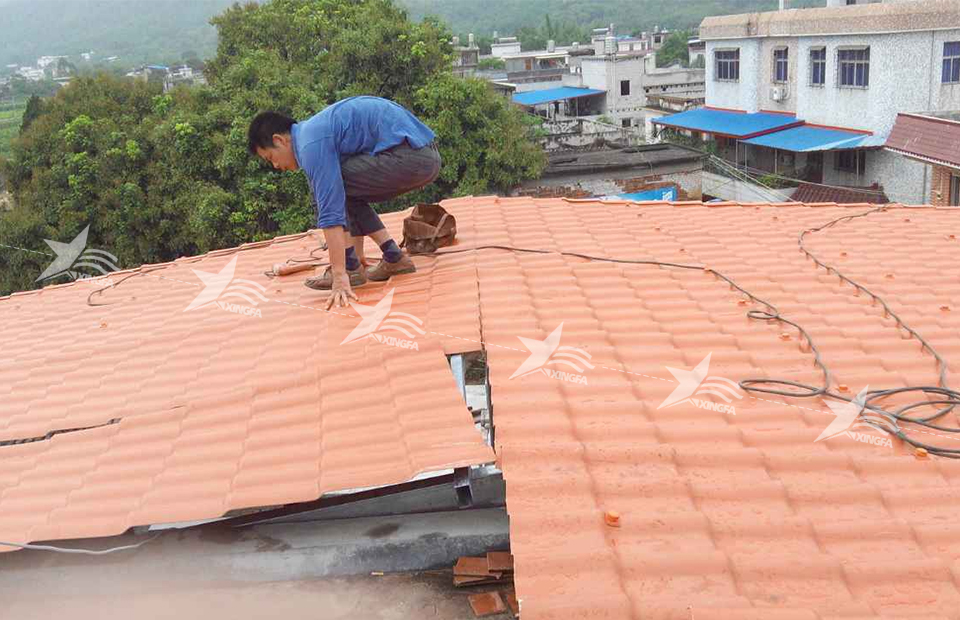
Annual comprehensive maintenance should be scheduled before the onset of the rainy season and extends beyond routine patrol: gently rinse the roof surface from top to bottom using low-pressure clean water; remove accumulated grime with a soft-bristle brush and neutral pH detergent—*strictly avoid steel wool pads, rigid scrapers, or strongly acidic/alkaline cleaners.* Re-torque all fasteners and reapply sealant where necessary. For lap joints exhibiting visible cracks, remove old sealant thoroughly before reapplying a high-performance, UV-stable sealant. After approximately five years of service, conduct a specialized system-wide evaluation: assess the degree of surface embrittlement and chalking; inspect purlins and substrate for deformation or settlement; and determine whether accessories require batch replacement. Localized damage permits individual tile replacement—full roof removal is unnecessary.
6. Cost Comparison: Proactive Maintenance vs. Deferred Consequences
The direct cost of maintaining synthetic resin roofing is minimal. Routine patrols entail primarily labor time; annual maintenance consumes only inexpensive consumables—such as sealants and washers—representing a negligible fraction of total roof construction cost. Conversely, the cost of *not* maintaining the roof is substantially higher: nail-hole infiltration can saturate ceiling linings and insulation, leading to mold growth; prolonged moisture exposure may corrode purlins, requiring structural reinforcement; widespread chalking and embrittlement ultimately mandate premature roof replacement. Worse still, leaks often manifest unexpectedly during active occupancy or production—triggering urgent, unplanned interventions whose costs far exceed those of scheduled preventive work. From a whole-life-cycle perspective, regular maintenance transforms large, unpredictable expenditures into small, predictable, and budgetable ones.
7. Common Misconceptions and Recommended Best Practices
Several prevalent misconceptions must be avoided:
- Misuse of High-Pressure Washers: Direct, close-range high-pressure water jets can strip the protective ASA layer and dislodge lap seals. Use only low-pressure rinsing combined with soft-bristle brushing.
- Inappropriate Cleaning Agents: Strong acids, alkalis, or solvent-based cleaners degrade the ASA surface. Only neutral-pH detergents are acceptable.
- Unplanned Drilling on Installed Tiles: Adding new fastener holes without proper sealing introduces new leakage pathways. Avoid unless absolutely necessary—and always ensure full waterproofing integrity.
- Overinterpreting Color Fading: Mild discoloration alone does not indicate functional failure. As long as structural integrity remains intact and no through-thickness cracks exist, aesthetic fading has no impact on performance. Chalking and embrittlement—not fading—are the true indicators warranting action.
- Reactive Rather Than Proactive Inspection: Waiting until leaks appear before accessing the roof forfeits the opportunity for low-cost, early-stage intervention. Incorporating scheduled patrols into annual facility management plans is consistently more economical and reliable than emergency repairs.