ES
ES  EN
EN  RU
RU  AR
AR Analysis of the Relationship Between Service Life of Synthetic Resin Tiles and Environmental Conditions, and Evaluation of Material Characteristics
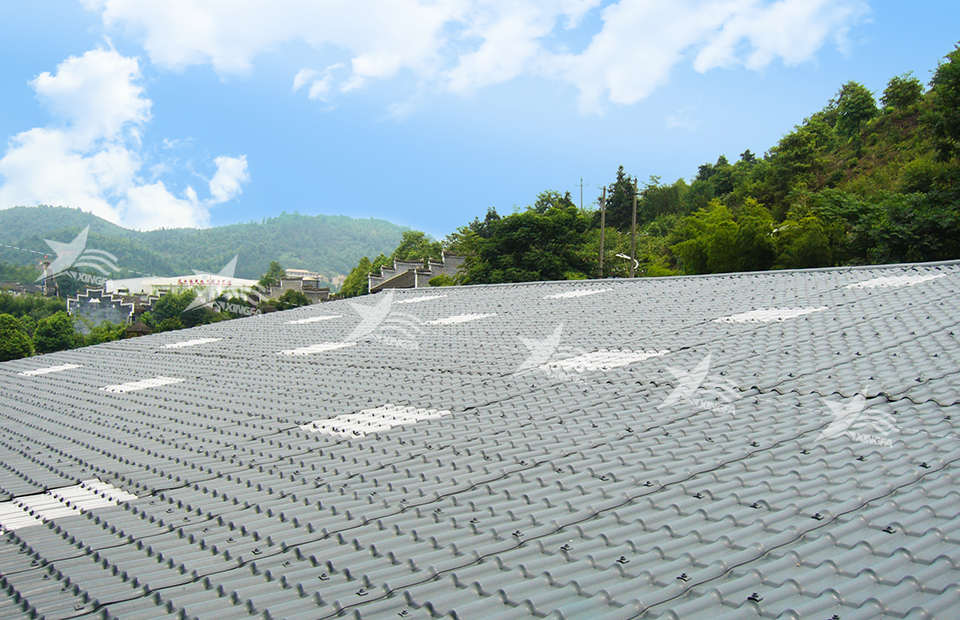
Many users assume that the service life of synthetic resin tiles is a fixed value—believing that purchasing high-quality products guarantees a uniform service life of approximately 20 years. In reality, the theoretical service life of synthetic resin tiles is derived from standardized, temperate environmental conditions; actual service life is highly dependent on site-specific environmental factors. External conditions—including ambient temperature, ultraviolet (UV) radiation intensity, acid–alkali corrosion exposure, ventilation and humidity levels, and wind/snow loads—directly accelerate or decelerate tile aging. Identical material formulations may exhibit service life variations exceeding 100% across different environments. This article comprehensively analyzes the influence of environmental factors on the service life of synthetic resin tiles, with reference to their intrinsic material properties, focusing on climatic conditions, corrosive environments, mechanical load conditions, and enclosed/humid environments.
1. High-Temperature and Intense Solar Exposure Environments: Core Drivers of Aging Acceleration
(A) UV Radiation Intensifies Surface Degradation
UV irradiation constitutes the primary aging trigger for synthetic resin tiles. Although the ASA (acrylonitrile–styrene–acrylate) top layer exhibits excellent weather resistance, prolonged exposure to high-intensity solar radiation induces gradual degradation of polymer molecular chains and progressive depletion of stabilizing additives. In southern regions characterized by year-round high temperatures and intense sunlight—where UV intensity is elevated and daily insolation duration is extended—surface aging accelerates markedly, manifesting over time as gloss loss, color fading, and surface chalking. In contrast, northern regions with milder, cloudier, and shadier conditions significantly retard surface aging, thereby extending service life.
(B) Thermal Cycling Induces Structural Fatigue
In regions experiencing pronounced diurnal and seasonal temperature fluctuations—such as those subject to intense daytime solar heating followed by rapid nocturnal cooling—synthetic resin tiles undergo repeated thermal expansion and contraction. As polymeric materials, they gradually accumulate microstructural fatigue under sustained cyclic deformation, resulting in progressive reduction in impact toughness and flexural resilience. Over time, this may lead to observable edge curling, localized buckling, or micro-cracking around fastener holes. Conversely, environments with stable temperatures and minimal thermal variation maintain structural integrity, enabling the material to fully realize its inherent durability potential.
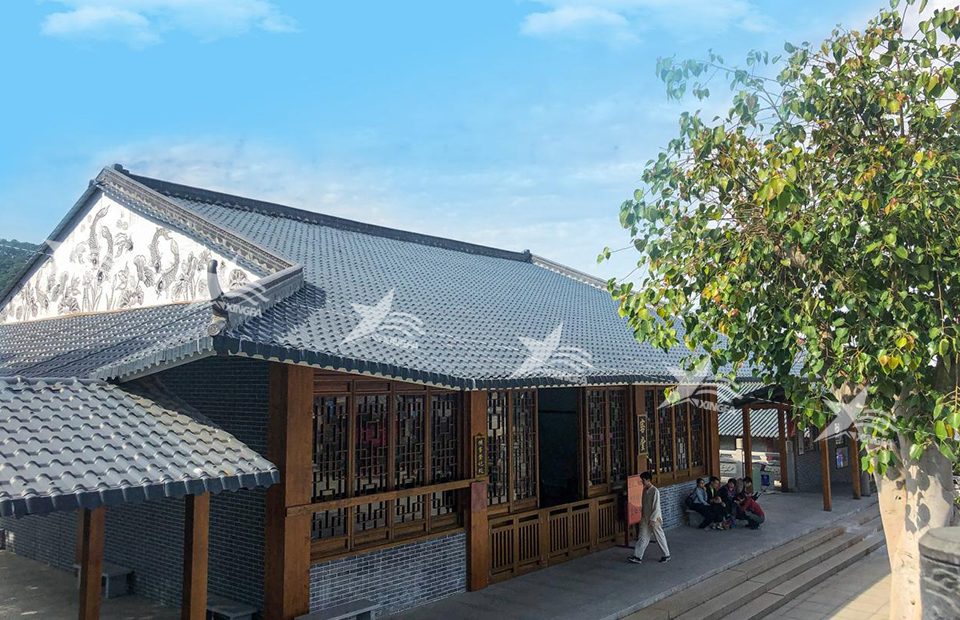
2. Acid–Alkali Corrosive Environments: Key Determinant of Service Life Ceiling in Industrial Applications
(A) Industrial Corrosion Significantly Reduces Service Life
While synthetic resin tiles inherently possess superior acid–alkali resistance and corrosion tolerance compared to color-coated steel sheets, they are not impervious to chemical degradation. In specialized industrial settings—such as chemical plants, dyeing and printing facilities, electroplating workshops, and livestock farms—airborne acidic or alkaline mists, ammonia gas, and corrosive particulates persistently attack the tile surface. Cumulative exposure gradually depletes the protective capacity of the ASA weather-resistant layer and compromises the dimensional stability and mechanical integrity of the substrate. Under severe corrosion conditions, standard-grade resin tiles may experience up to a 30% reduction in service life; accordingly, thickened, high-purity ASA composite tiles are recommended to ensure performance longevity.
(B) Coastal Salt-Fog Environments Accelerate Surface Deterioration
Coastal zones present a uniquely aggressive combination of high salinity, elevated humidity, and persistent sea breezes. Salt-laden aerosols possess mild penetrative capability and induce continuous surface abrasion and oxidative degradation. Low-grade or recycled-material resin tiles exhibit poor salt-fog resistance and may develop blistering, peeling, or premature discoloration within just a few years. By contrast, virgin-material, high-purity ASA resin tiles demonstrate markedly enhanced salt-fog resistance, exhibiting slower surface deterioration and greater suitability for such harsh coastal environments. In dry, non-corrosive environments—such as typical residential buildings or general-purpose warehouses—resin tiles experience negligible chemical degradation and can achieve their maximum theoretical service life. 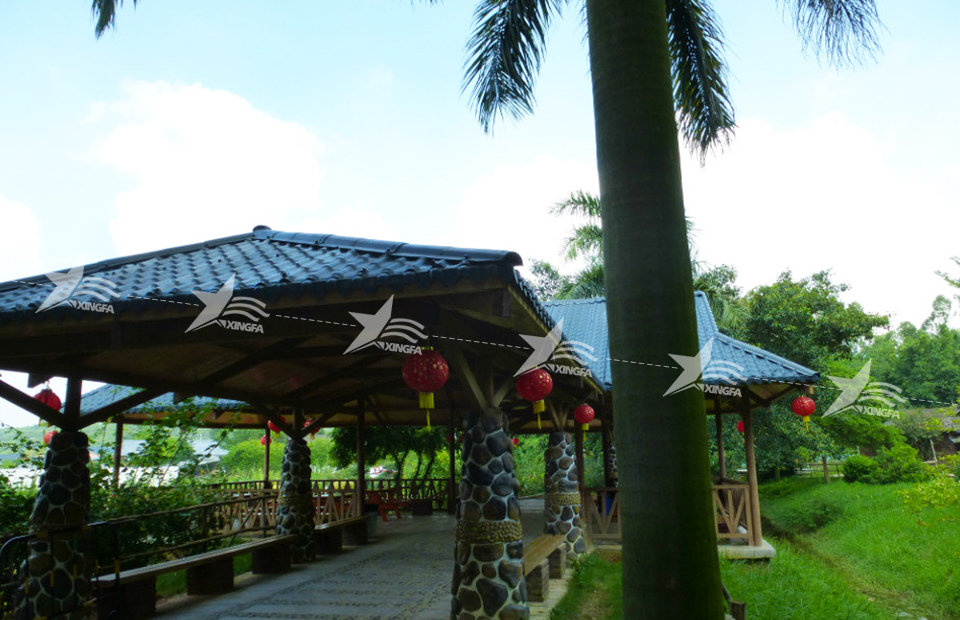
3. Rain, Snow, Wind, and Ice Load Environments: Critical Influences on Roof Structural Integrity
(A) Wind and Snow Loads Induce Mechanical Deformation and Wear
Regions prone to heavy snowfall, extreme cold, or frequent typhoons impose significantly higher external mechanical loads on roofing systems. Prolonged snow accumulation subjects tiles to sustained compressive stress, leading to gradual attenuation of material toughness. Repeated high-wind loading causes dynamic vibration and lateral shearing forces, potentially resulting in fastener loosening and misalignment at interlocking joints. Sustained mechanical stress compromises overall panel integrity and increases the risk of water infiltration—thereby indirectly shortening the effective service life. Inland areas with low wind speeds and minimal snowfall provide mechanically benign conditions, allowing tiles to retain structural stability over extended periods.
(B) Rainwater Erosion and Hail Impact Contribute to Cumulative Damage
In regions subject to frequent torrential rainfall, high-velocity runoff exerts long-term abrasive action on the surface protective layer. Similarly, recurrent hailstorms deliver direct kinetic impact, potentially inducing subsurface micro-cracks—even in high-toughness resin tiles. While premium-grade tiles can withstand typical hail events, repeated exposure to extreme weather conditions accumulates latent damage, accelerating functional degradation and reducing service life.
4. Enclosed and Humid Environments: Hidden Accelerators of Premature Aging
Poor roof ventilation, combined with high internal humidity and elevated temperatures, represents another critical factor shortening service life. In poorly ventilated industrial attic spaces or sealed agricultural sheds, trapped moisture cannot readily dissipate, resulting in prolonged exposure of the tile underside to hot, humid conditions. This promotes slow but persistent degradation of the substrate from below, diminishing material toughness. Concurrently, damp conditions foster mold growth and organic soiling, which adhere to the tile surface, impairing breathability and exacerbating surface aging. In contrast, well-ventilated roofs with balanced moisture levels maintain uniform temperature distribution across the tile cross-section and remain consistently dry—resulting in the slowest possible aging rate.
5. Conclusion: Environmental Conditions Dictate Actual Service Life
In summary, the intrinsic material service life of synthetic resin tiles establishes an upper theoretical limit; however, **the actual in-service lifespan is determined predominantly by environmental conditions**. In benign environments—characterized by moderate temperatures, low humidity, minimal chemical exposure, and balanced solar irradiance—tiles typically deliver reliable performance for 15–20 years. Conversely, in harsh environments marked by intense heat/UV exposure, high corrosion potential, frequent wind/snow loading, or chronic enclosure/humidity, cumulative environmental stressors progressively erode material performance, leading to substantial reductions in service life.
Therefore, product selection must transcend reliance on nominal service-life claims. Instead, specification should be rigorously aligned with local environmental profiles—selecting thickened, high-purity ASA composite tiles for demanding applications (e.g., industrial plants or coastal facilities), and standard virgin-material tiles for conventional residential or warehouse use. Such environment-adapted material selection is essential to maximize the real-world service life of roofing systems across both industrial and civil infrastructure.