EN
EN  ES
ES  RU
RU  AR
AR What Is the Self-Cleaning Function of Synthetic Resin Roofing Tiles?
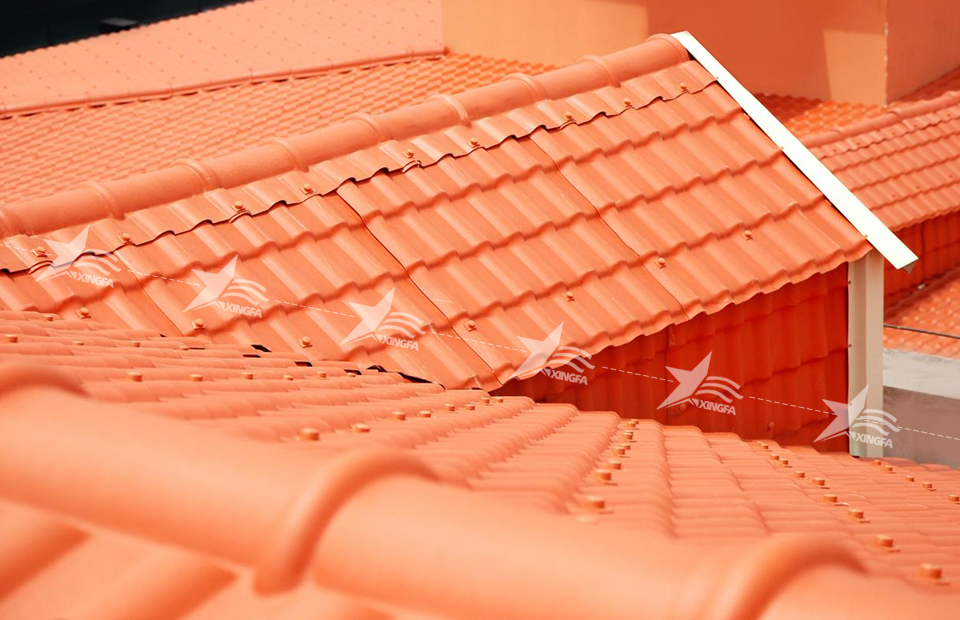
The self-cleaning capability of synthetic resin roofing tiles refers to the material’s inherent ability—enabled by its physical microstructure and/or chemical properties—to automatically remove surface-accumulated dust, stains, and biological contaminants (e.g., algae spores, mold) under natural environmental conditions (such as rainfall, wind action, and solar irradiation), thereby maintaining long-term aesthetic integrity with minimal or no manual cleaning required.
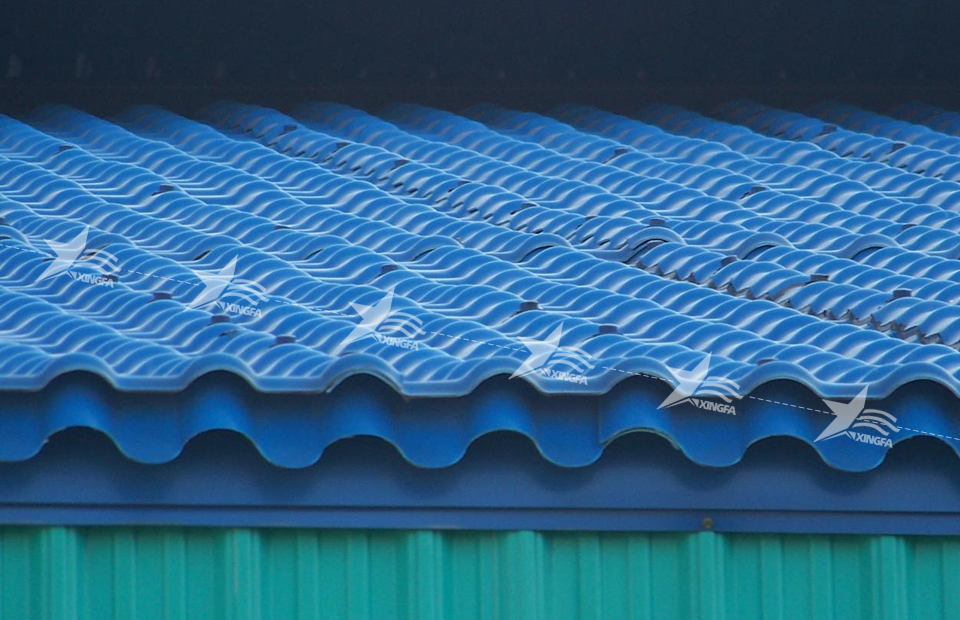
The core mechanism underlying this self-cleaning performance is the “lotus effect,” which arises from the synergistic interplay between low surface energy chemistry and controlled microscale topography:
Superhydrophobic Surface
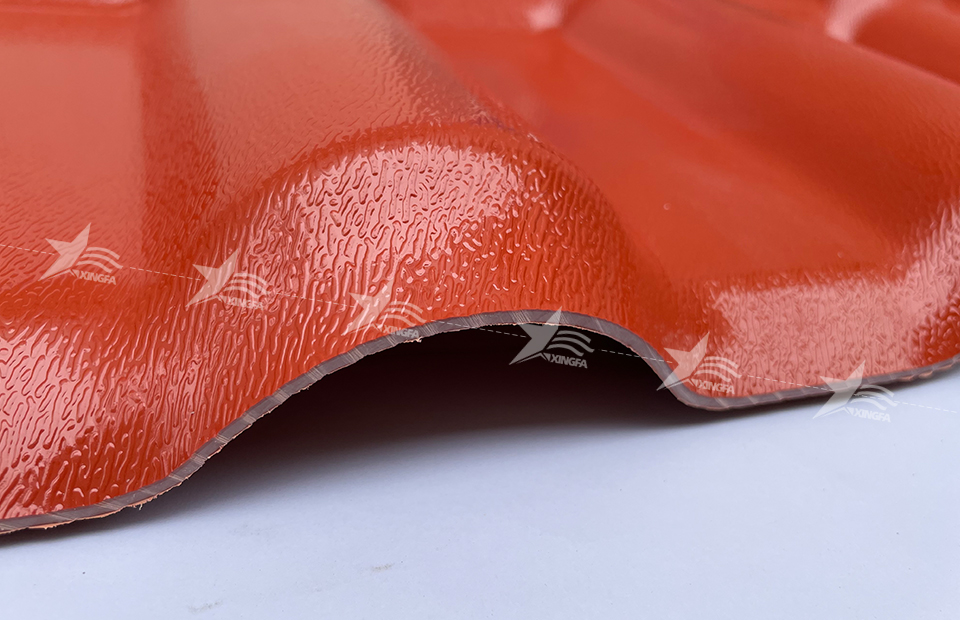
The tile surface is coated with highly weather-resistant acrylic or organosilicon resins. These coatings exhibit extremely low surface energy, resulting in water contact angles typically exceeding 90°. Upon contact, rainwater does not spread into a film but instead beads up into near-spherical droplets. As these droplets roll off the inclined roof surface, they adsorb and entrain loose particulate contaminants. Crucially, because the surface remains non-wetting, contaminants lack strong adhesion and are readily dislodged.
Microstructured Roughness
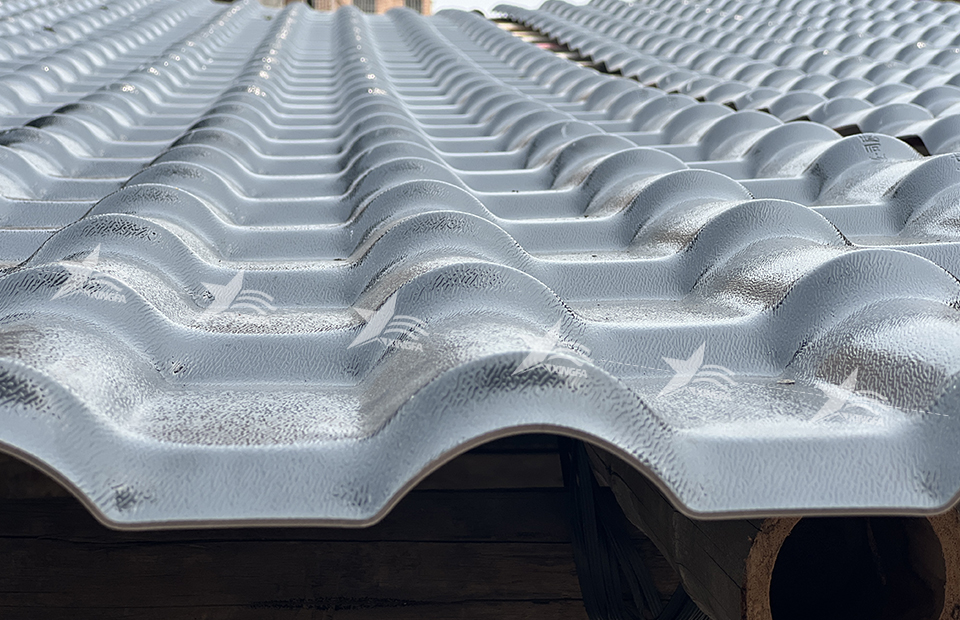
At the micro- or nanoscale, the surface features precisely engineered topographic heterogeneity—comprising controlled protrusions and recesses. This hierarchical roughness traps a continuous air layer between the solid surface and water droplets, significantly reducing the solid–liquid contact area. Consequently, droplets achieve exceptionally low adhesion and high mobility. Under gravitational force, rolling droplets efficiently collect and carry away dust, silt, biofilm precursors, and airborne spores—effectively achieving a “snowballing” self-cleaning action.
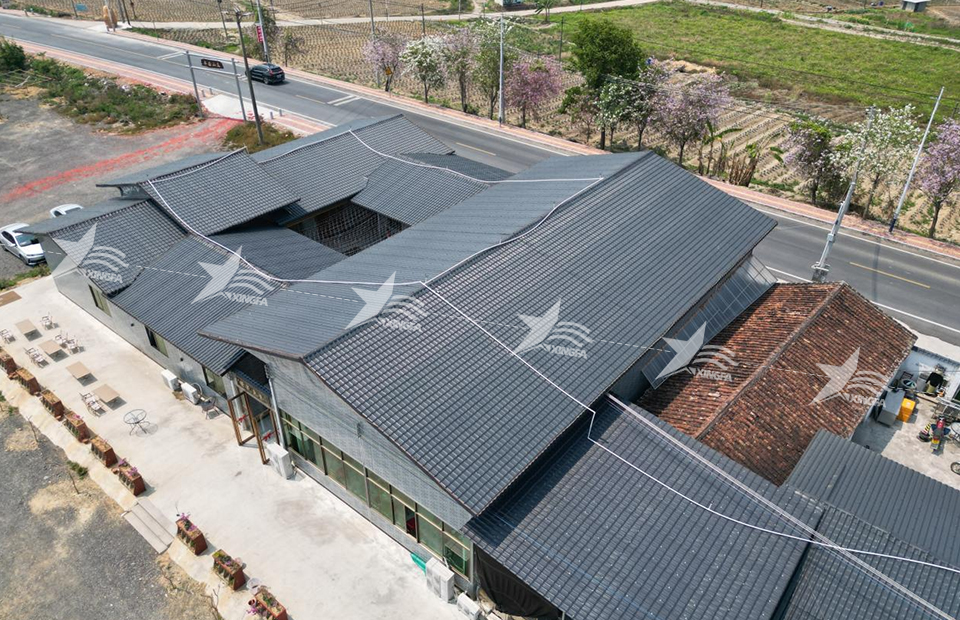
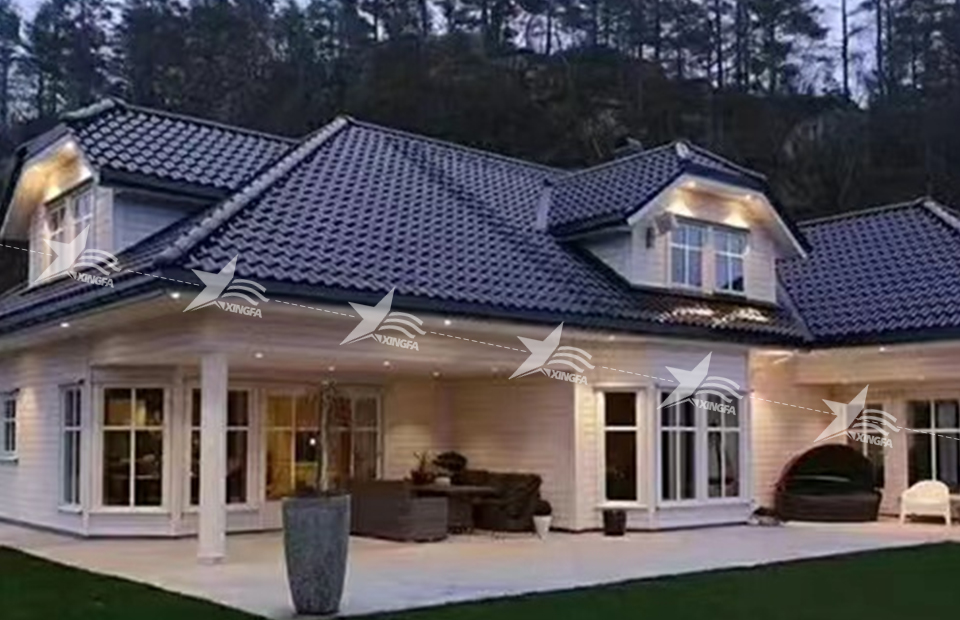
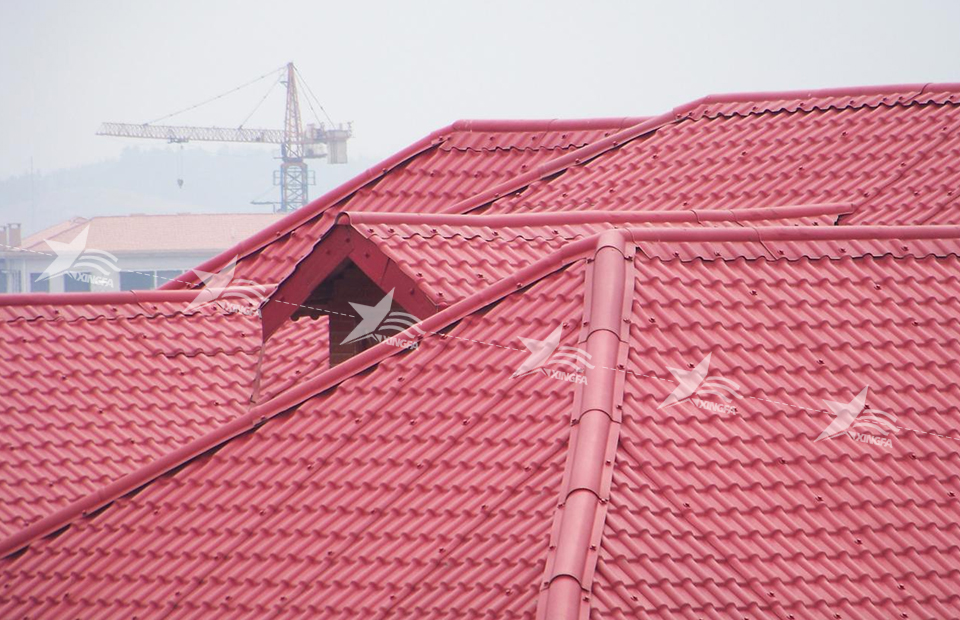
Thanks to this scientifically grounded self-cleaning principle, synthetic resin roofing tiles deliver multiple functional advantages—including maintenance-free operation, sustained stain resistance, excellent color retention, enhanced waterproofing, and improved thermal performance. These attributes make them well-suited for diverse architectural applications, seamlessly balancing aesthetic appeal with long-term, low-maintenance performance.