

 ES
 EN
 RU
 AR
Does PVC Hollow Roof Sheets Require Regular Maintenance?
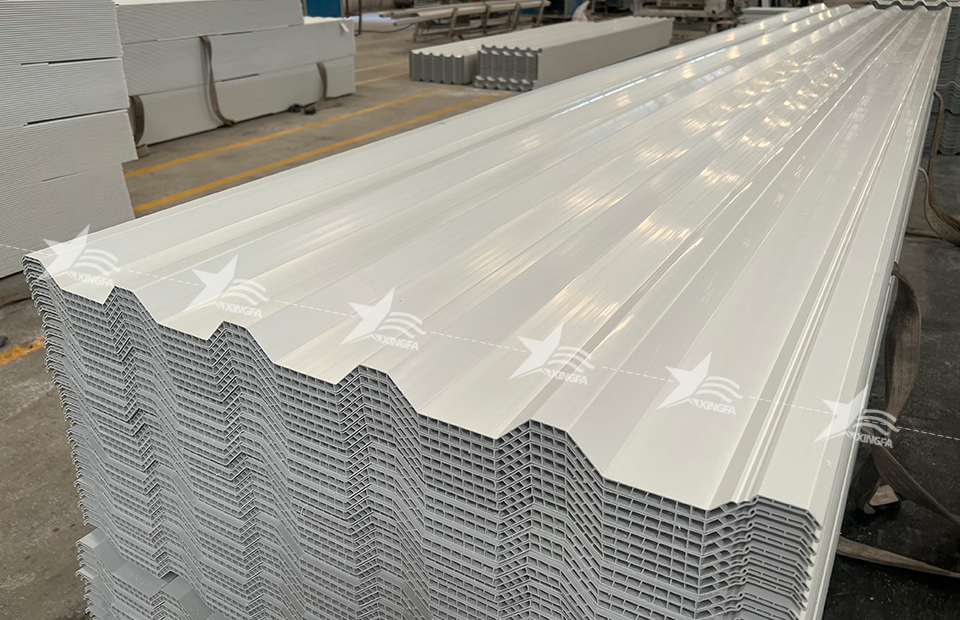
PVC hollow roof sheets—valued for their thermal insulation (achieved via hollow chambers), corrosion resistance, and lightweight properties—are widely employed in industrial workshops, livestock/poultry sheds, and warehouse buildings. Many users mistakenly assume it is a “fit-and-forget” maintenance-free material. In reality, while PVC hollow roofing does feature an extended maintenance cycle and minimal upkeep requirements, it is not exempt from periodic care. Scientific, scheduled maintenance significantly extends service life; conversely, neglect may lead to premature failure due to gasket degradation, accumulated debris-induced corrosion, or water ingress into the hollow chambers. There is no universal standard for maintenance frequency—instead, it must be calibrated according to local environmental conditions and seasonal variations. The guiding principle is “preventive maintenance,” not reactive repair following damage. This article presents a comprehensive maintenance framework for PVC hollow roof sheets, addressing seven key dimensions: necessity of maintenance, environment-driven scheduling, routine inspection items, phased maintenance protocols, seasonal timing considerations, troubleshooting guidance, and common misconceptions.
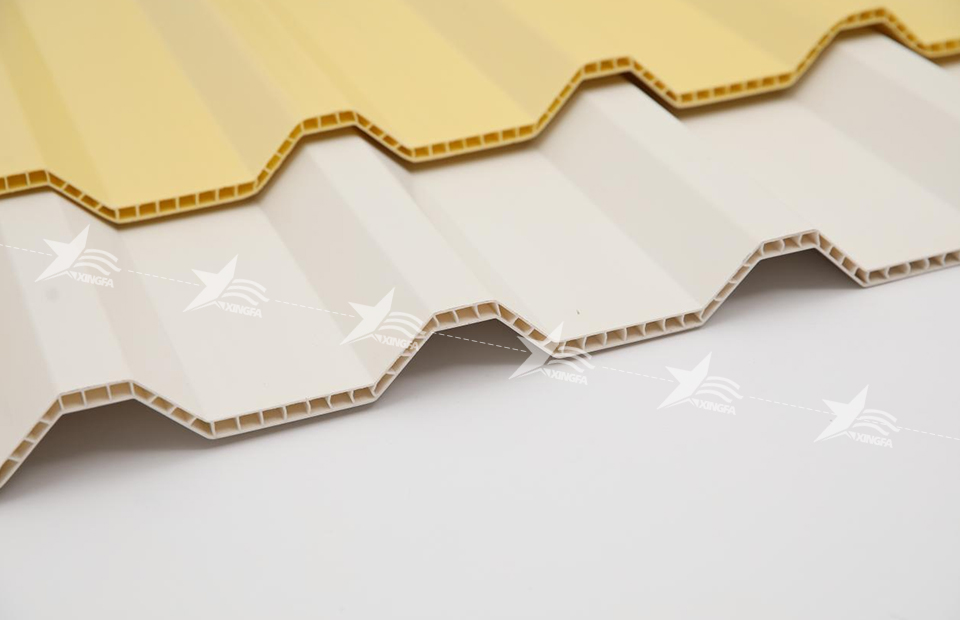
1. Necessity of Regular Maintenance for PVC hollow roof sheets
Although inherently corrosion-resistant and non-rusting, PVC hollow roofing remains subject to long-term environmental degradation. Prolonged UV exposure gradually degrades the surface layer; low-quality products lacking an ASA (acrylonitrile-styrene-acrylate) protective topcoat are especially prone to color fading and chalking. Accumulated organic debris—including fallen leaves, silt, and livestock manure—can obstruct drainage channels, resulting in ponding water that corrodes seam joints. Over time, rubber or EPDM washers beneath self-tapping screws become brittle and crack when continuously exposed to weather, leading to nail-hole leakage. Should end caps or chamber seals fail, moisture intrusion compromises thermal performance and accelerates internal deterioration. Unmaintained roofs exhibit markedly reduced service life. Crucially, effective maintenance does not entail complex refurbishment—it centers on systematic hazard identification and prompt resolution of minor issues, embodying a proactive, prevention-first philosophy that substantially lowers long-term repair costs.
2. Maintenance Frequency Is Environment-Dependent
Environmental conditions constitute the primary determinant of maintenance intervals. For standard industrial workshops and warehouses—where air pollution levels are low and rainfall relatively clean—visual inspections are recommended every six months, complemented by one comprehensive maintenance session prior to the annual rainy season. In contrast, high-corrosion environments such as livestock farms and chemical processing facilities—exposed to airborne ammonia, acidic mists, or alkaline vapors—require more frequent attention: visual inspections every three months and thorough cleaning/inspection biannually. Similarly, regions characterized by strong winds, heavy sand/dust loads, intense solar radiation, or high salinity demand intensified monitoring—particularly for abrasive sand accumulation and surface abrasions or micro-scratches. The overarching principle remains: the milder the environment, the longer the permissible interval; the harsher the environment, the shorter—and more rigorous—the maintenance cycle must be.
3. Routine Inspection Items (Every 3–6 Months)
Routine inspections rely primarily on visual assessment and focus on three critical areas. First, clear debris—including leaves, grass, silt, and (in livestock sheds) corrosive manure—from gutters, eaves, and corrugation troughs to prevent drainage blockage and prolonged water immersion at seam interfaces. Second, inspect panel lap joints for edge lifting or lateral displacement, and examine the roof surface for extensive discoloration or deep scratches. Third, closely examine ridge caps, flashing details, and other termination points—common locations for water infiltration. Inspections should be conducted during consecutive dry, sunny days when surfaces are fully dry. When accessing the roof, always observe strict safety protocols: use appropriate fall protection equipment, and walk exclusively along the valley (trough) positions aligned with underlying purlins—never step directly onto the crest (peak) of the corrugations.
4. Annual Comprehensive Maintenance (Once Per Year, Pre-Rainy Season)
A full-scale maintenance intervention must be performed annually—ideally just before the onset of the rainy season—as this represents the most critical opportunity to prevent leaks. First, systematically inspect all self-tapping screws for washer integrity: check for signs of aging, cracking, or detachment. Washer failure is the single most frequent cause of leakage in PVC hollow roofing; any compromised washers must be replaced immediately, followed by application of high-performance, weather-resistant sealant around each fastener. Second, examine sealant beads at panel overlaps for cracking or shrinkage; remove degraded sealant thoroughly and reapply fresh, compatible sealant. Third, verify the integrity of end caps and chamber seals to ensure complete moisture exclusion—preventing both thermal performance loss and internal chamber degradation. Fourth, for heavily soiled panels, perform low-pressure washing using soft-bristle brushes and neutral-pH cleaning agents. Under no circumstances should steel wool pads, abrasive scrapers, or high-pressure water jets be used.
5. Specialized Structural Assessment (Approximately Every 5 Years)
After five years of service, PVC hollow roofing systems warrant a dedicated structural evaluation. Key assessment criteria include: evaluating the degree of embrittlement and chalking across the panel surface; checking for localized sagging, subtle micro-cracks, or visible deformation; verifying whether hollow chambers remain hermetically sealed and free of trapped moisture; and inspecting underlying purlins and roof substrates for warping, deflection, or settlement—any substrate movement may induce tensile stress on panels, potentially causing fractures. Aging ancillary components (e.g., fasteners, washers, end caps) should be replaced in batches. Isolated damaged panels may be replaced individually without requiring full-system removal. Such specialized assessments uncover latent structural vulnerabilities undetectable during routine inspections—thereby preventing minor defects from escalating into widespread leakage failures.
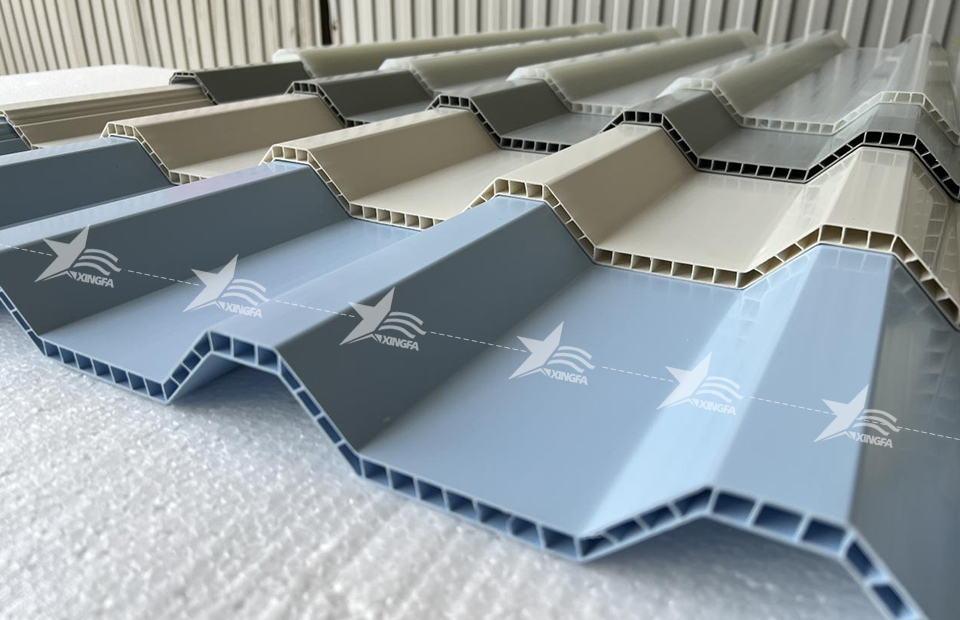
6. Seasonal Timing and Maintenance Scheduling
Maintenance activities should be strategically aligned with seasonal patterns. In southern regions with high annual rainfall, gutter clearance and sealant reapplication must be completed prior to the rainy season. In northern climates, pre-winter maintenance should include clearing leaf-laden corrugation troughs to prevent freeze-thaw damage to hollow chambers. Prior to peak summer heat, light-colored panels may benefit from gentle cleaning to restore solar reflectance and enhance passive cooling efficiency. Following extreme weather events—including high winds, hailstorms, or heavy snowfall—an additional ad hoc inspection is strongly advised to identify loosened panels, impact cracks, or other storm-related damage. Integrating seasonal triggers into the maintenance plan ensures timely, context-appropriate interventions—maximizing preventive effectiveness.
7. Troubleshooting Common Issues and Correcting Misconceptions
Appropriate response strategies depend on the nature and severity of observed issues. Superficial color fading or minor surface scratches—while cosmetically noticeable—do not compromise structural integrity or functional performance; these may be mitigated by applying a manufacturer-recommended, UV-stable, PVC-specific protective coating to slow further aging. By contrast, through-thickness cracks or panel collapse necessitate immediate replacement of the affected unit. Four prevalent maintenance misconceptions warrant explicit correction:
(1) Using steel wool pads, metal scrapers, or direct high-pressure water jetting—which inevitably scratch or erode the surface layer;
(2) Employing strong acidic or alkaline cleaners—which accelerate polymer degradation and chalking;
(3) Stepping on the crest (peak) of corrugations, which risks crushing the hollow chamber structure;
(4) Drilling new holes into existing panels without proper sealing—introducing uncontrolled leak paths and compromising chamber integrity.
Adherence to correct maintenance practices enables PVC hollow roof sheets to deliver stable, reliable performance over many years; conversely, chronic neglect drastically shortens its operational lifespan.