ES
 EN
 RU
 AR
How PVC Hollow Roof Sheets Deliver Thermal Insulation Performance
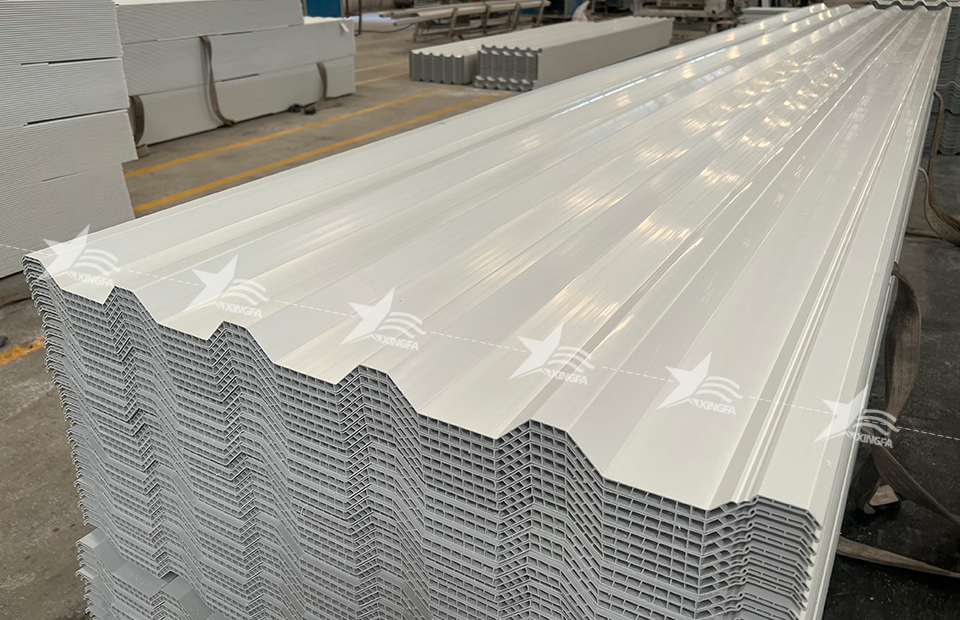
In industrial workshops, livestock breeding sheds, and storage facilities, roof thermal insulation directly impacts indoor thermal comfort and energy consumption. PVC hollow roof sheets—distinguished by their internal hollow structure and inherent material properties—exhibit outstanding thermal insulation performance, leading to increasingly widespread adoption in such applications. Their insulating capability does not rely on a single mechanism; rather, it arises from the synergistic interaction of sealed air layers, low-thermal-conductivity material, light-colored surface reflectivity, and a weather-resistant top layer. This article systematically analyzes how PVC hollow roof sheets achieve thermal insulation across seven dimensions: the principle of the hollow structure, intrinsic material thermal conductivity, functional role of the air layer, surface treatment, critical installation considerations, practical application value, and key precautions.
1. Hollow Structure: The Core Insulation Mechanism
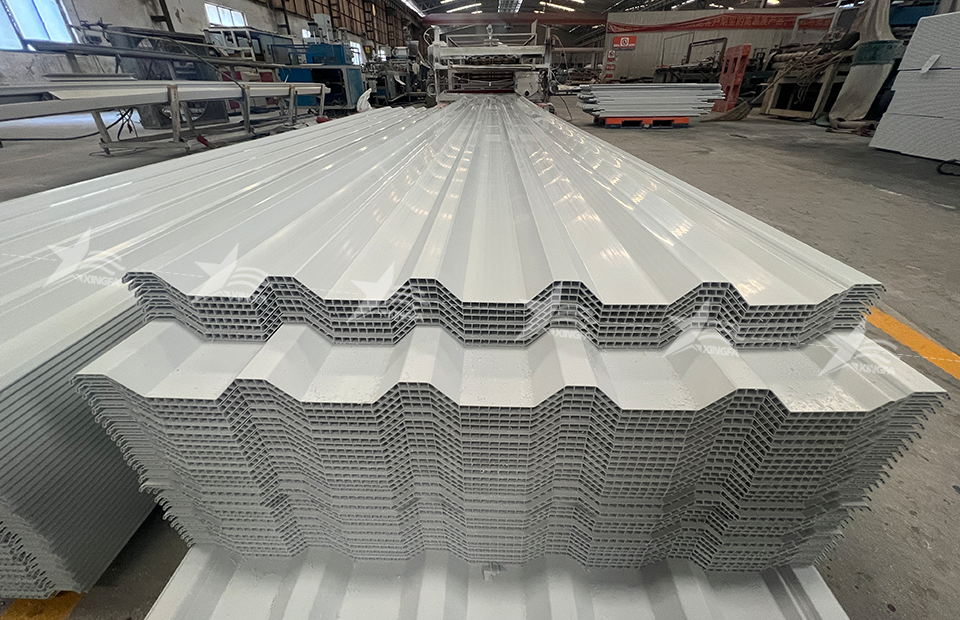
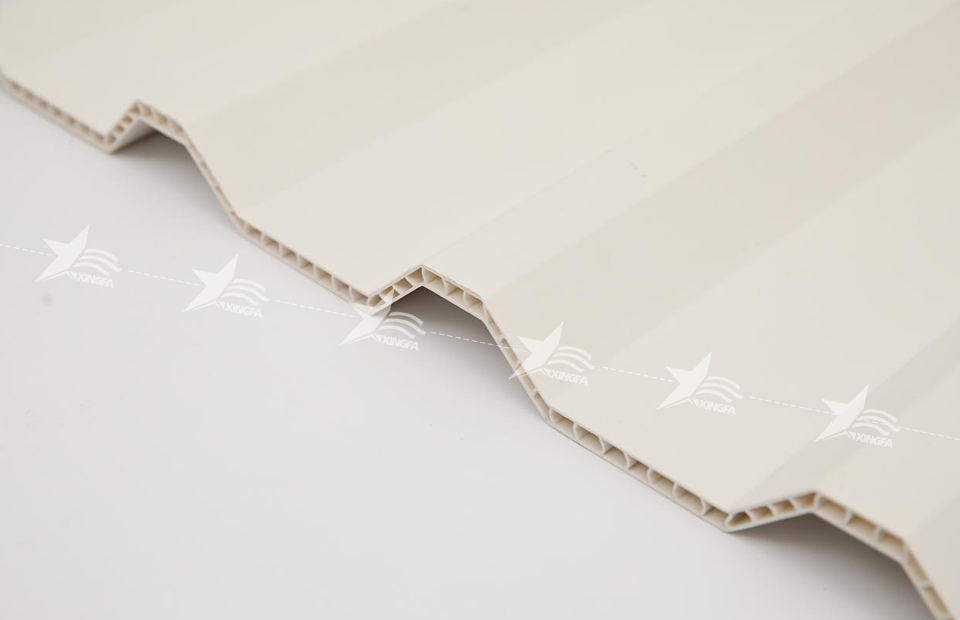
The defining feature distinguishing PVC hollow roof sheets from solid-profile alternatives lies in the presence of one or more sealed, internal hollow chambers formed during extrusion. These chambers encapsulate stationary air—a natural insulator with an exceptionally low thermal conductivity, significantly lower than that of plastics or metals. When properly sealed, the enclosed air remains largely static, minimizing both convective and conductive heat transfer. As a result, the hollow chambers function analogously to built-in thermal insulation layers, effectively impeding heat transmission through the roof. Generally, a greater number of hollow layers and increased chamber thickness correspond to higher thermal resistance (R-value) and superior overall insulation performance—constituting the primary source of thermal insulation in PVC hollow sheets.
2. Intrinsic PVC Material Properties: A Low-Conductivity Insulator
Beyond its structural design, the PVC polymer itself serves as an effective thermal insulator. Its thermal conductivity is markedly lower than that of metallic roofing materials (e.g., steel or aluminum) and even lower than most inorganic roofing tiles. Heat propagates slowly through PVC, meaning that—even in the absence of hollow cavities—the sheet material alone contributes to attenuating heat ingress and egress. The combined effect of low-conductivity PVC and engineered hollow geometry multiplicatively enhances thermal insulation performance. Compared to metal-based alternatives such as color-coated steel roofing sheets, PVC hollow sheets possess a clear inherent advantage in thermal conductivity—making them especially suitable for applications demanding summer heat rejection and winter thermal retention.
3. Functional Mechanism of the Air Layer
The enclosed air layer within the hollow chambers simultaneously suppresses all three fundamental modes of heat transfer: conduction, convection, and radiation. Regarding conduction, the large intermolecular spacing and low kinetic energy of stationary air molecules significantly impede direct thermal conduction. With respect to convection, the hermetically sealed cavity prevents air movement, thereby eliminating convective heat exchange. Concerning radiation, multi-chamber configurations introduce multiple internal interfaces that progressively attenuate incident thermal radiation through repeated reflection and absorption. Collectively, these three mechanisms confer a substantially higher thermal resistance to hollow sheets than solid sheets of equivalent thickness—enabling superior insulation performance without increasing material volume or weight.
4. Light-Colored Surface and Solar Reflective Cooling
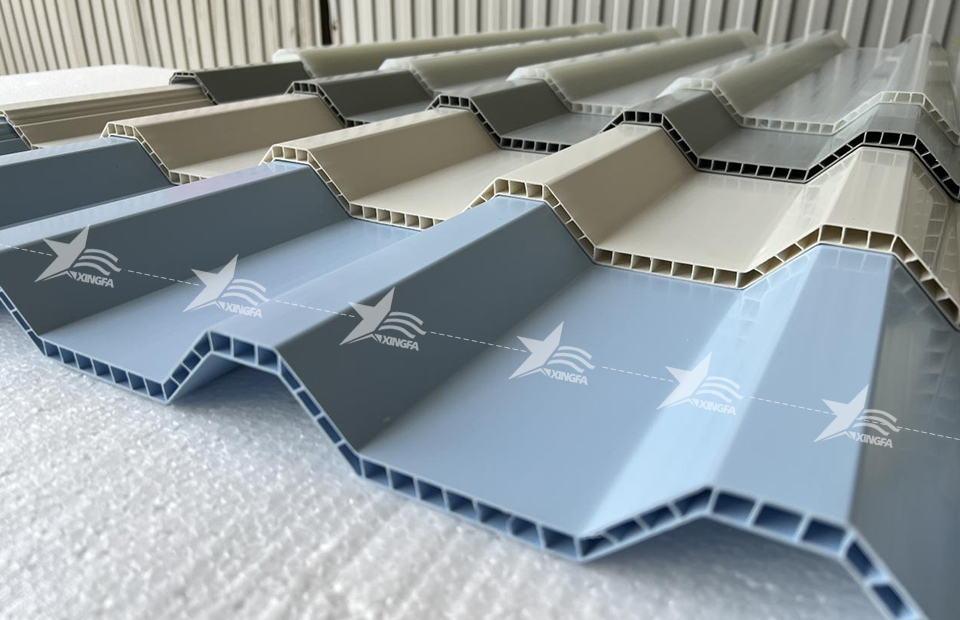
Thermal insulation encompasses not only heat retention but also mitigation of solar heat gain. The surface color of PVC hollow roof sheets critically influences their solar absorptance and reflectance. Light-colored surfaces exhibit high solar reflectance—effectively reflecting a substantial portion of visible and near-infrared solar radiation—thereby reducing roof surface temperature rise and minimizing heat accumulation indoors. Conversely, dark-colored surfaces absorb greater solar energy, resulting in comparatively diminished thermal performance. Consequently, selecting light-colored PVC hollow sheets is particularly advantageous in hot-climate regions, where enhanced solar reflectivity complements the structural insulation benefits. Furthermore, the inclusion of an ASA (acrylonitrile–styrene–acrylate) weather-resistant top layer ensures long-term color stability, preventing fading and chalking—thus preserving high reflectance performance over the service life of the roof.
5. Installation Practices: A Critical Determinant of Insulation Efficacy
The realized thermal insulation performance of PVC hollow roof sheets is highly contingent upon proper installation. To maintain optimal insulation, the hollow chambers must remain fully sealed. If end caps are omitted or lap joints are inadequately sealed, external air infiltration will induce convective currents within the chambers—severely degrading their insulating capacity. Installation best practices include:
(1) sealing all sheet ends with certified end caps;
(2) ensuring precise, watertight lap joints with appropriate overlap and sealant application;
(3) adhering strictly to recommended purlin spacing to prevent localized deformation or collapse of hollow chambers under load;
(4) incorporating adequate expansion joints to accommodate thermal expansion and contraction—thereby safeguarding structural integrity across temperature fluctuations.
Only rigorous adherence to these protocols ensures that the hollow architecture fulfills its intended thermal function; substandard installation inevitably compromises performance—even with premium-grade materials.
6. Application Value and Suitable Scenarios
The thermal insulation advantages of PVC hollow roof sheets translate into significant value across diverse building types. In high-temperature industrial workshops and warehouses, they demonstrably slow indoor temperature rise, reducing reliance on mechanical cooling and ventilation systems—and consequently lowering operational energy costs. In livestock and poultry housing, consistent thermal regulation mitigates both heat stress and cold stress, enhancing animal welfare and productivity. In cold northern regions, their insulation capability helps minimize heat loss in storage facilities and temporary structures. Compared to conventional color-coated steel roofs—which typically require additional insulation layers—PVC hollow sheets deliver appreciable thermal performance intrinsically, enabling simpler, faster, and more cost-effective installation while maintaining strong value-for-money positioning.
7. Key Considerations and Inherent Limitations
It is essential to recognize the realistic scope of PVC hollow roof sheets’ thermal performance. They provide effective *heat flow retardation*, not high-performance thermal insulation equivalent to dedicated insulation boards (e.g., mineral wool or rigid polyisocyanurate). Therefore, in extremely cold climates or buildings subject to stringent thermal envelope requirements, supplementary insulation remains necessary—PVC hollow sheets should not be relied upon as the sole thermal barrier. Additionally, the hollow construction inherently reduces structural rigidity relative to solid-profile alternatives. Consequently, foot traffic on wave peaks must be strictly prohibited during installation and maintenance, and purlin spacing must conform precisely to manufacturer specifications to avoid chamber collapse under load. When procuring, users should verify product compliance with standards for virgin PVC content, optimized chamber geometry, and ASA-based weather-resistant surfacing—avoiding substandard variants featuring undersized or poorly proportioned cavities. Optimal thermal performance can only be achieved through context-appropriate selection, rigorous quality control, and strict adherence to installation guidelines.