AR
AR  EN
EN  ES
ES  RU
RU Comprehensive Analysis of Thickness Standards and Related Performance Characteristics for PVC Roofing Sheets in Industrial Plant Applications
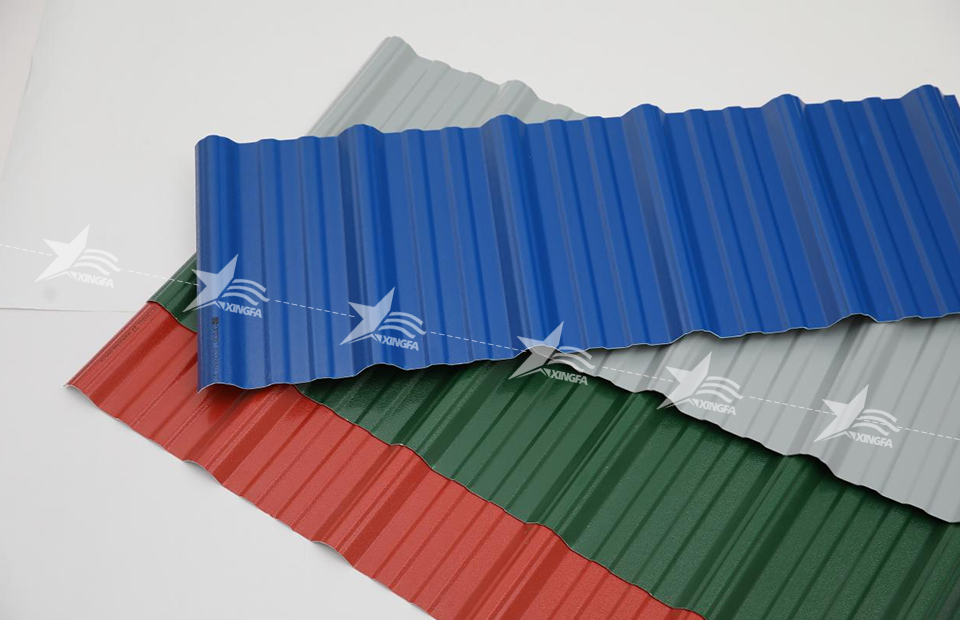
PVC roofing sheets are widely employed in roof construction for steel-framed industrial plants, warehouses, livestock sheds, and similar structures. Thickness constitutes a core physical parameter governing load-bearing capacity, impact resistance, and service life. However, product thickness in the market varies significantly, and many purchasers frequently confuse nominal thickness with actual effective thickness. Selecting an inappropriate thickness may directly result in sheet sagging, cracking, or water leakage. This article provides a systematic analysis—grounded in industry-recognized standards—covering thickness specifications, the influence of thickness on performance, common procurement misconceptions, and environmental performance considerations, thereby offering practical guidance for roofing material selection in industrial plant applications.
1. Reference Thickness Standards for Commonly Used PVC Roofing Sheets in Industrial Plants
①Distinction between Nominal Thickness and Actual Effective Thickness
Currently, no mandatory national standard prescribes a uniform thickness for PVC roofing sheets in China; instead, most manufacturers adhere to enterprise standards widely accepted across the industry. Commonly marketed nominal thicknesses include 2.0 mm, 2.5 mm, and 3.0 mm. It is essential to distinguish nominal thickness from actual effective base thickness: some manufacturers label products as “2.5 mm” while the measured base thickness falls only within the range of 2.1–2.2 mm—achieving the nominal value through surface coating protrusions rather than true substrate thickness. Purchasers must therefore rely on caliper measurements of the sheet’s structural base (excluding coatings) to verify actual thickness.
- 2.0 mm thickness: Typically suitable for temporary structures such as simple sheds, provisional storage facilities, or perimeter fencing. Its load-bearing capacity is limited and it is recommended only for low-wind-pressure, snow-free southern regions. It is not advised for primary roofs of large-scale industrial plants.
- 2.5 mm thickness: Represents the mainstream choice for general-purpose industrial plants and warehouses. It offers balanced performance under typical wind loads and light snow accumulation, delivering optimal cost-effectiveness.
- 3.0 mm thickness: Designed specifically for high-load conditions—such as northern regions with heavy snowfall, multi-story industrial buildings, or roofs featuring wide purlin spacing. It delivers superior impact resistance and dimensional stability against deformation.
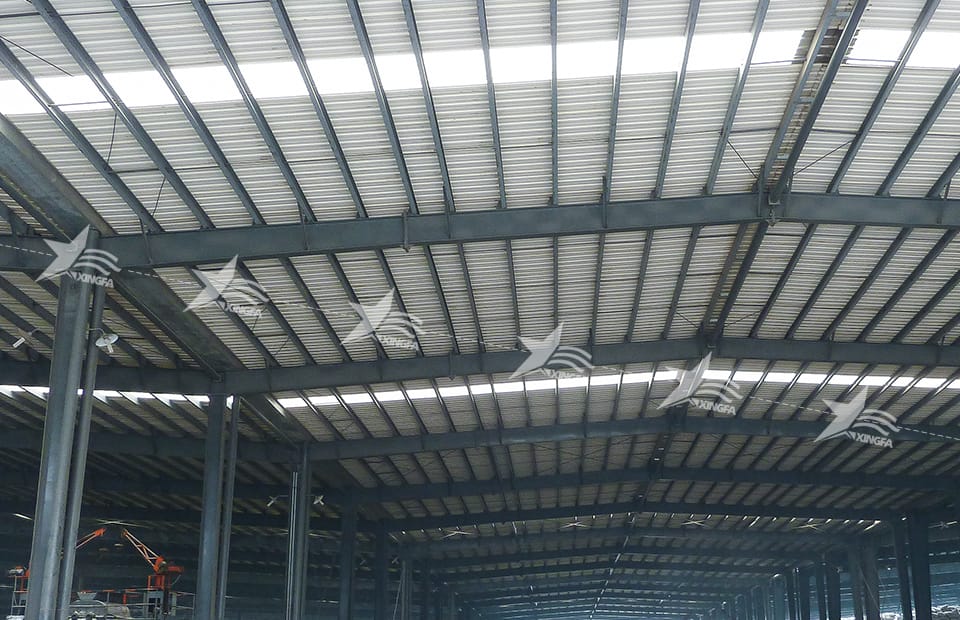
②Purlin Spacing Requirements Correlated with Sheet Thickness
Sheet thickness must be coordinated with purlin spacing; merely increasing sheet thickness without adjusting purlin layout will not prevent sagging or deflection. Recommended maximum purlin spacings are as follows:
- For 2.0 mm sheets: ≤ 600 mm
- For 2.5 mm sheets: 600–700 mm
- For 3.0 mm PVC sheets: ≤ 800 mm
Exceeding these spacing limits—even when using 3.0 mm sheets—may lead to progressive bending and permanent sagging over time due to prolonged exposure to solar radiation and mechanical loading.
2. Influence of Thickness on Key Performance Attributes of PVC Roofing Sheets
①Mechanical Strength and Load-Bearing Capacity
Sheet thickness directly determines impact resistance and flexural rigidity. Insufficient thickness increases susceptibility to cracking or perforation under hail impact or foot traffic during maintenance. Thin-gauge PVC sheets exhibit more pronounced thermal softening and deformation at elevated temperatures; prolonged summer sun exposure on industrial roofs may induce wave-like bulging. Under identical raw material formulations, greater thickness enhances resistance to deformation and extends service life—though it also proportionally increases material costs.
②Waterproofing and Aging Resistance
Appropriate thickness mitigates cracking risks induced by thermal expansion and contraction. PVC undergoes continuous cyclic expansion and contraction in response to diurnal temperature fluctuations. Thinner sheets concentrate internal stress, making lap joints particularly vulnerable to micro-cracking over time—ultimately compromising waterproof integrity. However, excessive thickness alone does not guarantee improved durability: if substandard raw materials—especially those containing excessive calcium carbonate filler—are used, even 3.0 mm sheets may become brittle and prone to fracture at low temperatures, rendering increased thickness ineffective in extending service life.
3. Environmental Performance Assessment of PVC Roofing Sheets for Industrial Plants
①Raw Material-Level Environmental Attributes
PVC resin is a synthetic polymer; certified virgin-grade PVC contains no heavy metals and emits no hazardous volatile compounds under normal ambient-use conditions. In contrast, low-cost, inferior products often incorporate substantial quantities of recycled scrap and inexpensive stabilizers—some of which contain lead or other heavy metals. Under sustained solar irradiation and elevated temperatures, such substandard stabilizers may gradually leach toxic substances. High-performance industrial PVC roofing sheets utilize calcium–zinc (Ca–Zn) eco-friendly stabilizers to replace traditional lead-based alternatives, thereby minimizing heavy metal leaching at the source.
②Environmental Performance During Manufacturing and Service Life
Production of compliant PVC roofing sheets generates negligible wastewater or exhaust emissions. Installation requires no on-site application of paints, bituminous coatings, or other auxiliary materials—reducing onsite pollutant release. Within the typical operational temperature range of ambient conditions up to 70°C, certified PVC roofing sheets remain chemically stable and do not decompose to emit toxic gases. Notably, however, PVC releases hydrogen chloride fumes upon open-flame combustion; thus, appropriate fire-protection measures must be implemented, and such sheets are unsuitable for workshops involving continuous high-temperature operations or open flames.
4. Recyclability and End-of-Life Environmental Profile
PVC is a thermoplastic polymer amenable to mechanical recycling. Upon reaching end-of-life, properly formulated PVC roofing sheets can be ground and reprocessed into new profiles—unlike asbestos-cement sheets or certain composite materials, which pose significant disposal challenges and contribute to persistent solid waste. Nevertheless, low-quality sheets containing excessive fillers or high proportions of recycled content possess minimal recyclability and present considerable post-consumer processing difficulties. From a sustainability perspective, preference should be given to virgin-material formulations to ensure viable closed-loop recycling potential.
5. Comprehensive Procurement Considerations for Industrial Plant Applications
Thickness represents only one dimension of material selection—purchasing decisions must not rely solely on thickness specifications. Buyers must conduct on-site caliper measurements to verify actual base thickness and rigorously assess material composition—not merely prioritize low-cost, nominally thick products. Specifically:
- For standard industrial plants in southern regions characterized by high temperatures and frequent rainfall, 2.5 mm virgin-material PVC sheets incorporating Ca–Zn stabilizers are recommended;
- For cold, snow-prone northern regions or large-span industrial buildings, 3.0 mm virgin-material sheets are advised;
- For temporary or lightweight structures, 2.0 mm sheets may suffice.
In all cases, strict adherence to recommended purlin spacing and standardized installation practices is essential to ensure structural integrity, long-term serviceability, and compliance with environmental requirements.