AR
AR  EN
EN  ES
ES  RU
RU Ultraviolet Radiation Impact on Service Life and Comprehensive Performance of Synthetic Resin Roofing Tiles versus Cement Roofing Tiles
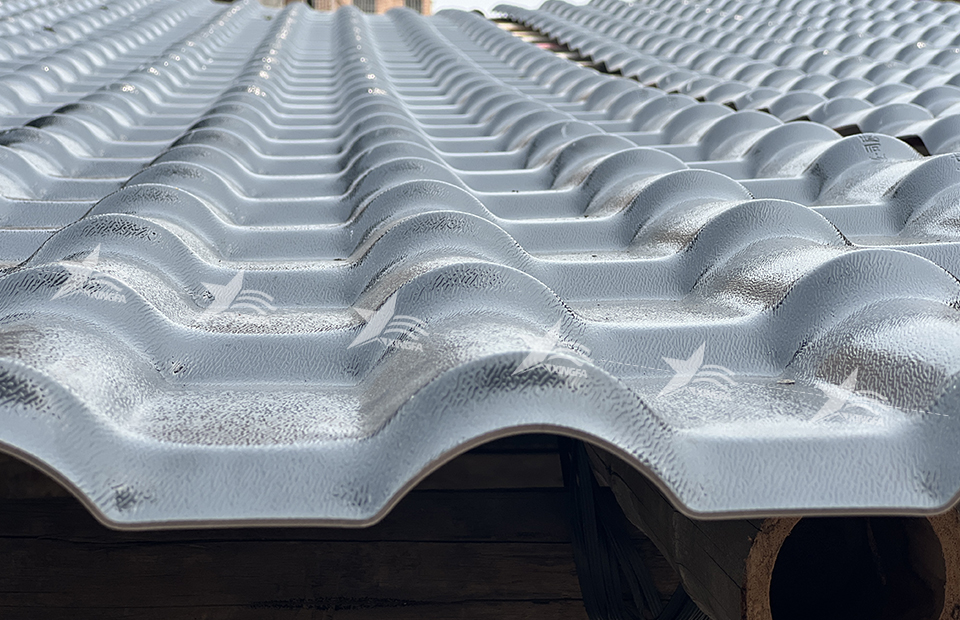
The service life of roofing tiles constitutes a core performance indicator in roof engineering. Among natural environmental factors, prolonged ultraviolet (UV) radiation is the primary cause of tile aging, functional degradation, and physical damage. Extended solar exposure disrupts the molecular structure of building materials, leading to discoloration, cracking, weathering, and water leakage—significantly reducing the effective service life of roofs.
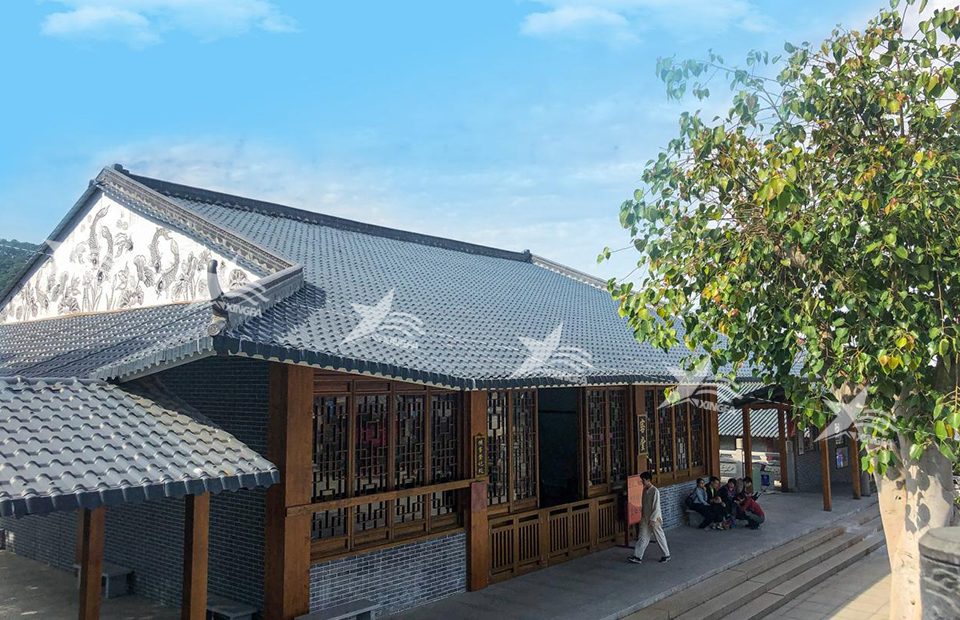
Currently, synthetic resin roofing tiles and cement roofing tiles are the two most widely adopted roofing materials for residential buildings, factory refurbishments, and rural villas. These materials differ markedly in terms of base composition, surface protection systems, UV resistance, cost structure, and installation requirements. This article presents a multidimensional comparative analysis of their performance characteristics, with particular emphasis on the influence of ultraviolet radiation on service life. It objectively evaluates the comprehensive longevity advantages and practical value of synthetic resin roofing tiles.
1. Core Product Characteristics Comparison
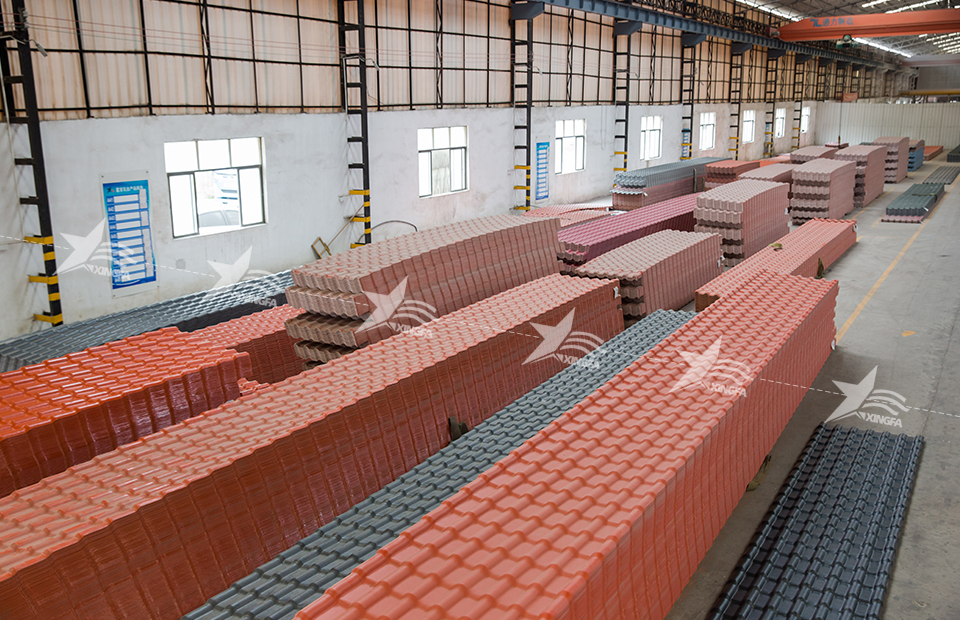
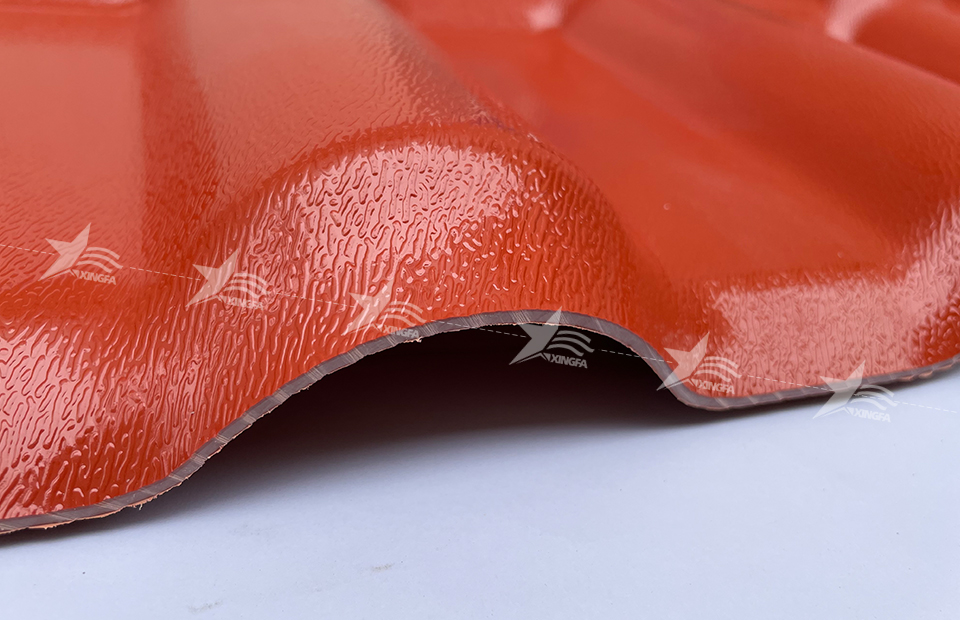
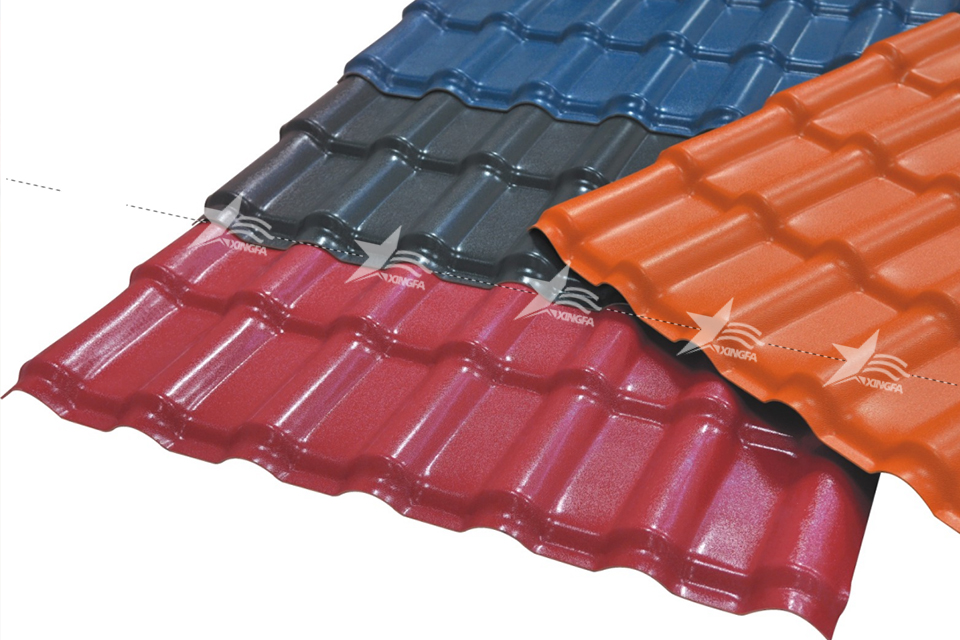
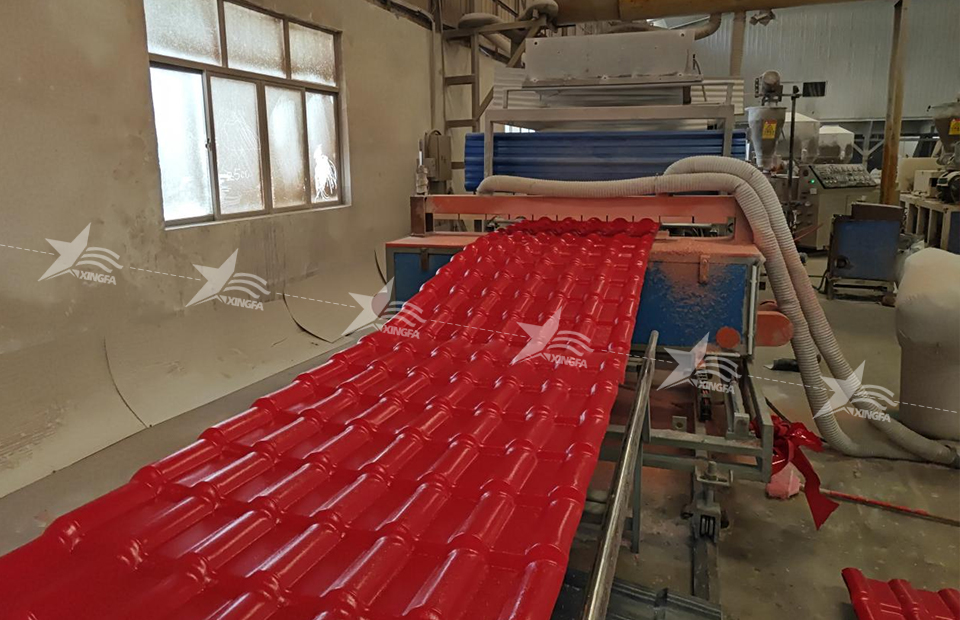
Synthetic resin roofing tiles represent an advanced composite roofing material manufactured via a three-layer co-extrusion process. Polyvinyl chloride (PVC) resin serves as the structural base, while the top layer consists of acrylonitrile–styrene–acrylate (ASA) high-weatherability engineering resin. The formulation further incorporates UV stabilizers, anti-aging agents, and toughening additives. The resulting product exhibits low density, light weight, excellent impact resistance, flexural strength, waterproofing capability, and corrosion resistance. Its stable material structure ensures resilience against thermal expansion/contraction, humidity, and acid rain. High-quality synthetic resin tiles undergo rigorous accelerated aging tests—including over 1,000 hours of UV exposure testing and cyclic high-/low-temperature weathering tests—demonstrating consistent performance across diverse climatic conditions nationwide.
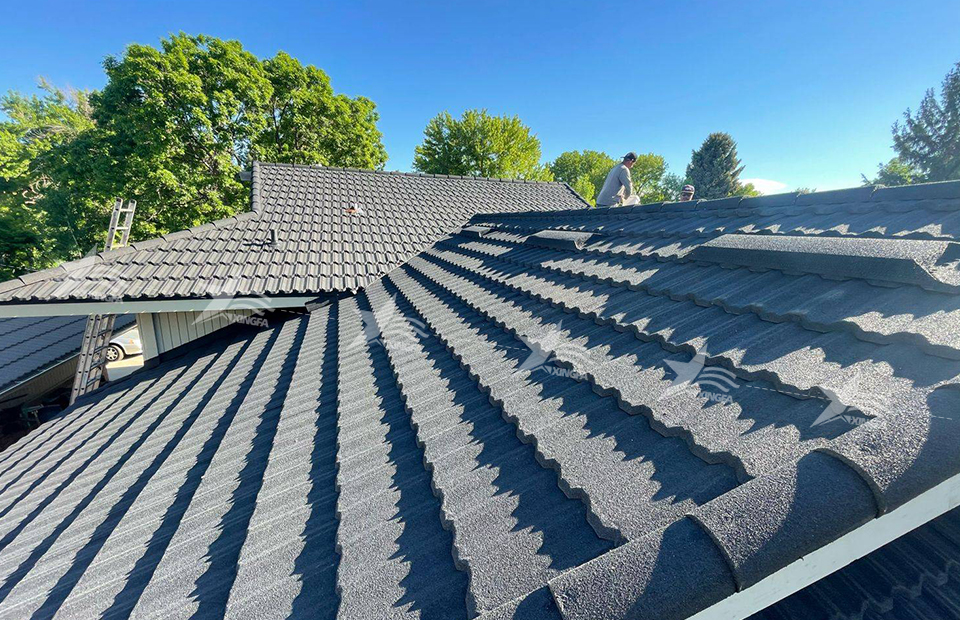
Cement roofing tiles belong to the category of traditional inorganic construction materials. They are fabricated from cement, sand, gravel, and fly ash, followed by compression molding and curing. Their inherent advantages include high rigidity, superior fire resistance, and excellent compressive strength. However, they suffer from pronounced limitations: high brittleness, substantial self-weight, and extremely poor tensile and flexural strength. Consequently, they are highly susceptible to cracking or fracture under mechanical vibration or thermal stress-induced shrinkage/expansion. Moreover, their low permeability and high surface porosity render them prone to moss growth and efflorescence in humid environments. Overall, their limited toughness restricts applicability to relatively narrow architectural scenarios.
2. Surface Coating Systems and UV Resistance Capabilities
Surface protective layers serve as the critical defense barrier against UV-induced degradation—and constitute the principal determinant of service life disparity between the two tile types. Synthetic resin tiles feature a proprietary ASA weather-resistant topcoat specifically engineered for UV resistance. Its chemically stable molecular architecture effectively blocks both UVA and UVB radiation, preventing UV-triggered scission of polymer backbone chains. This coating demonstrates exceptional adhesion, high film integrity, and long-term durability—remaining intact without peeling or flaking. When combined with specialized UV absorbers and hindered amine light stabilizers (HALS), it provides dual-layer protection against photo-oxidative degradation.
Empirical data indicate that premium-grade synthetic resin tiles retain over 90% of their original tensile strength after ten years of continuous outdoor exposure, with outstanding color retention. In contrast, substandard tiles made from recycled feedstock lack compliant ASA topcoats and rely solely on superficial pigment application; these rapidly fade, embrittle, and crack under prolonged UV exposure.
Cement tiles generally lack dedicated UV-resistant coatings. Their surface protection typically relies on thin, water-based decorative paints offering minimal thickness, weak adhesion, and poor weathering resistance. Prolonged UV irradiation readily degrades the organic binder matrix within such coatings, causing chalking, delamination, and fading. Once the protective layer fails, the underlying porous cementitious substrate becomes directly exposed to ambient conditions. Subsequent UV penetration, rainwater leaching, and repeated wet-dry cycles accelerate internal microstructural deterioration—manifesting as surface sanding, spalling, and fissuring. Such damage is irreversible and cannot be autonomously remediated, rendering cement tiles substantially inferior to synthetic resin tiles in long-term UV protection efficacy.
3. Ultraviolet Radiation Impact on Service Life
Ultraviolet radiation functions as the foremost “accelerant” of material aging—its deleterious effects are cumulative, progressive, and irreversible. Accordingly, the intrinsic UV resistance of roofing materials directly governs their operational lifespan. Nationally standardized high-performance synthetic resin tiles—equipped with ASA topcoats and optimized UV-stabilized formulations—deliver robust protection against long-term solar exposure. Under typical outdoor conditions, their service life spans 25–30 years; even in tropical regions characterized by intense UV flux, they maintain reliable functionality for over 20 years. During extended exposure, these tiles exhibit no measurable embrittlement, cracking, or dimensional distortion—only negligible, aesthetically inconsequential color fading—without compromising structural integrity or waterproofing performance. Maintenance requirements throughout their service life remain virtually nil.
By comparison, cement tiles experience significantly accelerated degradation under sustained UV exposure, thereby curtailing their usable lifespan. Standard cement tiles achieve only 15–20 years of service life under normal conditions; in high-UV environments, this diminishes further to 10–15 years. Within 3–5 years of installation, the surface paint layer begins to chalk and fade, eliminating its protective function. Thereafter, UV radiation progressively attacks the underlying cement matrix, inducing surface sanding, scaling, and micro-cracking. Rainwater infiltration into these defects, coupled with freeze-thaw cycling, exacerbates structural damage—resulting in tile breakage and roof leakage. Ongoing maintenance—including periodic repainting and localized tile replacement—is therefore unavoidable. Even with frequent interventions, such measures cannot halt the fundamental photochemical degradation of the cementitious matrix. Consequently, the overall service life remains markedly shorter than that of high-grade synthetic resin tiles.
4. Cost Comparison
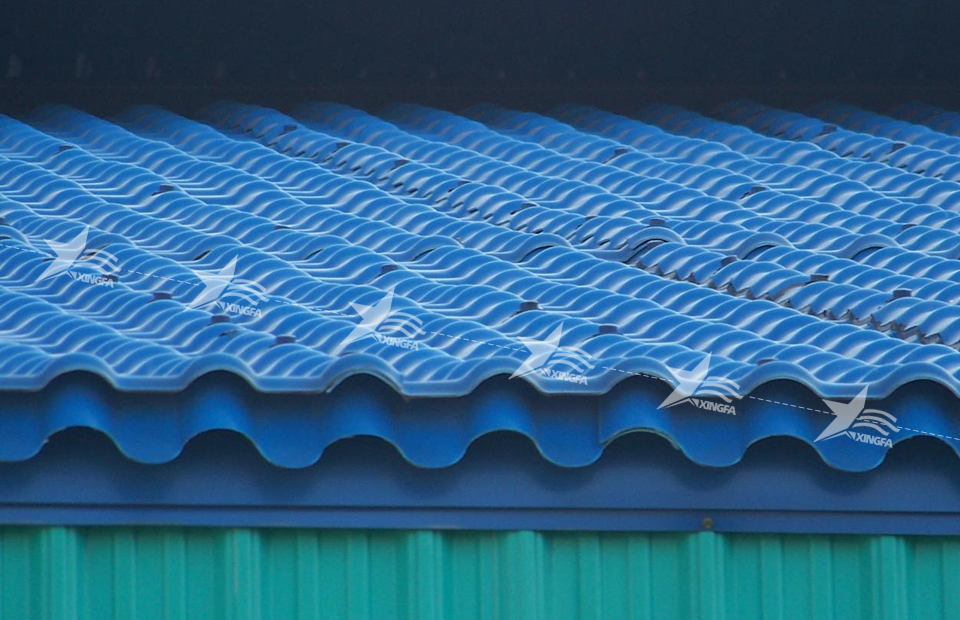
From an initial procurement perspective, cement tiles offer higher short-term cost efficiency: raw materials are inexpensive, manufacturing processes are straightforward, and unit-area costs are comparatively low—making them suitable for budget-constrained, low-complexity roofing projects. However, their lifecycle maintenance expenses are substantial, necessitating regular repainting, localized repairs, and eventual partial or full replacement—elevating total long-term investment.
Synthetic resin tiles command approximately double the upfront unit cost of cement tiles, representing a higher initial capital outlay. Nevertheless, they deliver exceptional long-term value. Owing to their superior UV resistance and structural stability, installed synthetic resin roofs require virtually no maintenance over two decades or more—eliminating recurring labor, material, and downtime costs associated with upkeep. A full lifecycle cost analysis reveals that the annualized cost per square meter for synthetic resin tiles is substantially lower than that of cement tiles—highlighting their pronounced economic advantage over time.
5. Comparison of Installation and Construction
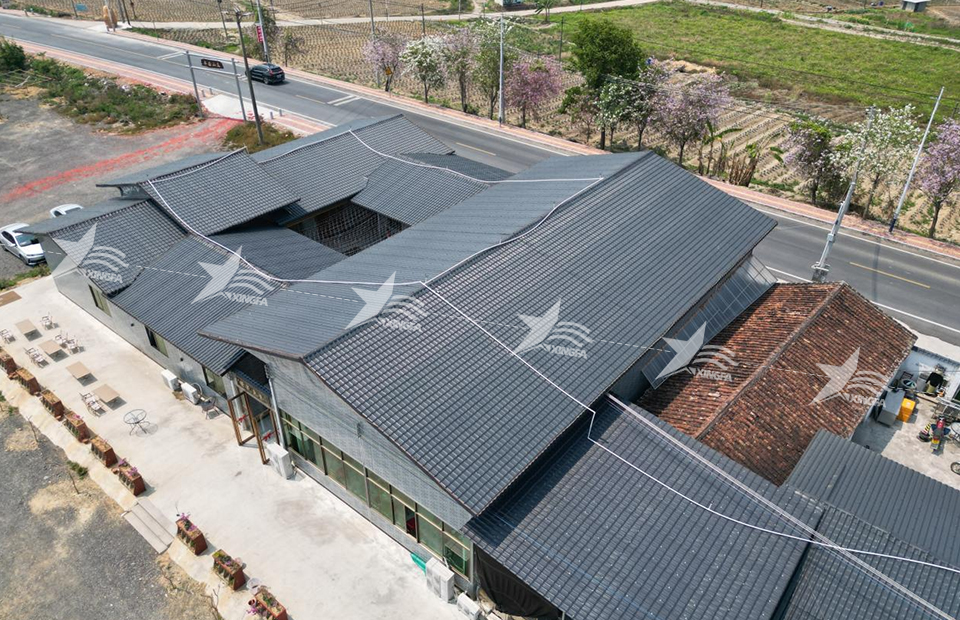
Synthetic resin roof tiles feature an exceptionally low self-weight—approximately one-fifth that of cement tiles—enabling single-person handling and installation without reliance on heavy machinery. Their standardized panel dimensions and precise interlocking design ensure excellent waterproofing and sealing performance. Installation procedures are straightforward, significantly accelerating construction progress, shortening overall project timelines, and reducing labor costs. Moreover, the material exhibits superior toughness, minimizing breakage during handling and installation. This makes synthetic resin tiles highly adaptable to diverse applications, including light-gauge steel roof systems, building renovation projects, and steep-slope roofs.
Cement tiles, by contrast, possess a substantially higher self-weight, imposing stringent requirements on roof structural load-bearing capacity. Their installation necessitates coordinated manual handling and laying by multiple workers, involves complex and time-consuming procedures, and inevitably extends project duration. Furthermore, cement tiles are inherently brittle; they are highly susceptible to chipping, cracking, or breaking during transportation and installation, resulting in elevated material waste rates. In addition, their numerous overlapping joints and relatively poor sealing performance tend to deteriorate over time due to prolonged UV exposure and thermal aging—leading to widened gaps and increased risk of water infiltration. Consequently, post-installation maintenance becomes both technically challenging and costly.
Conclusion
In summary, ultraviolet (UV) radiation is the primary factor governing the service life of roofing tiles. Synthetic resin tiles incorporate a proprietary UV-resistant coating, coupled with a chemically stable matrix and outstanding weathering resistance, enabling them to effectively withstand long-term solar exposure and UV-induced degradation—thereby delivering a significantly extended service life compared to conventional cement tiles.
Although synthetic resin tiles entail a comparatively higher initial investment, their compelling advantages—including zero-maintenance operation, extended service life, simplified installation, and broad application adaptability—deliver superior lifecycle cost-effectiveness relative to cement tiles. As such, they represent an optimal roofing material choice that balances high performance with economic efficiency—particularly well-suited for regions characterized by intense solar radiation and complex climatic conditions.