

 AR
AR  EN
EN  ES
ES  RU
RU Solving the Pain Points in PVC Factory Roof Tile Selection: A Strategic Approach to Extending Roof Service Life

Ⅰ. Common Pain Points in PVC Factory Roof Tile Selection Across Diverse Application Scenarios
With the continuous advancement of industrial factory construction and renovation projects, market demand for PVC factory roof tiles has grown steadily. However, performance requirements for roofing materials vary significantly across different application scenarios: high-temperature regions demand superior thermal insulation and cooling capabilities; coastal areas face severe challenges from salt fog corrosion; high-rainfall regions require exceptional waterproofing reliability; chemical plants necessitate strong resistance to acidic and alkaline corrosion; livestock farms require protection against ammonia-induced degradation; steel and light-gauge steel structures impose strict limitations on roof load-bearing capacity; and retrofit projects for aging factories prioritize rapid installation without structural reinforcement.
Conventional tile selection practices often focus solely on initial procurement cost while overlooking scenario-specific performance compatibility—resulting in three industry-wide core pain points:
- inadequate fire resistance, leading to non-compliance with fire safety regulations and serious regulatory risks during fire inspection;
- insufficient corrosion resistance and weatherability, causing premature deterioration—including fading, chalking, and leakage—within just a few years under harsh environmental conditions, thereby driving up annual maintenance costs; and
- complex installation processes, high material waste, and extended construction timelines collectively inflate overall project costs. Industry practice data indicates that suboptimal tile selection results in secondary roof refurbishment rates exceeding 40%, and total lifecycle costs are over 60% higher than those achieved through optimal, scenario-aligned selection.
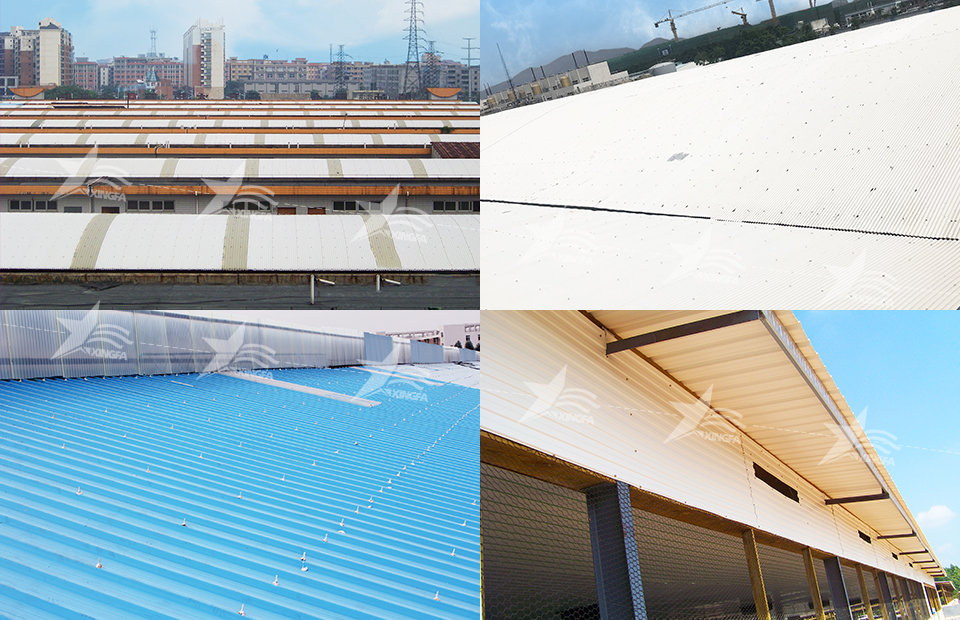
Ⅱ. A Strategic Breakthrough: The 3F Scenario-Adaptation Methodology—Reconstructing the Tile Selection Logic
Traditional PVC factory roof tile selection has long been trapped in the flawed paradigm of “comparing thickness and competing on price,” neglecting critical performance requirements dictated by specific operating environments. This misalignment inevitably leads to the paradoxical outcome of “low upfront procurement cost but high long-term operational expenditure.” As a high-tech enterprise with 21 years of R&D and manufacturing expertise in roofing materials, Foshan Chancheng Xingfa Roofing Co., Ltd. has distilled insights from over ten million square meters of real-world project experience to develop its proprietary 3F Scenario-Adaptation Methodology. This methodology centers on three core dimensions—Fire (fire compliance), Fight Corrosion (corrosion resistance and weatherability), and Fast Installation (installation efficiency)—and delivers customized PVC factory roof tile solutions tailored to regional climatic conditions and sector-specific facility requirements. It ensures optimal total lifecycle cost while fully satisfying essential performance criteria.
This methodology fundamentally departs from the outdated “one-size-fits-all” product approach, prioritizing performance alignment over price-driven decisions—and empowering clients to proactively prevent roof-related issues at the source, thereby substantially reducing long-term operational and maintenance burdens.
Ⅲ. The Three Pillars of the 3F Scenario-Adaptation Methodology
Fire: Prioritizing Regulatory Compliance to Establish a Robust Fire Safety Baseline. Industrial factories and warehouses are subject to mandatory fire safety standards. Within the 3F framework, fire compliance is the non-negotiable prerequisite in tile selection. Xingfa’s PVC factory roof tiles employ an advanced flame-retardant compound technology—integrating synergistic flame retardants with PVC base resin—to achieve B1-level (difficult-to-ignite) fire performance, as verified by authoritative national testing institutions. These tiles exhibit self-extinguishing behavior upon flame removal and produce no flaming droplets—significantly outperforming common B2-level (combustible) products on the market. This ensures seamless fire inspection approval, eliminates costly rework and regulatory penalties due to fire code violations, and provides foundational safety assurance for plant operations.
Fight Corrosion: Scenario-Specific Formulation for Long-Term Durability and Corrosion Resistance
Addressing diverse corrosion and climatic stressors, the 3F methodology leverages precision formulation to deliver superior, environment-tailored weatherability: In coastal high-salt-fog zones, products incorporate UV-stabilized modifiers and salt-fog-resistant formulations—validated by 1,000-hour salt spray testing—with service life expectancy exceeding 15 years. For highly corrosive environments such as chemical plants and livestock farms, calcium carbonate filler content is strictly capped at ≤30%, and proprietary acid- and alkali-resistant additives are incorporated to withstand aggressive agents including sulfuric acid and ammonia. In high-temperature regions, an optimized hollow-core structural design—combined with PVC’s inherently low thermal conductivity—delivers a thermal barrier effect of 10–15°C, reducing HVAC cooling energy consumption by 20–30%. In high-rainfall areas, enhanced rib geometry improves drainage efficiency and prevents ponding, eliminating leakage at its root cause.
Fast Installation: Scientific Material Optimization for Cost-Efficient, High-Speed Deployment
The 3F methodology resolves the common trade-off between fire performance and mechanical toughness by employing scientifically balanced formulations—overcoming the brittleness issue prevalent among competitors who sacrifice impact resistance to meet fire ratings. Xingfa’s PVC factory roof tiles retain a high impact strength of up to 8 MPa, enabling crack-free fastening, clean cutting without edge chipping, cold-forming adaptability for complex roof geometries, and integrated interlocking reference markings. Coupled with dedicated waterproof sealing accessories, these features allow standard construction crews to achieve rapid, error-free installation—boosting per-tile installation speed by 20% versus industry benchmarks, lowering labor costs by approximately 15%, and shortening overall project duration by 3–5 days.
Moreover, the lightweight design—weighing only one-fifth that of clay tiles and half that of color-coated steel sheets—significantly reduces loading demands on purlins and supporting steel structures. This characteristic is especially advantageous for retrofit projects: it enables structural upgrades without reinforcing the existing building frame, reducing preliminary structural investment by roughly 10%.
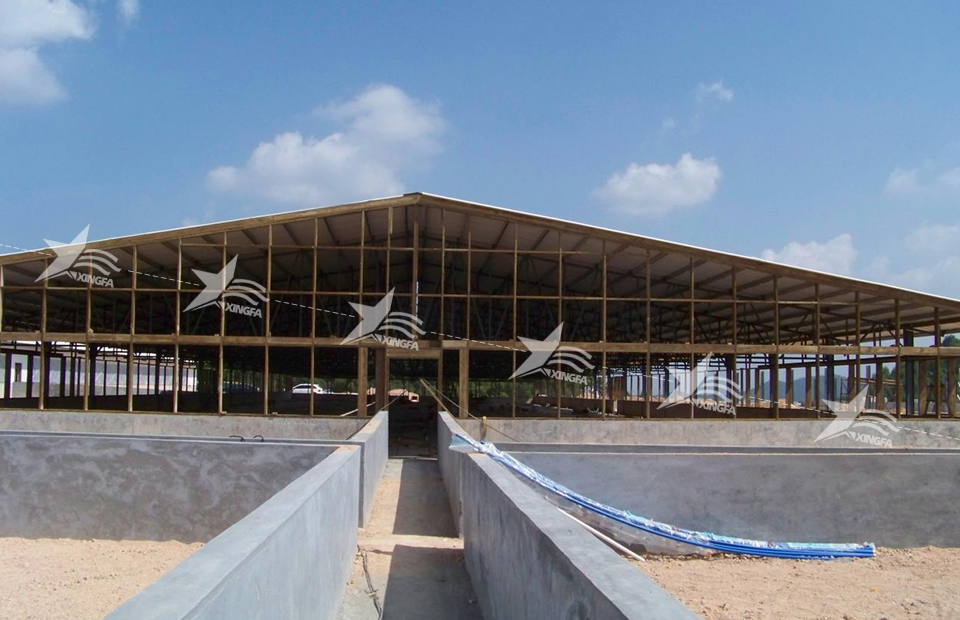
Ⅳ. Practical Validation: Methodology Implementation Delivers Tangible Value
Theory is gray, but practice remains the sole criterion for verifying truth. To demonstrate the real-world effectiveness of the 3F Scenario-Adaptation Methodology, we present a case study from a large ceramic manufacturing plant in Foshan—specifically, its warehouse roof renovation project. The plant implemented this methodology using Xingfa-brand PVC industrial roofing tiles, tailoring the solution to address the site’s unique operational challenges: high ambient temperatures, heavy dust accumulation, and strong chemical corrosion.
The warehouse originally featured conventional color-coated steel roofing sheets. After four years of service, widespread rusting and perforation occurred, resulting in frequent leaks during the rainy season. These leaks caused moisture damage to finished ceramic tiles, reducing product pass rates to just 92%. Indoor workshop temperatures soared to 43°C, leading to a 20% decline in worker productivity. Moreover, the existing roof’s fire-resistance rating was only Class B2—insufficient to meet the industrial park’s fire safety requirements—exposing the facility to a monthly compliance penalty of RMB 5,000.
Applying the 3F Scenario-Adaptation Methodology, Xingfa Roofing developed a customized solution: 3.0 mm-thick blue PVC corrosion-resistant corrugated roofing tiles, paired with specialized acid- and alkali-resistant sealing gaskets and self-tapping screws. Installation sequencing was optimized to improve roof drainage efficiency by 30%. The total project area covered 12,000 m² and was completed in just 12 days—three days ahead of schedule.
Post-implementation results were highly significant: • Indoor warehouse temperature dropped 33 °C below; tile product pass rate improved to 97%; • Annual maintenance costs decreased from RMB 120,000 to RMB 12,000—yielding over RMB 100,000 in annual savings on operations and regulatory compliance; • The facility successfully passed official fire safety inspection, fully eliminating associated compliance risks.
“Aside from resolving our long-standing roof performance issues, selecting Xingfa’s PVC roofing system has delivered substantial operational cost savings. The scenario-adapted product selection approach proved unequivocally correct.” — Project Manager.
Ⅴ. Summary and Outlook: Scenario-Driven Adaptation Defines the Future of PVC Industrial Roofing
As performance expectations for industrial roofing systems continue to rise, the “one-size-fits-all” approach to product selection is no longer viable. The 3F Scenario-Adaptation Methodology redefines PVC industrial roofing selection logic by anchoring decisions in core functional requirements—enabling clients to achieve optimal total cost of ownership across the asset’s entire lifecycle. As a high-tech enterprise with 21 years of dedicated expertise in roofing materials, Xingfa Roofing consistently places customer-specific scenarios at the heart of its innovation strategy. Through sustained technological advancement and continuous product refinement, we deliver premium-quality PVC roofing solutions for both new construction and retrofit projects across diverse industrial applications.
We hope the “3F Scenario-Adaptation Methodology” offers valuable insights for your industrial roofing selection process. Should you wish to access the full suite of scenario-specific solutions—or arrange for a professional technical consultation to assess your current roof’s performance and identify improvement opportunities—please contact us.