AR
 EN
 ES
 RU
Benefits of Synthetic Resin Tiles in Public Buildings
Public buildings—including schools, community service centers, agricultural and sideline markets, and parking facilities—typically experience high foot traffic and extended service lifespans. Consequently, their roofing systems must simultaneously satisfy multiple critical requirements: safety, durability, occupant comfort, economic efficiency, and aesthetic appeal. Synthetic resin tiles, featuring an ASA (Acrylonitrile Styrene Acrylate) weather-resistant topcoat, deliver a balanced suite of performance attributes that align closely with the functional and regulatory demands of public infrastructure projects. As such, they have gained widespread adoption in small- to medium-scale sloped-roof public buildings. Below, we detail their key advantages across six dimensions. The full text comprises approximately 1,500 words.
1. Reliable Safety Performance, Optimized for High-Density Occupancy Scenarios
Safety is the foremost priority in public building design and operation. Synthetic resin tiles are exceptionally lightweight—significantly lighter per square meter than traditional clay tiles or color-coated steel sheets—thereby substantially reducing roof dead load. This characteristic is especially advantageous for retrofitting aging public buildings, minimizing the need for costly structural reinforcement of the original framework.
The material exhibits excellent impact resistance and toughness. Under hailstorms or impacts from falling objects, it resists brittle fracture and wholesale detachment—unlike clay tiles—thus markedly lowering the risk of injury from falling debris.
Inherently non-conductive and electrically insulating, synthetic resin tiles eliminate concerns associated with electrical conduction. When integrated with code-compliant lightning protection systems, they present a lower lightning-related risk compared to conductive metal roofs. Moreover, unlike color-coated steel sheets, they do not corrode, thereby preventing rust staining, rust particle shedding, or contamination of surrounding areas and pedestrian zones.
Certified fire-retardant variants meet the B1 classification (difficult-to-ignite) under national fire safety standards. Within the scope permitted by current building codes for sloped roofs in public buildings, these tiles self-extinguish upon flame removal and impede fire propagation.
Additionally, their interlocking profile design—combined with a comprehensive suite of standardized waterproofing accessories—ensures robust wind uplift resistance. Even in typhoon-prone regions, roofs remain stable and secure, supporting uninterrupted public access and facility operations.
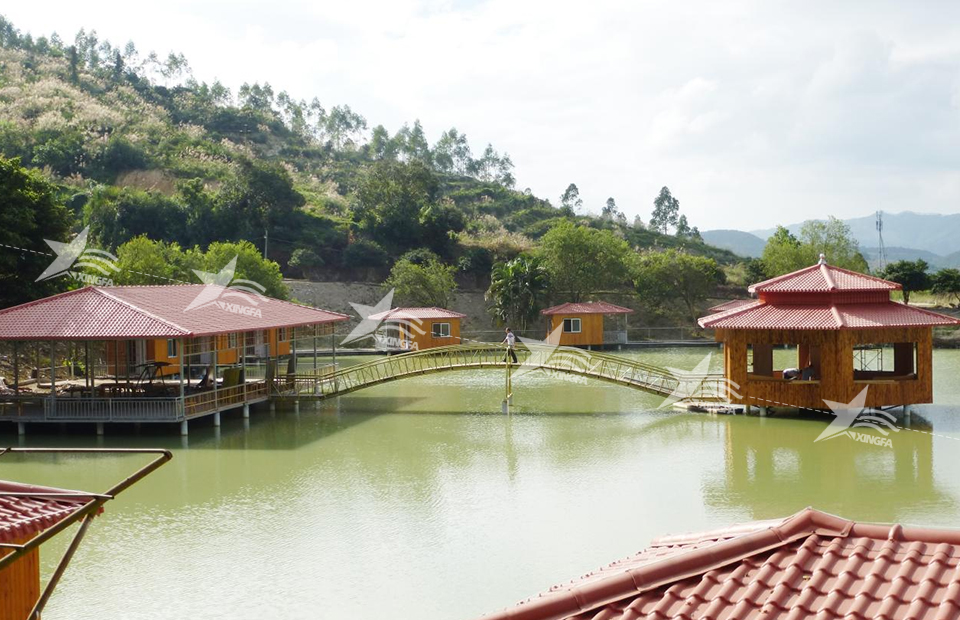
2. Exceptional Weather Resistance and Corrosion Resistance, Ensuring Long-Term Outdoor Stability
Public building roofs are continuously exposed to outdoor environmental stressors: solar radiation, precipitation, freeze-thaw cycles, and wide diurnal temperature fluctuations. In certain locations—such as coastal zones, peri-urban areas, or sites adjacent to livestock farms—the ambient air contains salt-laden aerosols or corrosive moisture.
The surface layer of synthetic resin tiles consists of ASA engineering resin, renowned for its superior ultraviolet (UV) resistance. Prolonged sun exposure causes minimal chalking, cracking, or color fading, ensuring consistent visual appearance and extended service life—reducing the frequency and cost of roof refurbishment.
As a high-molecular-weight inert polymer, the material demonstrates outstanding resistance to acids, alkalis, and salts. Unlike metallic roofing systems, it does not suffer rapid corrosion or perforation. Its performance advantage over color-coated steel sheets is particularly pronounced in demanding applications—for instance, coastal markets or community facilities near industrial or agricultural pollution sources.
With an extremely low water absorption rate, synthetic resin tiles remain dimensionally stable under repeated rain-snow freeze-thaw conditions—avoiding swelling, delamination, or cracking. Waterproofing relies on precision interlocking profiles complemented by engineered accessories; when installed in strict accordance with technical specifications, leakage risk remains highly controllable—minimizing operational disruptions caused by roof leaks.
3. Superior Sound and Thermal Insulation, Enhancing Indoor Environmental Comfort
Schools, community activity rooms, and administrative service halls impose stringent requirements on indoor acoustic quality and thermal comfort.
Color-coated steel roofs generate significant impact noise during rainfall, potentially disrupting teaching, meetings, and public events. In contrast, the structural composition of synthetic resin tiles effectively dampens and absorbs raindrop impact energy, resulting in markedly reduced noise transmission and a quieter interior environment.
Furthermore, the material possesses a low thermal conductivity coefficient—outperforming color-coated steel in thermal insulation performance. During summer, direct solar irradiation on the roof surface is significantly mitigated, limiting heat transfer into occupied spaces. This reduces indoor temperature rise and lowers HVAC energy consumption—directly supporting public building energy conservation and carbon reduction objectives.
4. Efficient and Streamlined Installation, Minimizing Disruption to Public Operations
Markets, community service centers, and similar facilities often cannot afford prolonged, full-scale closures for construction.
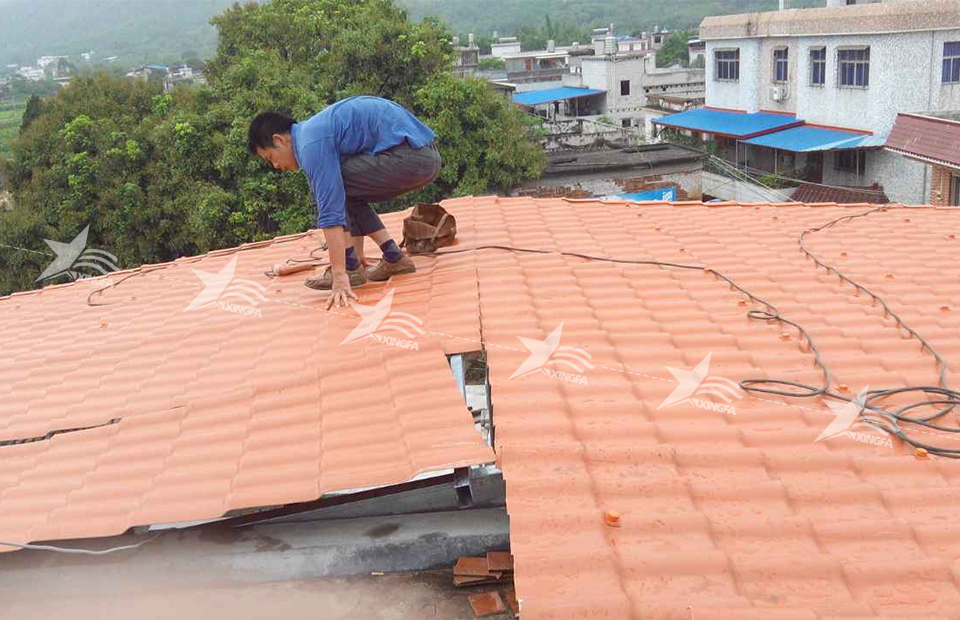
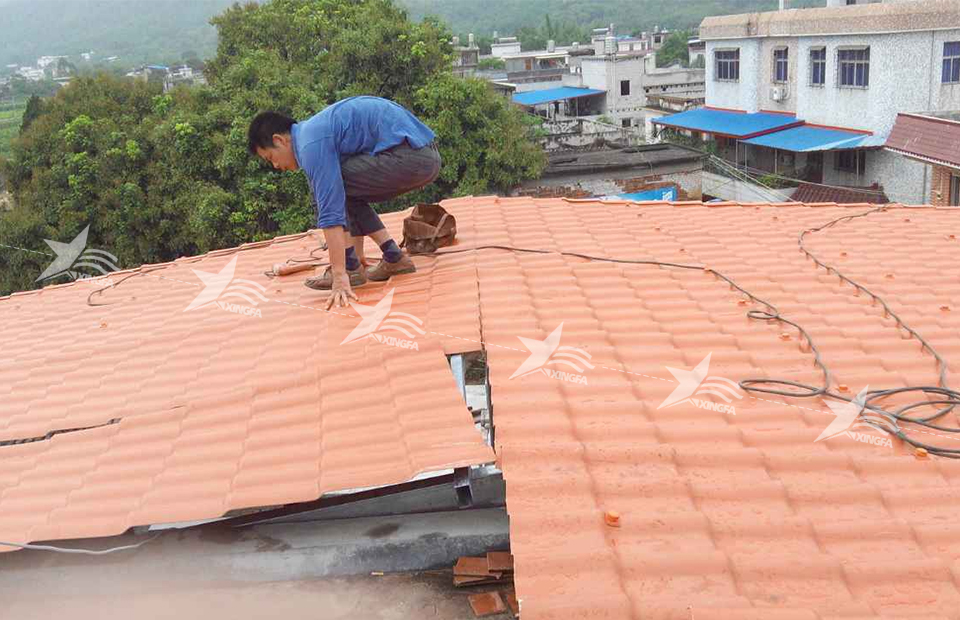
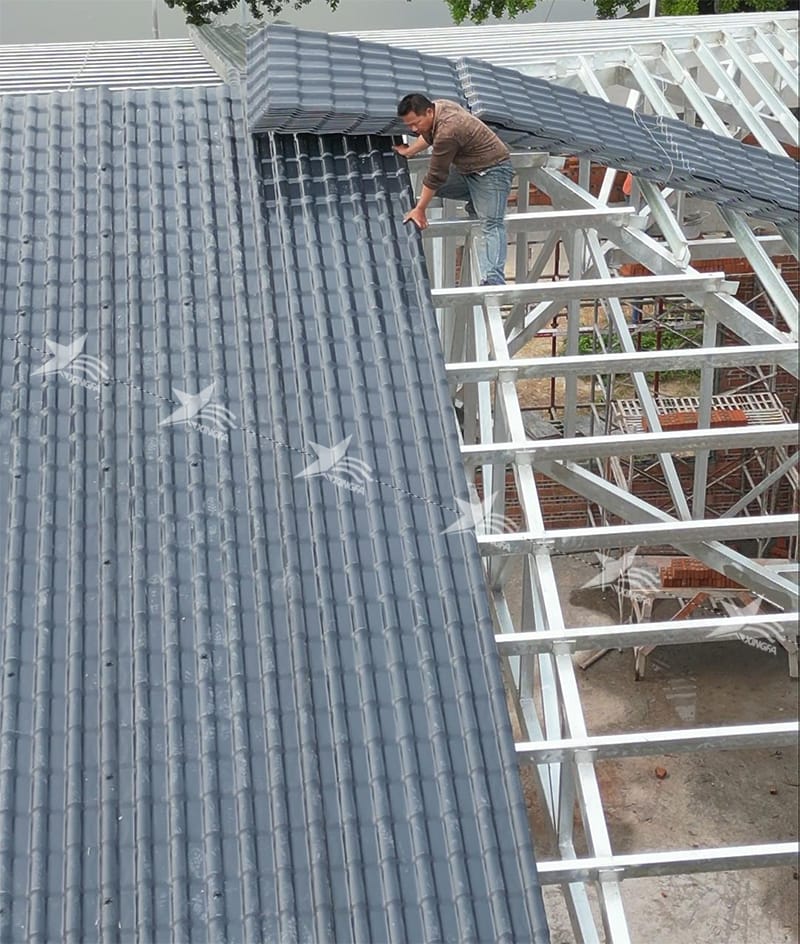
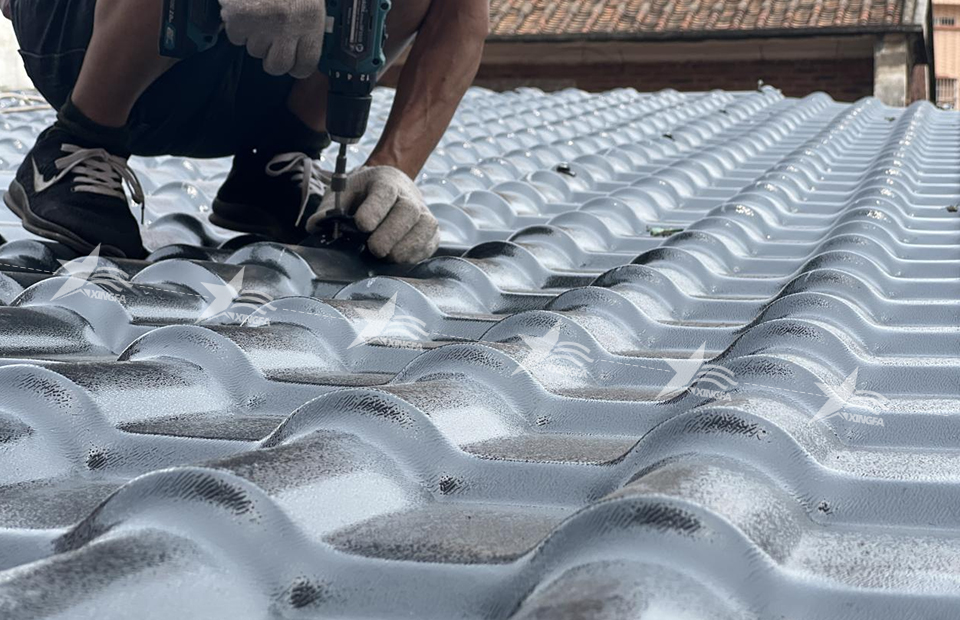
Synthetic resin tiles employ a dry-assembled, prefabricated installation method—eliminating the need for wet mortar work. This approach ensures a clean, dust-free worksite and minimizes construction waste. Each tile covers a broad width, facilitating rapid cutting and fastening. A complete range of standardized accessories—including ridge caps, eave closure boards, and waterproof flashing components—is available, enabling swift, systematic assembly and significantly shortening project timelines. Consequently, site closure duration is reduced, mitigating adverse impacts on public service delivery and commercial activities.
Owing to their light weight, tiles can be manually transported without heavy lifting equipment—even in confined or logistically constrained settings typical of urban renovation projects. Customizable tile lengths further reduce on-site cutting waste, while standardized node detailing simplifies waterproofing execution and enhances overall construction quality control—lowering long-term leakage risks.

5. Low Maintenance Requirements, Alleviating Public Fiscal Burden
The dense, smooth surface of synthetic resin tiles provides inherent self-cleaning functionality: rainwater naturally rinses away surface dust and particulates, inhibiting mud accumulation and algal or moss growth. Routine maintenance is limited to annual visual inspections—no periodic repainting, rust removal, or anti-corrosion treatments are required.
By comparison, color-coated steel roofs typically demand rust abatement and recoating every few years—and may require full replacement once corrosion advances. Clay tiles pose risks of displacement and clogged gutters due to vegetation ingress. In contrast, synthetic resin tiles entail substantially lower lifecycle maintenance expenditures.
Should localized damage occur, individual tiles can be replaced without dismantling large roof sections—ensuring simple, rapid, and cost-effective repairs. This feature is especially valuable for publicly funded projects operating under tight budgetary constraints.
6. Environmentally Sustainable and Health-Conscious
Certified synthetic resin tiles contain no asbestos or radioactive substances and emit no hazardous volatiles during service life—making them suitable for environments where occupants spend extended periods, such as schools and community centers.
At end-of-life, PVC-based variants are recyclable and can be reprocessed into secondary raw materials, reducing landfill burden and supporting circular economy principles. These attributes fully align with green building standards and the broader national strategy for low-carbon, sustainable infrastructure development.
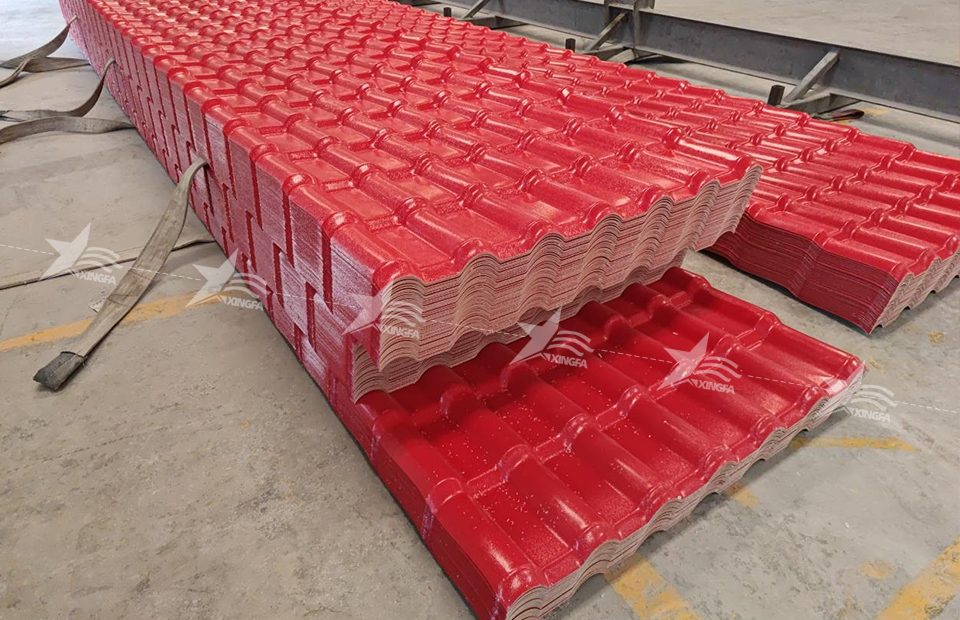
In summary, while synthetic resin tiles are not universally applicable—particularly in high-fire-risk, large-capacity venues requiring stringent fire-resistance classifications—they represent an optimal solution for the vast majority of small- to medium-scale sloped-roof public buildings. By integrating safety, longevity, occupant comfort, rapid installation, low operational cost, and aesthetic harmony, they deliver outstanding comprehensive value—making them a preferred choice for both new construction and roof renovation projects in the public sector.