AR
AR  EN
EN  ES
ES  RU
RU Overcoming the installation difficulties of PVC factory roofing sheet: How does the Starfire five-stage standard installation method ensure long-term durability?
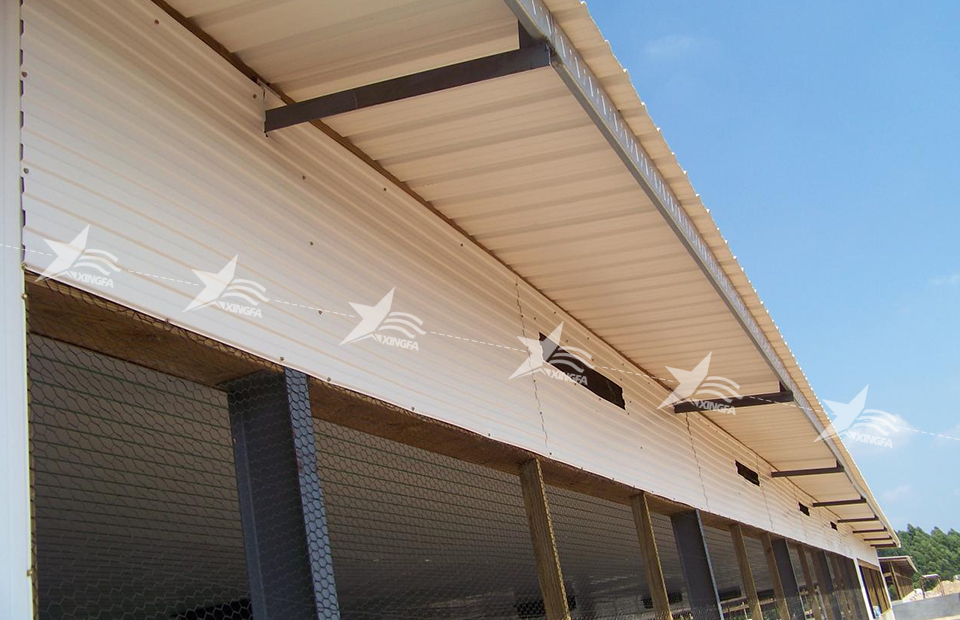
PVC Factory Roofing Sheet: Standardized Installation Solution
PVC Factory Roofing Sheet Installation: Overlooked Industry Pain Points and Latent Risks
In industrial factories, warehousing & logistics facilities, and large-scale agricultural greenhouses, PVC roofing sheets have become the mainstream choice for roof systems—valued for their corrosion resistance, thermal insulation performance, and fire-retardant properties. However, the industry has long suffered from a pervasive “product-centric, installation-neglecting” mindset. Installation practices remain largely reliant on individual contractors’ experience, with no unified technical standards in place. This has led to numerous latent issues: insufficient overlap width causing water leakage; non-compliant screw specifications resulting in loose fastening; and improper connection methods exacerbating sheet cracking. According to industry-wide preliminary statistics, over 60% of post-installation failures in PVC roofing systems stem directly from non-standardized installation practices.
These issues not only reduce roof service life by more than 30% and increase annual operation and maintenance costs by tens of thousands of RMB, but—under severe circumstances—may also compromise fire safety compliance, trigger project rework, and inflict incalculable losses on industrial production. Standardizing the installation process for PVC factory roofing sheets has thus become an urgent, industry-wide priority.
Breaking the Cycle of Traditional Installation Chaos: The Xingfa Five-Stage Standardized Installation Methodology
Conventional installation approaches rely heavily on workforce experience and lack consistent procedural guidelines—making errors and omissions inevitable. Drawing upon 21 years of integrated expertise in roofing material R&D, manufacturing, and on-site installation services, Foshan Chancheng Xingfa Tile Industry Co., Ltd. has developed a comprehensive, end-to-end standardized installation methodology—the Xingfa Five-Stage Standardized Installation Method (Five-Stage Standard Installation, or FSI). This methodology deconstructs PVC factory roofing sheet installation into five logically sequenced, clearly defined core stages—eliminating dependence on subjective experience and enabling even standard construction teams to achieve consistently high-quality installation outcomes. By addressing root causes of human error, FSI ensures long-term structural integrity and operational reliability of the roof system.
Core Principles of the FSI Methodology: Five Key Stages
Stage 1: Pre-Installation Preparation and Purlin Verification Prior to commencement of work, thorough preparatory activities must be completed: verification of PVC sheet model, quantity, and dimensional specifications; inspection of steel purlin spacing and levelness—standard requirements mandate purlin spacing ≤1.5 m and horizontal deviation ≤5 mm. Specialized installation tools—including cordless drills, carbide-tipped cutting saws, tape measures, ink lines, and plumb bobs—must be assembled. Additionally, Xingfa OEM self-tapping screws and waterproof sealing washers must be prepared. Finally, layout marking (tile alignment) is performed according to the building’s roof dimensions to minimize on-site cutting and associated material waste.
Stage 2: Systematic Laying and Standardized Overlap of PVC Factory Roofing Sheets Xingfa PVC roofing sheets feature factory-applied overlap reference markings. Installation follows the principle of “bottom-to-top, left-to-right.” Transverse overlap is precisely aligned to one full corrugation; longitudinal overlap length must be ≥150 mm. For roof slopes exceeding 15°, overlap width shall be incrementally increased to enhance rainwater runoff capacity and prevent ponding and leakage. Leveraging Xingfa’s proprietary high-toughness polymer formulation, the sheets support cold bending on site—enabling seamless adaptation to complex, non-standard roof geometries—while maintaining clean, chip-free edges during cutting, thereby significantly reducing material loss during installation.
Stage 3: Secure Fastening of PVC Roofing Sheets to Purlins Fastening constitutes the critical interface ensuring both structural stability and waterproof integrity. The FSI methodology prescribes strict operational protocols: screws must be installed exclusively at the crest (peak) of each corrugation—never in the trough—to eliminate potential water infiltration pathways. Screw specifications are selected based on sheet thickness: M5.5 × 80 mm screws for sheets 1.5–2.0 mm thick; M5.5 × 90 mm screws for sheets 2.5–3.0 mm thick—ensuring full penetration through the sheet and secure anchorage into the purlin. One screw is required per corrugation, with the screw head seated slightly below the sheet surface and paired with a waterproof sealing washer to achieve optimal joint sealing.
Specific fastening protocols apply to different purlin substrates: self-tapping screws are used directly on steel purlins; extended-length screws are mandated for timber purlins to ensure adequate thread engagement and pull-out resistance. When implemented correctly, this standardized fastening system enables the roof assembly to withstand Category 12 typhoon-level wind loads without loosening or detachment.
Stage 4: Detail Node Sealing and Waterproofing Critical junctions—including ridges, eaves, and gutters—are high-risk zones for water ingress. Per FSI requirements, specialized waterproof sealant must be applied at all such nodes. Ridge cap overlaps must extend ≥200 mm over underlying sheets; eave overhangs must be precisely controlled between 50–80 mm to ensure unimpeded drainage. Xingfa provides a complete suite of purpose-engineered waterproof node accessories—eliminating the need for on-site fabrication—and thereby enhancing both installation efficiency and long-term sealing reliability.
Stage 5: Post-Installation Inspection and Site Cleanup Upon completion of all installation work, a systematic final inspection must be conducted in accordance with established criteria: verification of screw tightness and correct placement; confirmation of overlap dimensions meeting specification; and validation of complete, continuous node sealing. All residual debris—including cuttings and dust—must be thoroughly removed from the roof surface to prevent accidental abrasion of the sheet surface, which could otherwise compromise waterproof performance. Xingfa offers comprehensive installation guidance and dedicated after-sales technical support to all clients; professional assistance is available on demand throughout the entire construction process.
Practical Results: Standardized Installation Delivers Tangible Value to Customers “In theory, knowledge is gray; in practice, it is the sole criterion for testing truth.” To demonstrate the real-world effectiveness of Xingfa’s Five-Stage Standardized Installation Method (FSI), consider the case of a roof renovation project at a large ceramic manufacturing plant in Foshan. The original color-coated steel roofing panels had been installed non-compliantly, resulting—after just four years of service—in widespread rusting and leakage. Indoor workshop temperatures soared to 43°C, and the roof failed to meet required fire-resistance standards, triggering monthly regulatory penalties of RMB 5,000.
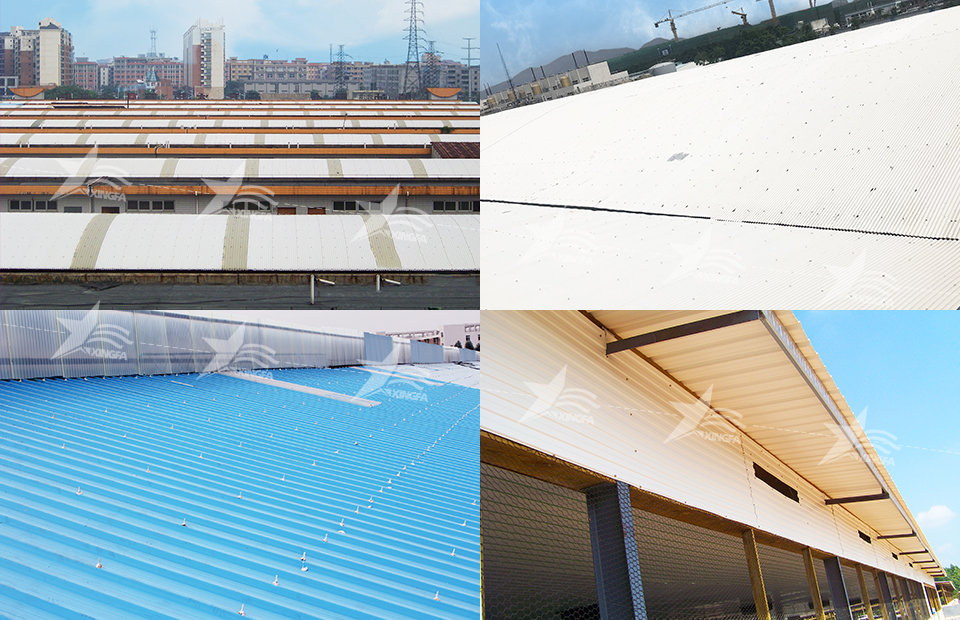
The project ultimately selected Xingfa PVC industrial roofing sheets and implemented installation strictly in accordance with the FSI Five-Stage Standardized Installation Method. Covering a total area of 12,000 m², the project was completed in just 12 days—three days ahead of schedule. Post-delivery outcomes significantly exceeded expectations:
- Indoor warehouse temperature dropped to below 33°C; tile product pass rate improved from 92% to 97%;
- Annual roof maintenance costs decreased from RMB 120,000 to RMB 12,000—yielding annual savings of approximately RMB 100,000;
- The roof successfully passed fire safety inspection, eliminating compliance risks; no leakage or cracking has occurred over five years of continuous service.
“We previously believed that selecting high-quality roofing sheets alone would suffice—only to realize that substandard installation severely undermined the performance of even premium materials. Xingfa’s standardized installation methodology resolved all our challenges in one go. With zero issues over five years, it has saved us tremendous time, effort, and operational anxiety.” — Project Manager
Summary and Outlook: Advancing Standardization Across the PVC Roofing Industry
Xingfa’s Five-Stage Standardized Installation Method represents 21 years of accumulated expertise from Xingfa Roofing Co., Ltd.—a deep commitment to the roofing building materials sector. By codifying best practices into a repeatable, process-driven framework, the FSI method eliminates reliance on individual installer experience. It enhances installation efficiency by approximately 20%, reduces material waste by roughly 15%, shortens overall project timelines, and lowers the total cost of ownership across the roof’s entire lifecycle.
As a high-tech enterprise specializing in innovative, eco-friendly roofing solutions, Xingfa Roofing not only delivers premium-grade PVC industrial roofing sheets but also provides comprehensive, standardized installation solutions. We are actively driving industry transformation—from “selling products” to “delivering integrated solutions”—to help more clients resolve persistent roofing challenges effectively and sustainably.
We hope Xingfa’s Five-Stage Standardized Installation Method inspires your next industrial roofing project. For access to the complete PVC industrial roofing installation guide—or to discuss a customized roofing solution tailored to your specific needs—please contact Foshan Chancheng Xingfa Tile Industry Co., Ltd.